
Queen
Elizabeth National Park is one of Uganda’s most popular safari
destinations, offering a rich combination of savannah plains, woodland,
wetlands, crater lakes, and waterways. Located in western Uganda, the park
provides a natural habitat for elephants, lions, buffaloes, Uganda kob, hippos,
leopards, warthogs, and many other wildlife species. Its diverse landscapes
also support a remarkable variety of birds, making the park suitable for both
wildlife viewing and bird watching. From game drives across the Kasenyi Plains
to boat cruises along the Kazinga Channel, Queen Elizabeth National Park offers
several ways to experience Uganda’s wild landscapes.
A Diverse
Savannah Landscape
One of the main reasons Queen Elizabeth National
Park stands out is its variety of habitats. The park covers extensive savannah
grasslands alongside acacia and woodland areas, wetlands, lakes, and volcanic
features. This diversity supports different wildlife species throughout the
park. Open plains provide important grazing areas for Uganda kob, buffaloes and
other herbivores, while woodland and bushy areas offer shelter for elephants,
warthogs, and smaller animals. The changing scenery also makes game drives more
interesting, with landscapes ranging from open grasslands to areas surrounded
by hills and water.
Excellent
Wildlife Viewing
Queen Elizabeth National Park supports a large
variety of wildlife, making it one of Uganda’s leading destinations for game drives.
Visitors often encounter elephants, buffaloes, Uganda kob, waterbucks,
warthogs, and several other antelope species. Lions are among the most
sought-after animals in the park. The Kasenyi Plains provide important habitat
for lions and their prey, creating good opportunities for predator sightings
during game drives. Leopards also inhabit the park, although their secretive
behavior means sightings require patience and careful observation.
The Famous
Tree-Climbing Lions of Ishasha
The Ishasha sector in the southern part of Queen
Elizabeth National Park is famous for its tree-climbing lions. These lions
often rest on the branches of large fig trees and other suitable trees,
creating a distinctive wildlife experience. Seeing a lion relaxing high above
the ground provides a different perspective from the usual sight of lions
resting on the savannah. Ishasha also supports elephants, buffaloes, topi,
Uganda kob, and other wildlife. The sector also offers a quieter atmosphere
compared with some of the park's more frequently visited areas.
The Kazinga
Channel Experience
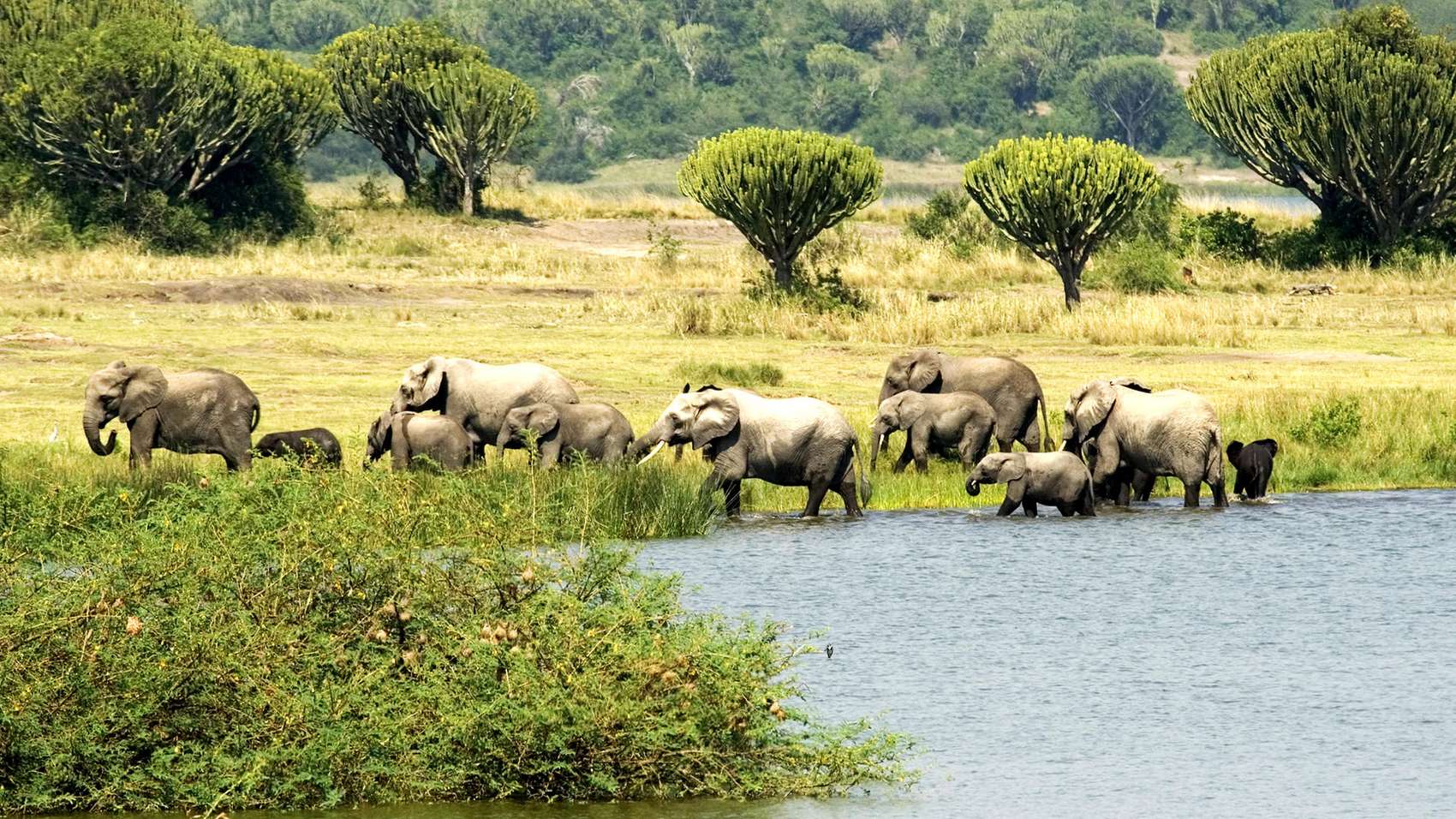
The Kazinga Channel is another major attraction
within Queen Elizabeth National Park. The channel connects Lake Edward and Lake
George and supports large concentrations of wildlife. A boat cruise along the
channel provides close views of hippos, crocodiles, elephants, buffaloes, and
water birds gathered around the shoreline. The slower pace of a boat also
offers a different way to observe wildlife compared with a game drive. The
channel is particularly rewarding for bird enthusiasts, with numerous species
living around the water and surrounding wetlands.
A Great
Destination for Bird Watching
Queen Elizabeth National Park is not only about
large mammals. Its varied habitats support a wide range of bird species, making
it an important destination for bird watching. Visitors may encounter African
fish eagles, grey crowned cranes, saddle-billed storks, kingfishers, herons,
vultures, rollers, and many other species. The combination of savannah,
woodland, lakes, and wetlands provides different habitats for resident and
migratory birds. Bird watching also adds another dimension to game drives
because travelers often encounter interesting species while moving between
wildlife-viewing areas.
The Kasenyi Plains
The Kasenyi Plains are among the best-known wildlife
areas in Queen Elizabeth National Park. The open grasslands attract large
numbers of Uganda kob and other grazing animals. The abundance of prey also
attracts predators, particularly lions. Early morning game drives across the
plains offer opportunities to observe wildlife as animals feed and move through
the grasslands. The open landscape also provides good visibility, allowing
visitors to scan the plains for animals at a distance.
Crater Lakes and
Scenic Landscapes
Queen Elizabeth National Park also features numerous
volcanic crater lakes that add scenic variety to the safari experience. The
crater landscapes provide opportunities for photography, nature walks, and
sightseeing. Some viewpoints offer broad views across the park, with lakes,
savannah, and distant hills forming a striking landscape. These areas provide a
welcome change from wildlife-focused activities and show the geological
diversity of western Uganda.
Activities to
Enjoy in Queen Elizabeth National Park
Game drives remain the main safari activity and
provide opportunities to explore the park's major wildlife areas. Morning and
afternoon drives offer different conditions for wildlife viewing. A boat cruise
along the Kazinga Channel provides close encounters with animals around the
water and excellent opportunities for bird watching. Travelers also explore the
park through nature walks, bird watching, cultural experiences, and visits to
scenic areas such as the crater lakes.
Best Time to
Visit Queen Elizabeth National Park
The dry seasons from June to September and December
to February are popular for wildlife viewing. During these periods, vegetation
is generally shorter, roads are easier to navigate, and animals often gather
around water sources. The wet seasons from March to May and October to November
bring greener landscapes and increased bird activity. The scenery becomes lush,
and the park takes on a different character. Queen
Elizabeth National Park remains open throughout the year, so the ideal
period depends on the type of experience you want.
How to Get to
Queen Elizabeth National Park
Queen Elizabeth National Park is accessible by road from Kampala and other major tourism destinations in western Uganda. The journey takes travelers through changing landscapes, towns, rural communities, and scenic countryside. The park also works well as part of a longer western Uganda safari. It often combines naturally with destinations such as Kibale National Park for chimpanzee trekking and Bwindi Impenetrable National Park for gorilla trekking.
Why Choose Queen
Elizabeth for a Savannah Safari?
Queen Elizabeth National Park offers a balanced
safari experience with diverse wildlife, varied landscapes, excellent game
drives, boat cruises, bird watching, and the famous tree-climbing lions of
Ishasha. Its location also makes it convenient to combine with several of
Uganda’s major tourism destinations. Whether your main interest is predators,
large mammals, birds, scenic landscapes, or a combination of activities, Queen
Elizabeth National Park introduces Uganda’s savannah wilderness.
Queen Elizabeth National Park stands out as a top
savannah safari destination because of its wildlife diversity, changing
landscapes, and variety of activities. From lions and elephants on the Kasenyi
Plains to hippos and crocodiles along the Kazinga Channel and tree-climbing
lions in Ishasha, the park offers many different wildlife experiences within
one destination. For travelers exploring western Uganda, Queen Elizabeth
National Park provides an excellent opportunity to experience the country's
savannah wildlife while enjoying some of its most scenic landscapes.