
Uganda offers one of the most diverse Big
Five experiences in East Africa, combining national parks, wildlife
reserves, and rhino conservation areas within a relatively compact safari
circuit. Travelers can see lions, elephants, buffaloes, leopards, and rhinos by
visiting key destinations such as Murchison Falls National Park, Queen
Elizabeth National Park, Kidepo Valley National Park, and Ziwa Rhino Sanctuary.
Each location offers something different, from open savannahs and river cruises
to walking safaris and rhino tracking experiences. Uganda's wildlife areas are
generally less crowded than many popular safari destinations, giving visitors a
more relaxed game-viewing experience. Combining multiple parks increases the
chances of seeing all members of the Big Five while also enjoying Uganda's
varied landscapes, birdlife, and conservation success stories. Careful
itinerary planning helps maximize wildlife sightings and overall safari value.
1. Murchison
Falls National Park
Murchison
Falls National Park is the best place to start if your goal is seeing the
Big Five on a Uganda safari. The park has large populations of elephants,
buffaloes, lions, and leopards spread across its northern plains. Game drives
around Paraa and the Buligi sector often produce good wildlife sightings,
especially in the early morning and late afternoon. While rhinos do not live
inside the national park, many travelers combine a visit to nearby Ziwa Rhino
Sanctuary to complete the Big Five list. The park also offers boat cruises
along the Nile, giving visitors another way to view animals gathering near the
water. For travelers with limited time, Murchison Falls is often the most
practical choice because it combines strong wildlife viewing, beautiful
landscapes, and a wide variety of safari activities in one destination.
2. Ziwa Rhino
Sanctuary
Ziwa Rhino Sanctuary is the only place in Uganda
where wild rhinos can be seen, making it an essential stop for anyone
interested in the
Big Five. Located along the main route to Murchison Falls National Park,
the sanctuary was established to reintroduce rhinos after they disappeared from
Uganda's national parks decades ago. Guided rhino tracking walks allow visitors
to approach these animals safely while learning about conservation efforts that
protect them. Because the rhinos live in a protected area, sightings are highly
reliable compared to many other African destinations where rhinos are difficult
to locate. Most travelers visit Ziwa before continuing to Murchison Falls to
see lions, elephants, buffaloes, and leopards. This combination remains the
easiest and most dependable way to complete a full Big Five experience in
Uganda.
3. Queen Elizabeth
National Park
Queen
Elizabeth National Park is one of Uganda's most popular wildlife
destinations and a strong location for seeing four members of the Big Five. The
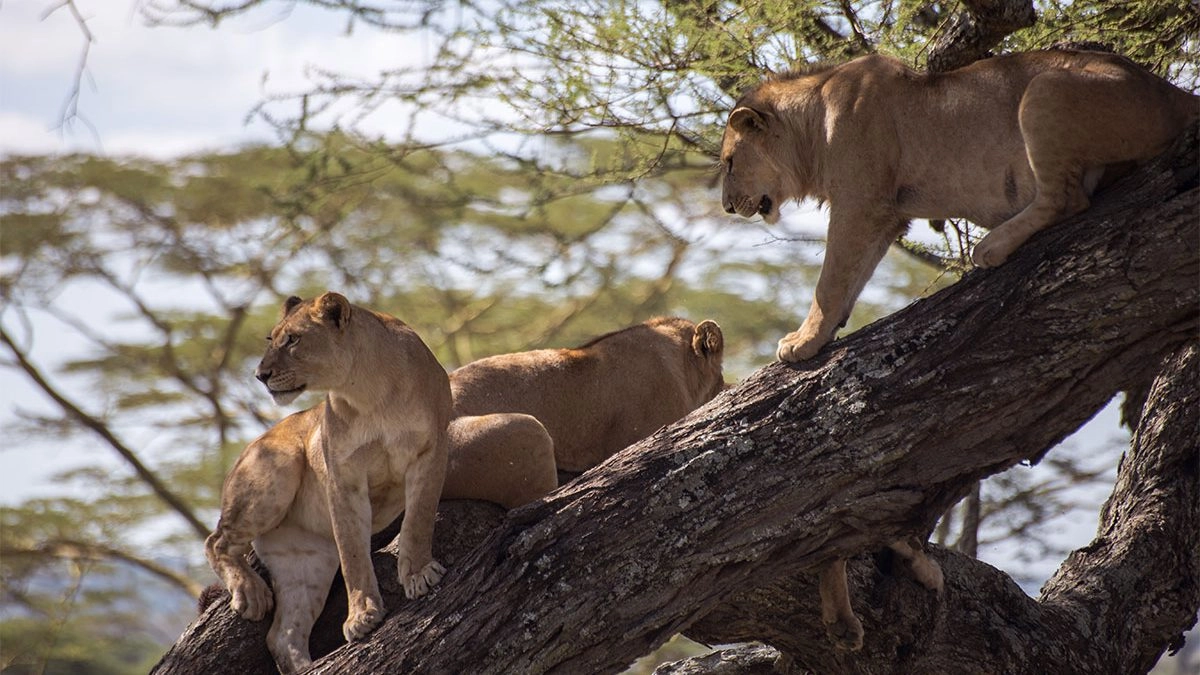
park supports healthy populations of lions, elephants, buffaloes, and leopards,
which can be found across different sectors. The Kasenyi Plains are known for
lion sightings, while elephants and buffaloes are commonly seen near roads and
water sources throughout the park. A boat cruise on the Kazinga Channel adds
another dimension to wildlife viewing, often providing close views of animals
along the shoreline. Although rhinos are not present here, many travelers
combine Queen Elizabeth National Park with Ziwa Rhino Sanctuary to complete the
Big Five checklist. The variety of habitats and activities makes this park one
of Uganda's most rewarding wildlife destinations.
4. Kidepo Valley
National Park
Kidepo
Valley National Park offers one of the most remote wildlife experiences in
East Africa and is an excellent location for seeing several Big Five animals.
The park is home to lions, elephants, buffaloes, and leopards, along with many
species that are rarely found elsewhere in Uganda. Wildlife viewing often feels
more personal because visitor numbers are far lower than in the country's more famous
parks. The Narus Valley is the main wildlife area, where animals gather around
permanent water sources throughout the year. Lions are regularly seen in the
region, while buffalo herds can be impressive in size. Kidepo's distant
location requires more travel time, but visitors are rewarded with wide-open
landscapes, less crowded game drives, and excellent opportunities for wildlife
photography.
5. Lake Mburo
National Park
Lake Mburo National Park is not a complete Big Five
destination, but it plays an important role in many Uganda safari itineraries.
The park is home to buffaloes and has a recovering leopard population, giving
visitors opportunities to see two members of the Big Five. It is also the best
place in Uganda to enjoy walking safaris, horseback safaris, and cycling
experiences alongside wildlife. Because elephants and lions are absent, Lake
Mburo is usually visited for its unique activities rather than Big Five viewing
alone. However, its location between Kampala and southwestern Uganda makes it a
convenient stop when traveling to gorilla trekking areas. Travelers looking for
a balanced safari with varied activities often include Lake Mburo as part of a
larger wildlife itinerary.
6. Semuliki
Wildlife Reserve
Semuliki Wildlife Reserve is one of Uganda's
lesser-known wildlife areas but still offers opportunities to see some Big Five
species. Buffaloes and elephants are present, while leopards move through the
reserve, though sightings are less frequent because of the thick vegetation.
The reserve attracts travelers interested in exploring quieter wildlife areas
away from the busier safari circuits. Semuliki is also known for its birdlife
and its position within the Albertine Rift, one of Africa's richest
biodiversity regions. Wildlife viewing requires patience, but visitors who
enjoy less-developed destinations often appreciate the reserve's natural
character. While it is not the first choice for completing the Big Five,
Semuliki offers an interesting addition for travelers wanting to see more of Uganda's
diverse ecosystems.
7. Pian Upe
Wildlife Reserve
Pian Upe Wildlife
Reserve is gradually gaining recognition among travelers seeking wildlife
experiences beyond the traditional safari route. Located in northeastern
Uganda, the reserve supports buffaloes and some elephant populations while
providing vast open landscapes suitable for wildlife viewing. Predator
sightings are less common than in larger national parks, but the reserve offers
a peaceful atmosphere and very low visitor numbers. Travelers interested in
exploring unique areas often combine Pian Upe with Kidepo Valley National Park
for a broader northeastern Uganda safari experience. The reserve is also known
for species that are rarely seen elsewhere in the country. Although it is not a
complete Big Five destination, Pian Upe contributes valuable wildlife
experiences for those looking to explore beyond Uganda's most visited parks.
8. Ajai Wildlife
Reserve
Ajai Wildlife Reserve is a conservation area in
northern Uganda with a history linked to wildlife protection and habitat
restoration. Buffaloes and other plains wildlife are present, while
conservation efforts continue to support biodiversity recovery within the
reserve. Although it does not currently provide reliable Big Five viewing, Ajai
remains important because of its role in Uganda's broader wildlife conservation
network. Visitors interested in community conservation and less-visited
wildlife areas may find the reserve worth including in a northern Uganda
itinerary. The reserve's accessibility from nearby towns makes it suitable for
short visits. For travelers focused specifically on the Big Five, Ajai works
best as a supplementary wildlife destination rather than a primary safari
location.
9. Toro-Semliki
Wildlife Reserve
Toro-Semliki Wildlife Reserve provides opportunities
to see elephants and buffaloes within a relatively quiet wildlife area. The
reserve lies near the Rwenzori region and attracts travelers who enjoy
exploring destinations that receive fewer visitors. Wildlife sightings can vary
due to vegetation density, but guided activities help improve chances of
spotting key species. The reserve is also known for its birdlife and cultural
experiences with local communities living nearby. Travelers looking for a
different side of Uganda's wildlife often include Toro-Semliki in extended
safari itineraries. While it is not considered a major Big Five destination, it
contributes to a broader understanding of Uganda's wildlife and conservation
efforts beyond the country's better-known national parks.
10. Combined Big
Five Circuit
The most effective way to see the entire Big Five in
Uganda is by combining several destinations into one safari circuit. Most
travelers begin with Ziwa Rhino Sanctuary for rhino tracking before heading to
Murchison Falls National Park for lions, elephants, buffaloes, and leopards.
Some itineraries also include Queen Elizabeth National Park to increase chances
of seeing predators and enjoy additional game viewing opportunities. This
combined approach offers the highest success rate for completing the Big Five
while allowing visitors to experience different landscapes and safari
activities. It also provides flexibility for travelers with varying interests,
whether focused on photography, wildlife conservation, or general game viewing.
For most visitors, combining these destinations delivers the most complete and
rewarding wildlife experience in Uganda.