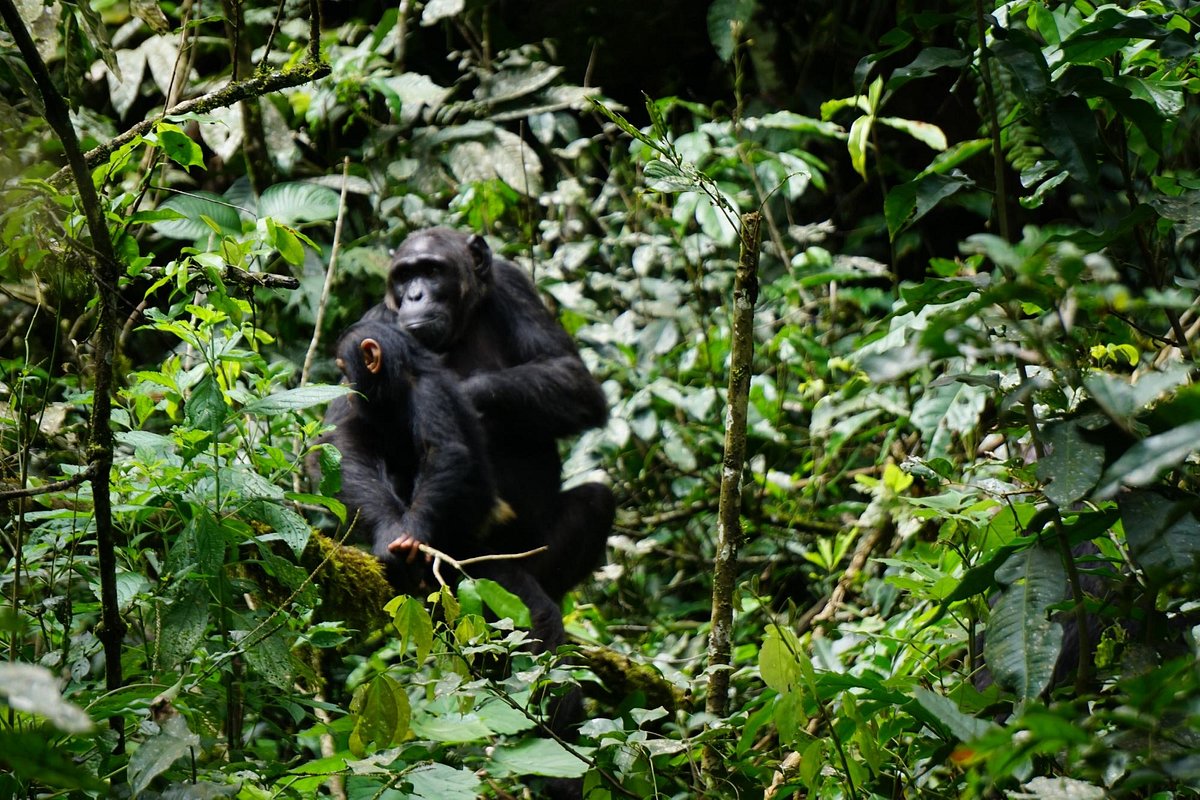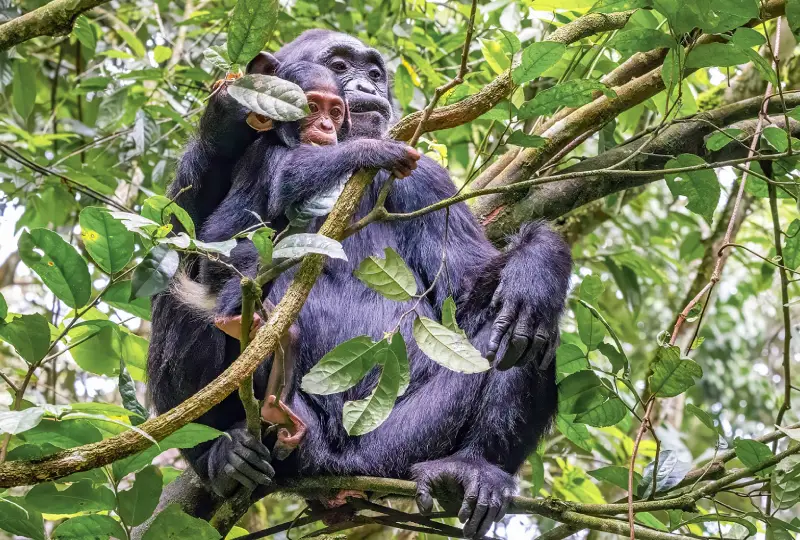

Kibale National Park holds the title of Uganda's
Primate Capital for good reason. It shelters the highest density of
chimpanzees in Africa and supports 13 different primate species, more than any
other park in the country. The forest is famous for reliable, near-certain
chimpanzee sightings and offers a unique full-day habituation experience. Birdwatchers
also value its 375 bird species, while the nearby Bigodi Wetland adds extra
wildlife viewing. Good roads and comfortable lodges near Fort Portal make the
park easy to visit year-round. Whether you want a quick morning trek or an
in-depth study of chimp behaviour, Kibale delivers. For travellers seeking a
packed, honest wildlife experience without unnecessary travel, this forest
gives you maximum return on time and money.
1. Highest
Chimpanzee Density in Africa
Kibale holds the largest number of
chimpanzees per square kilometre anywhere on the continent. With more than 1,500
chimps living in the forest, your chance of seeing them on a trek is about
99%. This density means you do not spend hours searching with little result.
Guides know the groups well and lead you directly to their daily feeding spots.
For travellers who want reliable wildlife viewing without long, fruitless
walks, this park gives you the best odds. You get straight to the main event
without wasted time or effort.
2. Thirteen
Different Primate Species
No other park in Uganda has this many primate types in one place. Besides
chimps, you find red colobus, black-and-white colobus, blue monkeys, red-tailed
monkeys, grey-cheeked mangabeys, L’Hoest’s monkeys, olive baboons, pottos, and
bushbabies. This variety means every walk through the forest shows you
something new. You are not just looking for one animal; the forest is alive
with different monkeys moving through the trees. For anyone who wants a
complete primate experience, this park delivers a full list without needing to
travel elsewhere.
3. Almost
Certain Chimpanzee Sightings
The Uganda Wildlife Authority gives trekkers a 99%
success rate for seeing chimps. This high rate comes from long-term
habituation and experienced guides who know the chimps' daily routines. You do
not worry about going home disappointed. Even on short morning walks, you are
very likely to find a group. This reliability matters for travellers who plan
their trips carefully and cannot afford to miss the main attraction. Other
parks have lower success rates, but Kibale offers peace of mind that you will
get what you paid for.
4. The
Chimpanzee Habituation Experience
This special activity lets you spend a full day with a chimp group that is
still getting used to people. You join researchers and trackers at dawn and
follow the chimps through their entire daily routine—feeding, playing, resting,
and moving. Unlike the standard one-hour trek, you get four or more hours of
observation. This deeper experience shows you real chimp behaviour without the
time limit. For visitors who want more than a quick look, this is a rare chance
to understand how these animals live and interact.
5. Rich Birdlife
Alongside Primates
Kibale hosts over 375 bird species, including six Albertine Rift endemics like
the green-breasted pitta. While walking through the forest, you constantly see
and hear colourful birds. The great blue turaco, black bee-eater, and African
pitta are common sights. This means your primate trek doubles as a birdwatching
walk. You get more value from each activity because the forest is full of life
at every level. For travellers who enjoy nature broadly, this park gives you
two wildlife experiences in one trip.
6. Easy Access
and Good Infrastructure
The park lies about 5–6 hours from
Kampala on good roads. Fort Portal town nearby offers comfortable lodges,
restaurants, and supplies. The Kanyanchu Visitor Centre serves as a
well-organised starting point for all treks. Accommodations range from budget
to luxury, with some lodges right inside the forest. This convenience makes
planning simple. You do not need specialised transport or remote camping gear.
For travellers who value comfort and reliability, Kibale is easy to add to any
Uganda itinerary.
7. Year-Round Trekking
Availability
You can track
chimps in Kibale any month of the year. The forest stays green and the
chimps do not migrate. Even during rainy seasons, treks continue with good
success rates. The dry seasons (June–August and December–February) give easier
walking conditions, but the wet months offer quieter trails and lower prices.
This flexibility helps you plan travel around your schedule, not the park's
limitations. You are not forced into peak tourist times if those do not suit
your budget or availability.
8. The Bigodi
Wetland Sanctuary
Right outside the park, this community-run swamp adds extra primate and bird
viewing. You can walk boardwalks through papyrus to see more monkeys, otters,
and over 200 bird species. This activity supports local villagers directly and
gives you a different habitat from the main forest. It costs less than a chimp
trek and takes only half a day. For travellers who want to see more wildlife
without paying for another full permit, Bigodi is a practical, budget-friendly
addition to your visit.
9. Forest
Elephants and Other Big Mammals
Elephants regularly move between Kibale and nearby Queen Elizabeth National
Park. You sometimes see them along forest edges or hear them crashing through
thick bush. Buffalo, giant forest hogs, bushpigs, and duikers also live here.
This variety means the park is not just about primates. You get a fuller safari
feel with larger animals adding excitement to your walks. The guides avoid
dangerous animals, but their presence reminds you that this is real wild
country, not a zoo.
10. Long-Term
Research and Expert Guides
Kibale hosts one of the longest-running chimpanzee research projects in the
world, run by Yale University and other institutions. This scientific work
means the park staff know individual chimps by name and understand their family
histories. Guides share this knowledge during treks, telling you which chimp is
which and what they are doing. This depth of information makes your visit more
interesting than just seeing animals from a distance. You learn real facts
about behaviour, social structure, and conservation challenges directly from
people who study them daily.
Best time to visit
Kibale National Park for Primate trekking
The best time for primate
trekking in Kibale is during the dry seasons from June to August and
December to February. In these months, forest trails stay firm and dry, making
walks easier and less tiring. The chimps and monkeys move freely through the
canopy with good visibility. However, Kibale works well all year because it is
a rainforest with reliable fruit availability for primates. The wet seasons
from March to May and September to November bring heavier rain, but treks still
run with high success rates. The main drawback is muddy, slippery paths that
slow you down. The dry months offer comfort and easier hiking, while the wet
months give you quieter parks and cheaper accommodation. If you want good
conditions without peak crowds, aim for late June or early July.
How to get there
to Kibale National Park for Primate trekking
You can get to Kibale National Park either by road
or by air. The common way is by road from Kampala or Entebbe, covering roughly
320 kilometres in 5 to 7 hours via the Mubende-Fort Portal highway . From
Fort Portal town, it is a short drive of about 26 kilometres to the park’s
visitor centre at Kanyanchu . The main road is tarmac, but the final
section can be gravel and muddy during rains, so a 4x4 vehicle is wise .
For a faster option, you can take a domestic flight from Entebbe to Kasese
Airstrip, followed by a road transfer of about an hour to the park .
Public buses and shared taxis also run from Kampala to Fort Portal, though they
are less comfortable and reliable