
Kibale National Park holds 13
primate species, more than any other park in Uganda. The star is the
chimpanzee, with over 1,500 individuals and a 99% sighting success rate. You
also see red colobus, black-and-white colobus, blue monkeys, red-tailed
monkeys, grey-cheeked mangabeys, L'Hoest's monkeys, olive baboons, vervet
monkeys, and patas monkeys. At night, bushbabies, pottos, and Demidoff's
galagos come out. This variety means every forest walk shows you different
animals, from ground-dwelling baboons to canopy-dwelling colobus. The park's
mix of habitats supports each species in its own niche. Guides know exactly
where to find each type, so you do not waste time searching. Whether you want
the famous chimps or the rare, shy L'Hoest's monkey, Kibale delivers a complete
primate experience without travelling to multiple parks. This diversity makes
it the undisputed primate capital of Uganda.
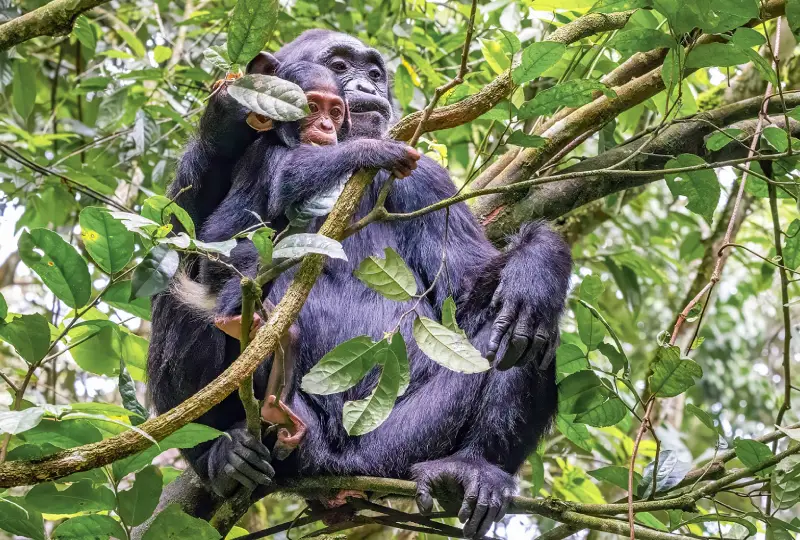
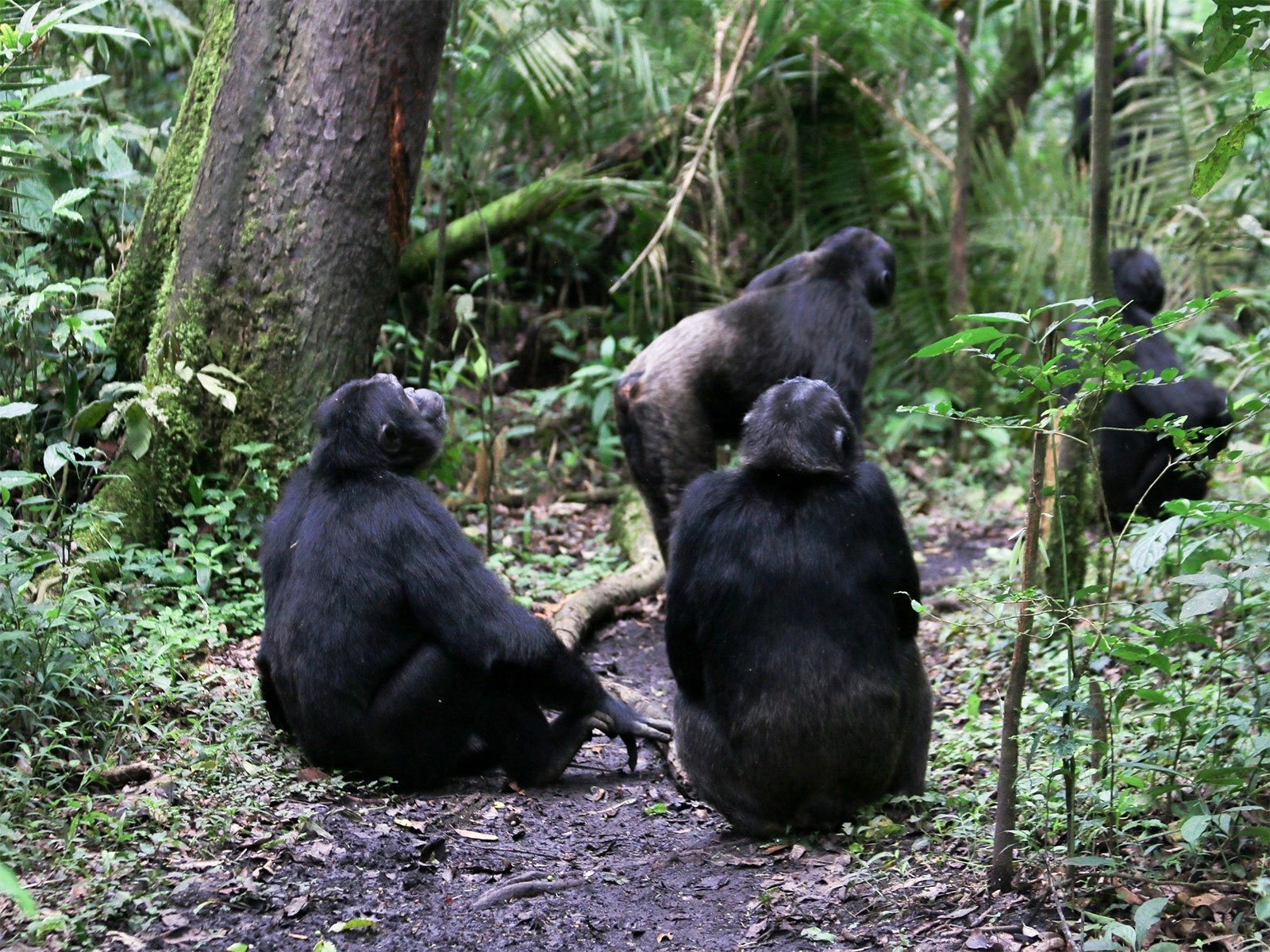
1. Chimpanzee
Chimpanzees are the main
attraction, with over 1,500
individuals in the forest . They are highly intelligent and share
nearly 99% of human DNA . You can see them using tools, communicating with
loud calls, and moving in social groups . The park has habituated groups,
so your chance of a sighting is very high. Watching their behaviour, from
feeding to playing, gives you a real look into their complex daily lives .
2. Red Colobus
Monkey
This is an endangered species, and
Kibale is one of the best places to see them . They spend most of their
time in the upper forest canopy, leaping between branches. Their reddish-brown
colour and long tails make them easy to spot . They are sensitive to human
disturbance, so seeing them feels like a special find. They feed mainly on
young leaves and are usually seen in large, peaceful social groups
3.
Black-and-White Colobus Monkey
These monkeys are easy to recognise with their striking black bodies and long,
flowing white tails . They move gracefully through the trees and are often
seen by visitors . They eat mostly leaves, so they spend a lot of time
resting in the dense forest. Their beautiful appearance makes them a favourite
subject for photographs. They are one of the more commonly seen primates, so
you are very likely to spot them during your walks.
4. Olive Baboon
Olive baboons are the largest primates in Kibale and are often seen on the
ground near park roads or forest edges . They live in large, complex social
troops. Their diet is varied, including fruits, seeds, insects, and small
animals. Watching their social interactions and hierarchy is interesting. They
are more adaptable than some other monkeys, so they are a common sight in open
areas and clearings
5. Red-Tailed
Monkey
Also called Schmidt’s guenon, this is one of the most colourful and vocal
monkeys in the forest . They are often seen in mixed groups with other
species like blue monkeys and red colobus. They are curious and noisy, making
them a favourite for visitors on primate walks. They feed on fruits and insects
in the forest canopy. Their distinctive red tail and cheek pouches make them
easy to identify
6. Blue Monkey
Despite their name, blue monkeys
are not actually blue. Their coats are dark grey, but they can sometimes look
blue in certain light. They are agile and can be shy, but guides know where to
find them in the shadows. They are an important part of Kibale’s biodiversity
and are often seen with other monkey species. They move quickly through the
trees, blending well with the forest. Their calls are a common sound in the forest.
7. L’Hoest’s
Monkey
L’Hoest’s monkeys are known for their secretive nature and distinctive white
beards. They prefer the quiet areas and dense undergrowth of the forest. They
are more terrestrial than many other monkeys and are often seen on the ground.
They have large cheek pouches for storing food. Their elusive behaviour makes
spotting them a rewarding challenge. They are often found in small groups
8. Grey-Cheeked
Mangabey
This is a medium-sized monkey with
shaggy grey fur. They are most active in the morning and late afternoon. They
live in social groups and eat mostly fruit. Kibale
is one of the best places to see them in East Africa. They are often seen
moving through the forest canopy, and their loud calls can be heard from a
distance. They are known for their feeding habits and social structure.
9. Vervet Monkey
In Kibale, vervet monkeys have a smaller population compared to other
areas . They can be identified by their dark face and pale grey body. They
are often seen around lodge areas and forest clearings. They are adaptable and
live in social groups. Their presence adds to the park’s diversity, and they
are easy to observe when they come into open spaces
10. Patas Monkey
The patas monkey is not a common
resident of dense forests but is occasionally spotted in Kibale, especially
near the park edges. They are the fastest runners among primates and are more
typical of savannah areas. Seeing one in the forest is a rare and interesting
sight. They move very quickly on the ground. If you are lucky, you might spot
them in open grasslands at the park's boundary.
11. Bush Baby
(Galago)
Bush babies are small, nocturnal primates. They spend the day sleeping and come
out at night. You can sometimes see their glowing eyes or hear their loud calls
during a night walk. They are agile jumpers and feed on insects and fruit. They
are a completely different experience from the daytime primates. A night walk
is the only way to see them.
12. Potto
The potto is another nocturnal primate that is rarely seen. It is a slow-moving
animal that grips branches firmly . It lives in the trees and is part of
the forest’s hidden wildlife. Birdwatchers or night trekkers might be lucky
enough to see one. Its unusual, deliberate movements make it a special find for
those who stay up late. It is one of the forest’s more mysterious
residents
13. Demidoff’s
Galago (Dwarf Bush Baby)
This is the tiniest primate in the forest. It is nocturnal and very shy .
It lives in the forest thickets, eating insects, fruit, and tree gums. Because
of its small size and secretive habits, it is very difficult to see. Even on
night walks, sightings are rare. Its presence shows how rich and complete the
park's primate community is
Best time to
visit the primates in Kibale National park.
The best time for primate viewing in Kibale is during
the dry seasons from June to August and December to February. Trails stay firm
and dry, making walking easier and less tiring. The forest canopy is less
dense, so you see monkeys and chimps more clearly. However, Kibale works well
all year because primates do not migrate and fruit remains available. The wet
seasons from March to May and September to November bring heavier rain, making
paths slippery and muddy. Treks still run with high success rates, but you walk
slower and get wet. The dry months offer comfort and better photography
conditions, while the wet months give you quieter parks and lower accommodation
prices. If you want good weather without peak crowds, choose late June or early
July.
What to carry
for Primate Trekking in Kibale National park