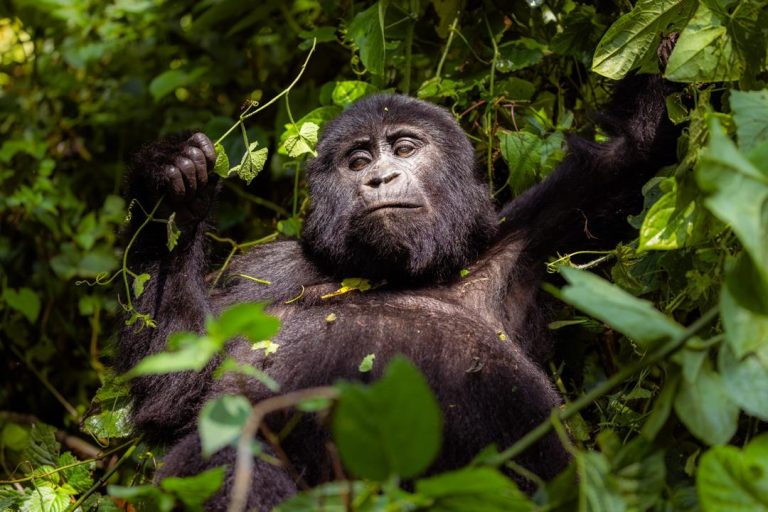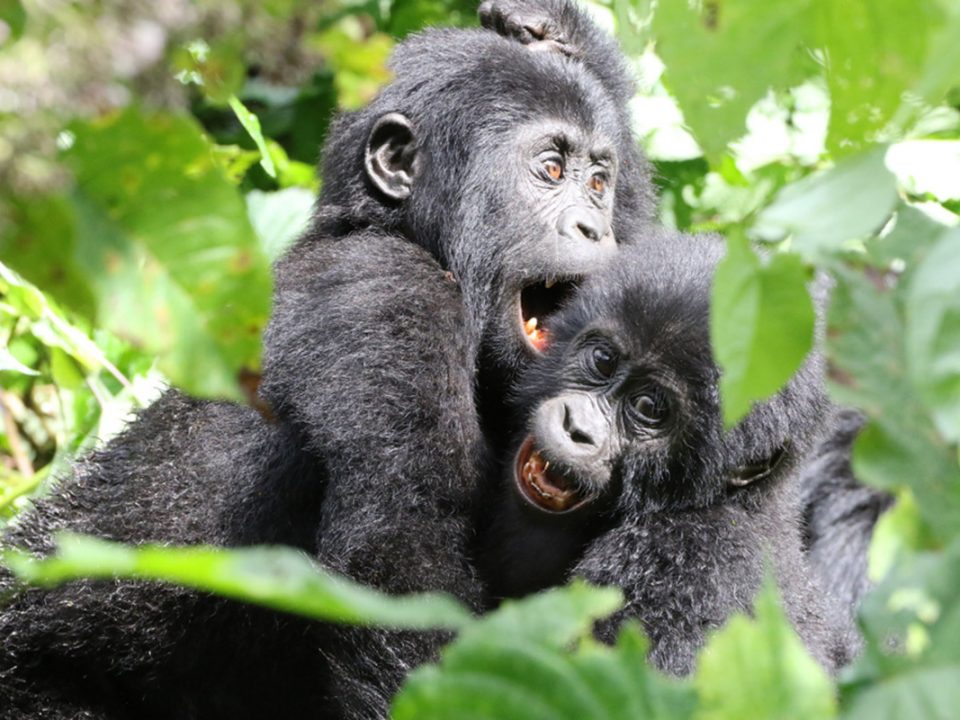

Yes, you are very likely to
see gorillas in Rwanda, but it is not a legal guarantee. The official
success rate exceeds 98% because trackers monitor each gorilla family daily and
know their sleeping spots from the night before. Rangers start at dawn, follow
fresh trails, and use radio communication between teams to pinpoint the group's
location. Most treks find the assigned family within 2–4 hours of hiking.
However, weather, thick vegetation, or a family crossing into Congo can block
your view. The park's permit system gives you a specific family and a one-hour
viewing window, but no refund is issued if they stay hidden. To practically
guarantee your sighting, book permits for two or three consecutive days. That
raises your odds to nearly 100%. So, yes you will almost certainly see gorillas
in Rwanda, but prepare for the small chance of a miss. Accept that risk, and
you will not be disappointed.
1. The Short
Answer is yes you will see the gorillas in Rwanda
Yes, you will the gorillas, Though No tour operator can promise you will see
gorillas in Rwanda. Wild animals move freely, and habituation does not
remove their instinct to avoid humans. Tracking groups sometimes walk for hours
in thick forest, yet gorillas may stay hidden or cross into neighboring Congo.
Even with permits, your chance depends on weather, terrain, and the group’s
mood that day. The official success rate is over 98%, but that figure includes
sightings from a distance. A close view is probable, but not certain. So, if
you plan to see gorillas in Rwanda, prepare for a possible miss. Your permit
fee does not refund if the gorillas are not found. Accept this risk before you
pay.
2. What the 98%
Success Rate Really Means
Rangers report that most treks find
the assigned gorilla family within 2–4 hours. That high number comes from daily
monitoring by trackers who know the group’s overnight nests. However, “found”
can mean spotting a black shape through leaves for 30 seconds. If you want to
see gorillas in Rwanda, understand that quality varies. Some days, the family
stays in open clearings; other days, they rest in dense bamboo. The trackers
work hard, but they cannot control gorilla behavior. Your guide will radio
other teams to share location updates. Still, heavy rain or fog can cancel your
view. So, expect a high chance, but never a warranty.
3. The Role of
Permits and Allocation
You buy a specific permit for one
gorilla family at a set time. That family is habituated to human presence for
one hour daily. This system increases your odds because rangers know their
daily routes. Yet, if that family moves across the park boundary, you cannot
follow them into Congo. To see gorillas in Rwanda, you must stay inside Volcanoes
National Park. If the family crosses, your trek ends early. Some permits
are for less stable groups that roam widely. Ask your agent which family you
book stable groups like Susa or Pablo have larger ranges but are more
predictable. Even so, no permit guarantees a face-to-face meeting.
4. Weather and
Terrain Challenges
Volcanoes National Park sits at 8,000–14,000 feet with steep slopes and muddy
trails. Rain reduces visibility and makes climbing slow. When mist covers the
peaks, trackers lose visual contact with the gorillas. If you slip or tire,
your group may fall behind the lead ranger. To see gorillas in Rwanda, you need
physical fitness and proper waterproof gear. But even fit people miss them when
afternoon storms hit. The best months are June–September and December–February,
but rain can fall any day. Guides will not extend your trek past the permit’s
time window. So, check weather reports, but know that nature does not obey
forecasts.
5. The One-Hour
Rule and Distance
Once located, you get exactly 60 minutes with the gorillas. That time starts
when you first see them, not when you arrive. If trackers find them far from
the trailhead, your walking time cuts into that hour. You might see gorillas in
Rwanda from 10 meters away, or they might stay 30 meters back in brush. The
rangers set a minimum 7-meter distance, but gorillas sometimes approach closer.
Other days, they ignore you and stay behind vines. Your hour passes quickly,
and if the family moves, you move with them but slowly. No extra time is given
for poor views. So, lower your expectation of a long, perfect encounter.
6. Health and
Emergency Cancellations
Gorillas catch human diseases like
flu. If any member shows signs of illness, the whole trek is canceled to
protect the group. This happens more often than operators admit. You may arrive
at the park gate, only to be told the family is under observation. To see
gorillas in Rwanda, you must be healthy and prove it with a temperature check.
If you cough or sneeze, you stay behind. Also, if a gorilla gives birth, the
mother and baby are off-limits for weeks. These rules are strict and
non-negotiable. No refund or replacement trek is offered for health-related
cancellations. That is the reality of conservation-first tourism.
7. Alternatives
If You Miss Them
If you do not see gorillas
in Rwanda on your scheduled day, your options are limited. You cannot
transfer your permit to another day unless you buy a new one. Some operators
offer a second trek at half price if space exists, but that is rare. You can
visit the Dian Fossey tomb or the golden monkeys instead, but that does not
replace the gorilla experience. The park does not guarantee re-tracking. Your
best backup is to book multiple days three permits cost about $4,500 total,
which raises your odds. But even then, each day is independent. So, plan for failure
and have other activities ready. Do not put all your hope on one morning.
8. Final
Verdict, High Chance, No Promise
To be direct: you are not guaranteed to see gorillas in Rwanda. The park states
this clearly on every permit. The 98% figure is a statistical average, not a
contract. Many people do see them, and the experience is real. But some leave
disappointed after hours of muddy hiking. Your money buys access, not results.
The guides are skilled, but they are not magicians. If seeing gorillas in Rwanda
is your only goal, buy two or three trek days. Accept that rain, illness, or
border crossings can ruin any single attempt. Manage your emotions and budget
for risk. That honest view will save you from frustration and let you enjoy the
forest anyway