
A gorilla trekking safari takes you deep into the
rainforest in search of one of Africa’s most fascinating animals, the
Mountain Gorillas. Unlike a traditional game drive where you view wildlife
from a vehicle, gorilla trekking brings you into the forest on foot, creating a
more active and personal wildlife experience. From the early morning briefing
to the moment you finally stand before a habituated gorilla family, every stage
of the trek brings something different. Knowing what the experience involves
helps you prepare well and appreciate the adventure from beginning to end.
Early Morning
Start
Your gorilla trekking adventure begins early in the
morning, usually with breakfast at your lodge before heading to the designated
trekking center. You will register, meet your guides and receive a briefing
before entering the forest. The morning is an important part of the experience
because the trekking team organizes visitors according to the gorilla
families being visited and shares essential information about safety and
responsible behavior. Starting early also gives you plenty of time for the
trek, especially if the gorilla family is located deep inside the forest.
A Briefing
before the Trek
Before setting off, you will receive instructions
from the guides about how to behave in the presence of the gorillas. You will
learn about maintaining the required distance, keeping your voice low, avoiding
sudden movements and following the instructions of your guide throughout the
encounter. The briefing also covers health considerations because mountain
gorillas are susceptible to human illnesses. Paying attention at this stage is
important because the rules are designed to protect both visitors and the
gorillas while allowing you to enjoy the experience responsibly.
Hiking through
the Rainforest
The journey takes you into a thick tropical forest
where the surroundings become part of the adventure. You may walk along narrow
paths, climb steep slopes, cross muddy sections and move through dense
vegetation as you follow the trackers. The terrain varies depending on the
location of the gorilla family, so you should be prepared for both easy and
challenging sections. Along the way, you can enjoy the sounds of birds, beautiful
plants, butterflies and the atmosphere of the forest. The hike is not simply a
way of reaching the gorillas; it is an opportunity to explore their natural
world.
Several Hours on
the Trail
The duration of a gorilla trek cannot be predicted
precisely because gorillas move freely through the forest. Sometimes a family
may be found after a relatively short walk, while on another day the trek may
take several hours. The trackers use information about the gorillas' previous
movements to locate them, but the animals can travel considerable distances.
This uncertainty is part of the excitement because you never know exactly when
the trackers will announce that the gorillas are nearby. A flexible attitude
and patience will help you enjoy the experience.
A Physically
Demanding Adventure
Gorilla trekking requires a reasonable level of
fitness because you may spend hours walking over uneven and sometimes steep
terrain. The forest can be slippery after rain and thick vegetation can make
some sections more difficult to navigate. However, the guides generally
maintain a manageable pace and allow breaks when necessary. Visitors who may
find carrying their belongings difficult can hire porters to carry their bags
and provide assistance on challenging sections. Wearing comfortable hiking
boots and suitable clothing can make a significant difference during the trek.
Experienced
Guides and Trackers
Guides and trackers who understand the forest and
the behavior of the gorilla
families will accompany you. Trackers normally move ahead to locate the
animals by following signs such as nests, feeding areas and other evidence of
their movements. Once the family is located, the guides help visitors approach
appropriately and explain the behavior of the gorillas. Their knowledge adds depth
to the experience because you learn about the family you are visiting, the
forest ecosystem and the conservation work-taking place in the area.
The First Sight
of the Gorillas
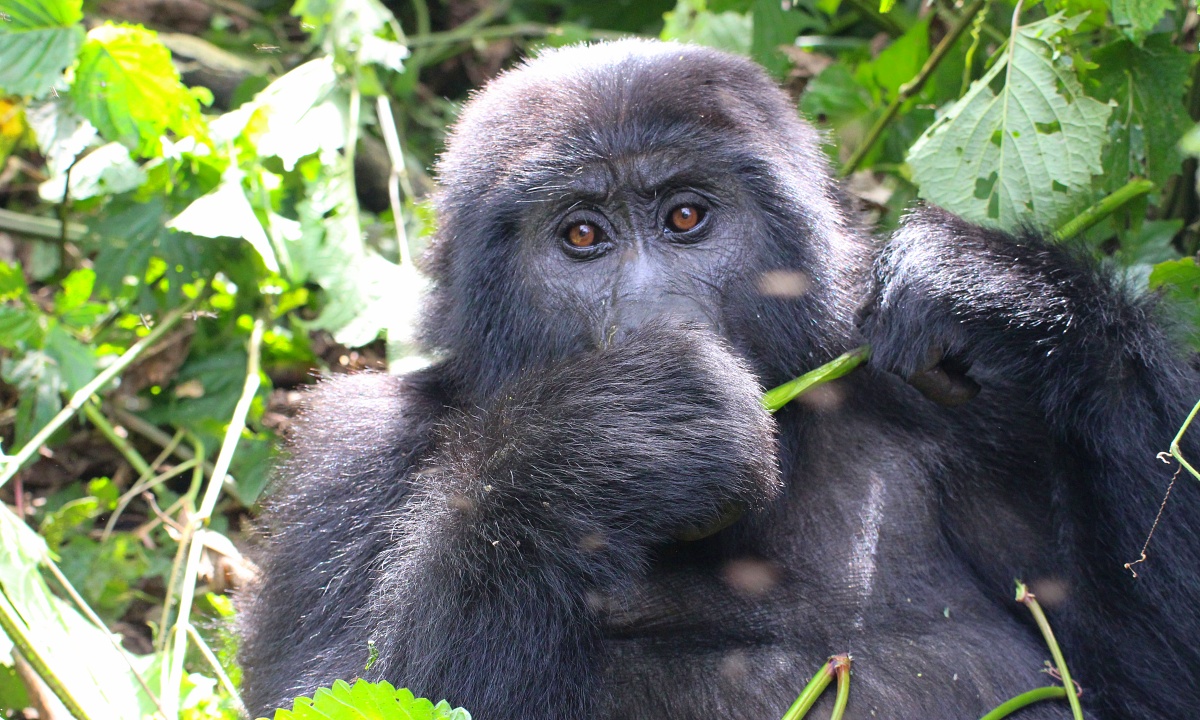
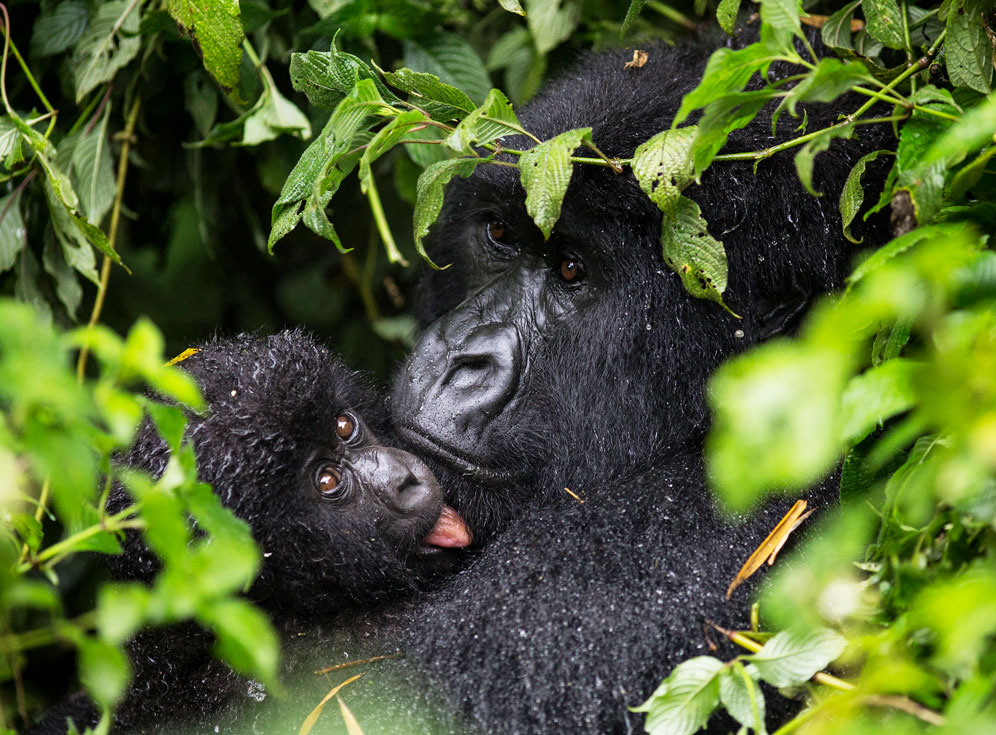
After following the forest trails, there comes a
moment when the trackers locate the gorilla family. Your first sighting may be
a silverback resting among the vegetation, a mother feeding her infant or young
gorillas playing nearby. Because the encounter takes place in the natural
forest, the experience feels very different from seeing an animal in captivity
or from a safari vehicle. The anticipation built during the hike makes that
first glimpse particularly exciting, and many visitors find themselves quietly
taking in the moment before reaching for their cameras.
Time with a Habituated
Gorilla Family
Once the family has been located, you will spend a
limited period observing them while following the instructions of your guides.
The gorillas may be feeding, resting, playing, grooming one another or moving
through the forest. You will have the opportunity to watch their social
behavior and see the relationships between different members of the group.
Since the animals are habituated to controlled human presence, visitors can
observe them at close range while maintaining the required distance. The
encounter provides a rare opportunity to see mountain gorillas behaving
naturally in their own environment.
Different
Gorilla Personalities
One of the fascinating aspects of gorilla
trekking is seeing that each gorilla has its own behavior and personality.
Young gorillas can be playful and energetic, while adults may spend much of
their time feeding or resting. The dominant silverback often has an imposing
presence and may be seen watching over the group. You may also observe
grooming, feeding, communication and interactions between adults and young
gorillas. These small details make the experience more than simply checking a
gorilla sighting off your travel list.
Strict
Conservation Rules
The gorilla encounter is carefully regulated to
protect the animals and visitors. You are required to follow instructions from
the guides, maintain the recommended distance, avoid touching the gorillas and
refrain from feeding them. Flash photography is not allowed, and visitors are
expected to keep noise to a minimum. Anyone who is feeling unwell should inform
the trekking team because mountain gorillas can be vulnerable to human
diseases. These measures ensure that tourism does not unnecessarily disturb the
animals or expose them to avoidable health risks.
Changing Forest
Weather
Weather conditions can change quickly in the gorilla
trekking areas, so you should be prepared for sunshine, rain, mud and cooler
temperatures. Rain can make trails slippery and wet, while the dense vegetation
may remain damp even after the rain stops. A waterproof jacket, sturdy hiking
boots and waterproof protection for your backpack and camera are therefore
useful. Being prepared for changing weather allows you to concentrate on the
experience rather than worrying about getting wet or damaging your belongings.
Other Wildlife
and Forest Life
Although the gorillas are the main attraction, there
is plenty to see and hear throughout the forest. The trekking areas support
numerous bird species, butterflies, monkeys, trees, ferns and other plants.
Your guide can help identify different species and explain their importance to
the forest ecosystem. Even when you are still searching for the gorillas, the
surrounding biodiversity keeps the trek interesting. For nature lovers and bird
enthusiasts, the forest provides an additional experience beyond the main
gorilla encounter.
Local Porters
and Community Support
Hiring a local porter can make your trek easier
while also providing direct economic benefits to people living around the
protected areas. Porters can carry your backpack, water, camera equipment and
other belongings, allowing you to concentrate on navigating the trail. Some can
also provide assistance on difficult sections where the terrain is steep or
slippery. Choosing a porter is therefore not only practical but also a simple
way of contributing to local livelihoods and making your visit more beneficial
to the surrounding community.
Cultural
Experiences around the Forest
A gorilla trekking safari can be extended beyond the
national park with cultural and community experiences. Depending on your
itinerary, you can visit nearby communities, learn about local traditions,
experience traditional performances, purchase locally made crafts or take part
in community walks. These activities give you an opportunity to understand the
people living around the gorilla habitat and see how tourism contributes to
local livelihoods. Adding a cultural experience can make your safari more
complete by bringing together wildlife, nature and local culture.
A Tired but
Rewarding Return
After several hours in the forest, you may return to
your lodge feeling physically tired but satisfied with what you have
experienced. Muddy shoes, tired legs and wet clothing can be part of the
journey, especially after a challenging trek. Once you return, you can relax,
enjoy a meal and reflect on the experience. The physical effort becomes part of
the story because you did not simply arrive at a viewing point; you walked
through the forest and worked with the trackers to find the gorillas.
Memories That
Last Beyond the Safari
The experience often stays with visitors long after
they have left the forest. It may be the sight of a silverback watching over
its family, a young gorilla playing among the vegetation, the sound of the forest
or the excitement of finally locating the group after hours of hiking. Unlike
wildlife encounters that can be observed from a distance, gorilla trekking
places you directly within the forest environment. The combination of hiking,
anticipation, close wildlife observation and natural surroundings makes it an
experience that can become one of the main highlights of an African safari.
A Safari That
Goes Beyond Gorilla Trekking
Gorilla trekking can also be combined with other
experiences to create a wider safari. Visitors can add chimpanzee trekking in
Kibale National Park, game drives in Queen Elizabeth National Park, a boat
cruise along the Kazinga Channel, golden monkey trekking in Mgahinga or
cultural experiences around the gorilla destinations. This allows you to
experience rainforest, primates, savannah wildlife, waterways and local
communities within one journey. As a result, gorilla trekking does not have to
be a standalone activity but can become one of the major highlights of a
diverse African safari.