
1. Game Drives
Game drives are the quintessential
safari activity in Lake
Mburo National Park, offering exceptional opportunities to spot the park's
abundant wildlife. The best times are early morning and late afternoon when
animals are most active and temperatures are cooler. As you traverse the park's
network of game tracks, you'll encounter large herds of zebras, impalas, and
elands grazing across the rolling savannah. Buffaloes and the rare Rothschild's
giraffes are also commonly sighted. The park's relatively small size and open
terrain mean sightings are frequent and rewarding. With a knowledgeable guide,
you'll learn about animal behavior and ecology, making each drive both
educational and thrilling. Night game drives are also available, adding the
excitement of spotting nocturnal species like leopards and hyenas.
2. Night Game
Drives
Night game drives are a special privilege in Lake Mburo, as the park is one of
only a few in Uganda that permits after-dark
wildlife viewing. Armed with powerful spotlights, experienced guides lead
you into the nocturnal world, revealing creatures that remain hidden during
daylight hours. The elusive leopard is a top target, often spotted hunting
along the park's edges. You'll also encounter spotted hyenas, civets, genets,
and the endearing bush babies leaping between branches. The African wildcat and
various owl species add to the nighttime spectacle. These two-hour excursions
offer a completely different safari experience, immersing you in the mysterious
sounds and sights of the African bush after sunset, and often yielding
thrilling wildlife encounters.
3. Boat Safaris
A boat safari on Lake Mburo
provides a serene yet exciting perspective, allowing you to explore the park's
aquatic ecosystem. Gliding across the calm waters brings you face-to-face with
pods of hippos, their enormous heads surfacing with snorts, and large Nile
crocodiles basking on the muddy banks. Wildlife comes to the water's edge to
drink, offering close views of buffalo, zebras, and antelopes. The lake is also
a birdwatcher's paradise, with opportunities to spot the rare shoebill stork,
African fish eagles, kingfishers, and herons. The two-hour cruise is
particularly magical during sunset, when the golden light illuminates the
landscape and the sounds of nature create a peaceful, unforgettable atmosphere.
4. Guided
Walking Safaris
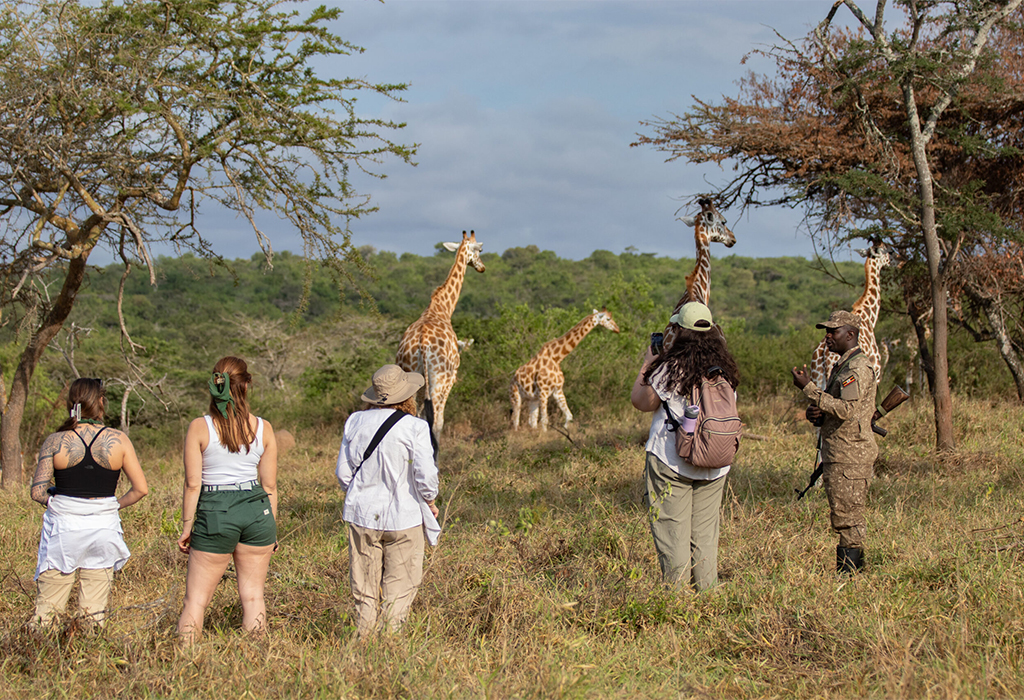
Walking safaris in Lake Mburo are a truly immersive experience, and the park is
one of only two in Uganda where this activity is permitted. Accompanied by an
armed ranger guide, you venture into the bush on foot, experiencing the
wilderness at a slower, more intimate pace. This allows you to appreciate the
smaller details often missed on a game drive animal tracks, fresh dung,
insects, and medicinal plants used by local communities. A popular route leads
to the natural salt lick, where you can observe wildlife from a viewing
platform. The
walk up Kazuma Hill rewards you with panoramic views of the entire park.
These safaris offer a profound connection to nature and a genuine sense of
adventure.
5. Horseback
Safaris
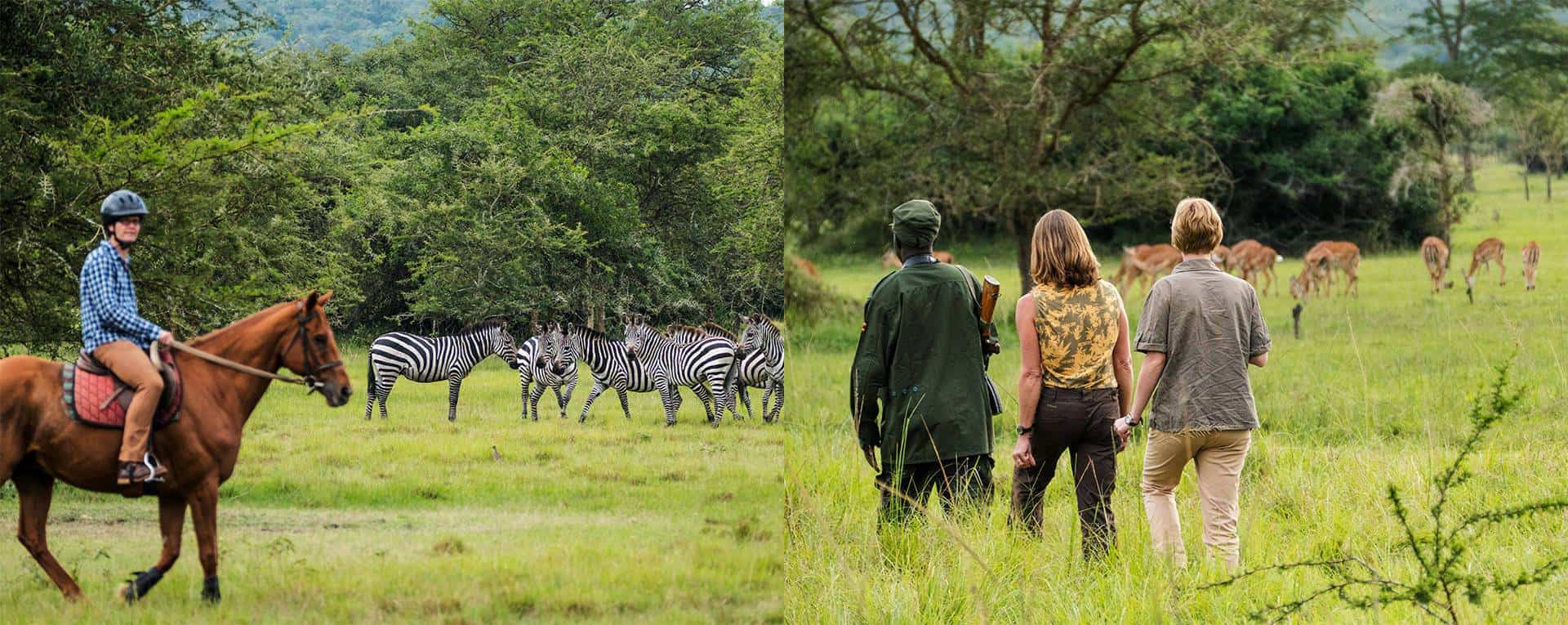
Horseback safaris offer an extraordinary way to experience Lake Mburo's
wildlife, providing a quiet and intimate encounter that is unmatched by
vehicle-based tours. Animals perceive a horse and rider as a single,
non-threatening entity, allowing you to approach zebras, giraffes, and
antelopes at remarkably close range without alarming them. Operated primarily
by Mihingo Lodge, these safaris cater to riders of all skill levels, from
beginners to experienced equestrians. Guided excursions range from one-hour rides
to half-day adventures, traversing the savannah and woodlands. The rhythmic
movement and elevated vantage point create a unique bond with nature, making
this one of the most memorable activities the park has to offer.
6. Cycling and
Mountain Biking
Cycling safaris are a unique offering in Lake Mburo, as this is the only
national park in Uganda that permits mountain biking. Guided
bike tours follow wildlife tracks through the park's relatively flat valley
bottoms, offering an active and eco-friendly way to explore. The moderate pace
allows for detailed wildlife observation, with zebras, impalas, and warthogs
often encountered along the trails. You can cover more ground than walking
while remaining quiet enough not to disturb animals. Bikes are typically
available for hire at the main gate or through lodges. The experience combines
physical activity with adventure, as you pedal through stunning landscapes,
feeling the fresh air and the thrill of being fully immersed in the wilderness.
7. Birdwatching
Lake Mburo is a premier birdwatching destination, boasting an impressive
checklist of over 350 recorded species. The park's diverse habitats including
wetlands, acacia woodlands, and savannah support a wide variety of both
resident and migratory birds. Key species include the elusive African finfoot,
the striking papyrus gonolek, the majestic southern ground hornbill, and the
rare shoebill stork found in the swampy areas. Woodland species such as the
red-faced barbet and Nubian woodpecker are also common. The best birding occurs
during the wet seasons (March–May and October–November) when migratory birds
arrive. With experienced guides or local birding experts, you can spot and
identify a remarkable diversity of avian life.
8. Cultural
Encounters
Cultural encounters add a rich human dimension to your Lake
Mburo safari, offering insights into the traditions of the Banyankole and
Bahima communities. These pastoralist people are renowned for their iconic
Ankole long-horned cattle, which are central to their way of life. Visits to
local homesteads allow you to learn about cattle herding, milk processing, and
traditional ceremonies. You can participate in daily activities, sample local
cuisine, and listen to stories passed down through generations. The Igongo
Cultural Centre, located near the park gate, provides additional historical
context through its museum exhibits. These interactions support community-based
tourism initiatives, ensuring that your visit benefits local people while
enriching your understanding of the region's heritage.
9. Sport Fishing
Sport fishing is a relaxing yet
rewarding activity available on designated sections of Lake Mburo, particularly
around the Mazinga area. The lake is home to several fish species, most notably
tilapia and lungfish, providing a peaceful angling experience set against the
backdrop of the park's scenic shores. A fishing permit is required, costing
approximately US$15 per person, and you must bring your own equipment or
arrange it through your lodge. Fishing trips are typically conducted in the
morning or late afternoon, lasting a few hours. While success is not
guaranteed, the tranquility of the surroundings and the chance to catch your
own lunch make this a delightful activity for those seeking a slower-paced
adventure.
10. Visiting the
Salt Licks
Visiting the natural salt licks in
Lake Mburo is a fascinating activity that offers exceptional wildlife viewing
opportunities. The park's mineral-rich deposits attract a variety of animals
that come to supplement their dietary needs, especially during the dry season.
Guided tours lead you to viewing platforms strategically positioned near these
salt licks, where you can observe wildlife at close range. Common visitors
include zebras, buffaloes, and several antelope species, often arriving in
large numbers. The best viewing times are early morning and late afternoon when
animals are most active. This activity provides a unique insight into animal
behavior, as you watch them compete for access to the essential minerals, and
is a perfect complement to traditional game drives.
Best time for
activities in Lake Mburo National park
The best time for activities in Lake Mburo National
Park depends on the experience you seek . For the most rewarding wildlife
viewing, game drives, and walking safaris, the dry seasons from June to
September and December to February—are ideal. During these months, animals
concentrate around permanent water sources, and the trails are firm and
accessible . Conversely, if birdwatching is your priority, visit during
the wet seasons of March to May and October to November when
migratory species arrive and the landscape is lush and green . The park is
accessible year-round, though road conditions during heavy rains can be
challenging
How to get there
for activities in Lake Mburo National park
Getting to Lake Mburo National Park is relatively
straightforward, as it's the closest savannah park to Kampala, located about
240 kilometers (150 miles) west of the capital . The most common route is by
road via the well-paved Kampala–Masaka–Mbarara highway, a drive that takes
approximately 3.5 to 4 hours, entering through the main Sanga Gate . For
convenience and game viewing, a private 4x4 safari vehicle is highly
recommended, especially during the rainy season; however, public transport is
an option, with buses and taxis going to Sanga or Lyantonde, from where you can
take a boda-boda (motorcycle taxi) to the park gate . For those seeking a
quicker option, chartered flights are available from Entebbe International
Airport or Kajjansi Airfield to Mbarara Airstrip, followed by a short 30-minute
transfer to the park
Booking to
Uganda safari with Zoophilist adventures and safaris
Booking a Uganda safari with Zoophilist Adventures
and Safaris ensures a well-organized, authentic, and value-driven experience
across the country’s top wildlife destinations. As a licensed operator, they
handle all logistics from securing gorilla trekking permits and park fees to
arranging accommodations and transfers saving you the stress of planning. Our
itineraries are tailored to your interests, whether gorilla trekking in Bwindi,
chimpanzee tracking in Kibale, or game drives in Queen Elizabeth and Murchison
Falls. With professional guides, you enjoy safe, insightful adventures that
connect you to Uganda’s diverse wildlife and cultures, while also supporting
conservation and local communities