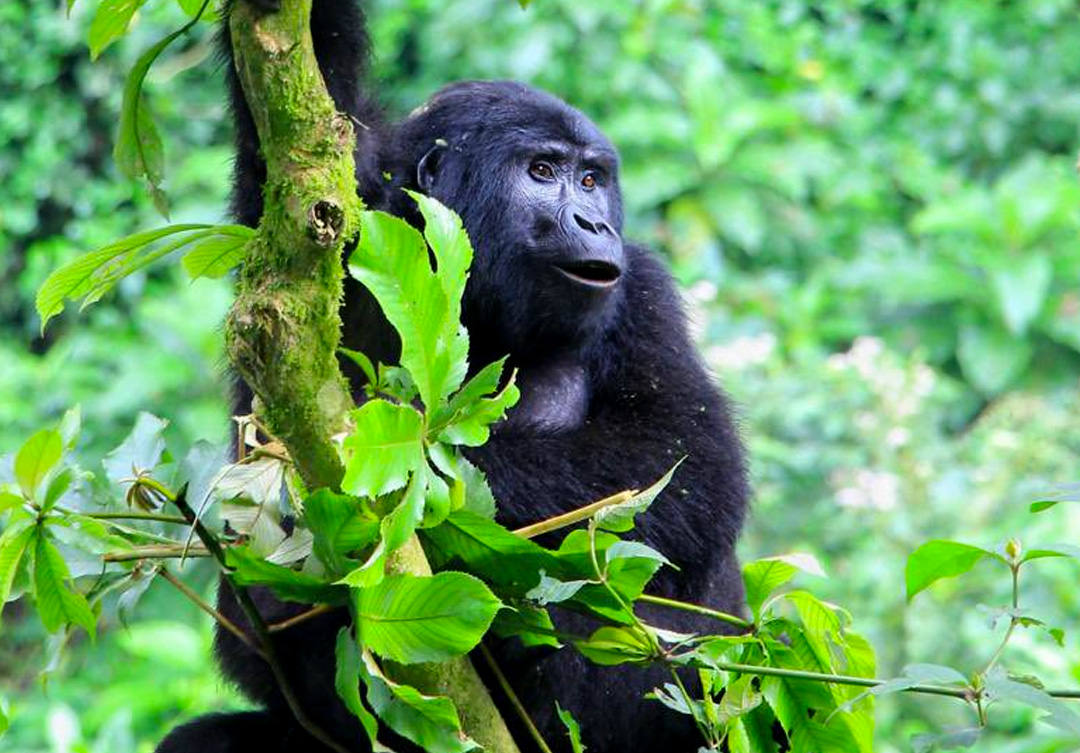

Bwindi Impenetrable National Park in southwestern
Uganda is home to roughly half of the world's mountain gorillas, with 23
habituated groups available for trekking. The park has four access sectors:
Buhoma, Ruhija, Rushaga, and Nkuringo. You can get there by flying from Entebbe
to airstrips at Kihihi or Kisoro, or by driving from Kampala (8–10 hours) or
Kigali in Rwanda (4–6 hours). The Rwanda route is shorter and often preferred
by travelers. Gorilla trekking permits cost $800 for foreign non-residents. The
terrain is steep and muddy, so you need a 4x4 vehicle and good physical
fitness. Dry seasons from June to September and December to February are the best
travel times.
1. Flying from
Entebbe or Kampala (Fastest Option)
The quickest way to reach Bwindi is by taking a
domestic flight from Entebbe International Airport or Kajjansi Airstrip near
Kampala . Domestic airlines like Aerolink Uganda and Bar Aviation operate
daily scheduled flights that take roughly 1 to 1.5 hours . These flights
land at either Kihihi Airstrip (serving the northern Buhoma and Ruhija sectors)
or Kisoro Airstrip (serving the southern Rushaga
and Nkuringo sectors) . From the airstrip, your lodge or tour operator
will arrange a 4x4 transfer, which takes an additional 1 to 2 hours to reach
your specific park entrance . This option costs more but saves you a full
day of driving, making it a good choice if you have limited time . Book
flights well in advance, especially during the dry season, and confirm which
sector your permit covers so you land at the correct airstrip .
2. Driving from
Kampala or Entebbe (Budget-Friendly)
For a more budget-friendly option, you can drive
from Kampala or Entebbe, covering about 460 to 500 kilometers . The trip
takes roughly 8 to 10 hours by road, following the Kampala–Masaka–Mbarara–Kabale
highway . The road is paved for most of the route until you reach Kabale,
after which the final 80 to 120 kilometers to Bwindi's sectors are on unpaved,
winding mountain roads . This last stretch can take 2 to 4 hours depending
on your sector . A 4x4 vehicle is essential, especially during the rainy
seasons when these roads get slippery and muddy . Renting a vehicle or hiring
a driver gives you flexibility to stop at places like the Equator for photos
and meals . You can also take public buses from Kampala to Kabale and then
arrange a private transfer for the final segment .
3. Driving from
Kigali, Rwanda (Shortest Road Route)
Many travelers use Kigali International Airport as
their arrival point because it is significantly closer to Bwindi than
Kampala . The drive from Kigali to the southern sectors of Bwindi
(Rushaga and Nkuringo) takes about 4 to 5 hours, while the northern sectors
(Buhoma) take about 6 hours . You will cross the border at either Cyanika
or Katuna, which are One-Stop Border Posts, meaning immigration for both
countries is handled in one building and usually takes about 30–45
minutes . This route cuts your road travel time by more than half compared
to coming from Kampala . You do need a visa for both countries, but you
can get the East African Tourist Visa to cover both Rwanda and Uganda .
This is a good choice for a compact trip, as you can reach your lodge in the
afternoon and be ready for the next morning's briefing.
4. Choosing
Which Route Based on Your Gorilla Trekking Sector
Your Bwindi gorilla trekking permit is for one of
the four sectors: Buhoma, Ruhija, Rushaga, or Nkuringo. The sector determines
which entrance you use and therefore which route is most practical .
Buhoma and Ruhija are in the north and are best reached via Kihihi Airstrip or
by road from Kampala via Kabale . Rushaga and Nkuringo are in the south
and are closest to the Rwanda border and Kisoro Airstrip . If you are
flying into Kigali, the southern sectors (Rushaga and Nkuringo) offer the
shortest drive of about 4–5 hours, making them the best choice for a Kigali
start . If you are flying from Entebbe or driving from Kampala, the
northern sectors (Buhoma and Ruhija) are the most straightforward to
access .
5. Additional
Travel Considerations
When planning your trip, keep in mind that the dry
seasons (June–September and December–February) are the best times for travel
because road conditions are better and flights are less likely to be delayed by
weather . During the rainy seasons, dirt roads can be slippery and flights
can be delayed or affected by poor visibility . Road conditions in the
"last mile" to the park entrances are especially rough and require a
capable 4x4 vehicle . Also, avoid driving at night, as mountain roads have
sharp turns, steep drops, and poor lighting . Always build buffer time
into your schedule for potential border delays, especially on the popular
Katuna route which handles heavy truck traffic, and aim to cross borders before
10:00 AM to avoid queues
Best time to go
visit Bwindi for gorilla trekking
The best time to visit Bwindi for gorilla
trekking is during the two dry seasons: from June to September and December
to February. During these months, there is less rainfall, so the forest trails
are drier and less slippery. This makes hiking easier and less tiring,
especially on the park's steep slopes. The drier ground also means that the
gorillas are easier to find, as they stay at lower altitudes where food is more
available. You are more likely to have a successful trek with shorter walking
times. That said, Bwindi is a rainforest, so it can rain at any time of the
year. You should always come with waterproof clothing and strong boots. The
rainy seasons from March to May and October to November have heavier downpours,
making trails muddy and much more challenging to walk. Some lodges also offer
lower rates during these wetter months.
Top activities
to combine with gorilla trekking in Bwindi
After your gorilla trek, consider relaxing at Lake
Bunyonyi, which is only a 2–3 hour drive away. The lake is safe for swimming,
and you can take a canoe or kayak to explore its 29 islands. For bird lovers,
Bwindi itself offers guided walks along trails like the Mubwindi Swamp trail,
where you can spot many of the park's 350 bird species. You can also take a
nature walk to the Munyaga Waterfall near Buhoma, a short and easy hike that
lets you see monkeys and forest birds. For a cultural activity, visit the Batwa
community to learn about their forest life through traditional dances,
fire-making, and storytelling. If you have more time, combine your trip with a
safari to Queen Elizabeth National Park for classic game drives, or to
Murchison Falls for boat cruises and wildlife viewing