
Uganda is one of the few destinations in the world
where visitors can come face to face with endangered mountain gorillas in their
natural habitat. Gorilla trekking takes place in two protected areas: Bwindi
Impenetrable National Park and Mgahinga Gorilla National Park. Together,
these forests form part of the larger Virunga-Bwindi ecosystem, home to a
significant population of mountain gorillas. One of the most interesting parts
of planning a gorilla safari in Uganda is learning about the different gorilla
families. Each family has its own name, members, history and territory. Some
families are well known for particular individuals, while others have
fascinating stories of leadership, births, movements and changes in group size.
Gorilla Families
in Bwindi Impenetrable National Park
Bwindi Impenetrable National Park has several
habituated gorilla families available for trekking. These families are
distributed across four main trekking sectors: Buhoma, Ruhija, Rushaga and
Nkuringo. The family available to you depends largely on the sector where your
trek is booked.
Mubare Gorilla
Family
Mubare is one of the oldest habituated gorilla
families in Bwindi and is associated with the Buhoma sector. The family was
named after Mubare Hill, where the group was first discovered by researchers. The
group has experienced several changes over the years, including changes in
leadership and membership. Like many mountain gorilla families, its size and
composition have changed naturally through births, deaths, transfers and the
formation of new groups. Mubare is particularly interesting for visitors who
want to learn about the history of gorilla tourism in Bwindi because it was
among the first gorilla families to become available for trekking.
Habinyanja
Gorilla Family
Habinyanja is another well-known gorilla
family found in the Buhoma sector. The name comes from a local word meaning
a place with water, reflecting the area where the family was first observed. The
family has a long history of changes in leadership and membership. At different
times, it has had a number of silverbacks sharing responsibilities within the
group. Visitors tracking Habinyanja have the opportunity to observe
interactions between adults, younger gorillas and infants as the group moves
through the forest.
Rushegura
Gorilla Family
Rushegura is another habituated family in the Buhoma sector. The group was formed after a split from the larger Habinyanja family, making its history a good example of how gorilla groups naturally change over time. The family is often associated with a relatively calm trekking experience, although the difficulty of any trek depends on where the gorillas have moved on the day. As with all gorilla families, the group may travel through thick vegetation and uneven terrain in search of food and suitable resting areas.
Oruzogo Gorilla
Family
Oruzogo is found in the Ruhija sector of Bwindi. The
family became well known among researchers and visitors because of its active
social behavior and the presence of young gorillas. Oruzogo has experienced
births and changes in membership over the years. Watching the younger gorillas
play, climb and interact with adults is often one of the highlights of visiting
this family.
Bitukura Gorilla
Family
Bitukura is another famous gorilla family in the
Ruhija sector. The group takes its name from the Bitukura River, an important
geographical feature in the area. The family has been habituated for gorilla
tourism and research, giving visitors an opportunity to observe the natural
social structure of mountain gorillas at close range. Bitukura has also
experienced changes in membership and leadership over time, as naturally
happens within gorilla communities.
Kyaguriro Gorilla
Family
Kyaguriro is based in the Ruhija sector and has a
particularly important history in gorilla research. For many years, the group
was primarily associated with research activities rather than ordinary tourist
trekking. The family has provided researchers with valuable opportunities to
study mountain gorilla behavior, social relationships and group dynamics. Its
history makes Kyaguriro an important part of Bwindi's conservation story.
Nshongi Gorilla
Family
Nshongi is associated with the Rushaga
sector in southern Bwindi. The family was once known as one of the larger
habituated groups in the area before it experienced changes that resulted in
the formation of other groups. The history of Nshongi demonstrates how gorilla
families are not fixed communities. When groups become large or social
relationships change, some members may leave and establish or join other
groups.
Mishaya Gorilla
Family
Mishaya was formed when the silverback Mishaya left
the Nshongi group with several females and established his own family. The
group became known for its strong silverback leader. Although the original
Mishaya group no longer exists in the same form, its story remains important
when discussing the history of gorilla families in Rushaga. Gorilla groups may
disappear, merge or change significantly as their members move between
communities.
Bweza Gorilla
Family
Bweza is another gorilla family associated with
Rushaga. The group originated from changes within the Nshongi family and later
became an independent habituated group. Tracking Bweza gives visitors a chance
to observe the complex social relationships that shape mountain gorilla
communities. Families may include a dominant silverback, other adult males,
females, juveniles and infants.
Busingye Gorilla
Family
Busingye is found in the Rushaga sector. Its name
means "peaceful" in the local language. The family is known for
having experienced changes in membership and leadership over time. Like other
gorilla families, its composition is influenced by births, deaths, transfers
and the formation of new groups.
Kahungye Gorilla
Family
Kahungye is another family historically associated
with the Rushaga
sector. The group was once large before some members separated to form
another family. This is a good example of the natural process of group fission
in mountain gorillas. When a gorilla community becomes large, social changes
may result in members leaving and forming new groups under different
silverbacks.
Nkuringo Gorilla
Family
Nkuringo is one of the best-known gorilla families
in southern Bwindi and is associated with the Nkuringo sector. The family takes
its name from the local area. The group has attracted attention because of its
social history and the challenging mountainous landscape where it lives.
Visitors trekking in the Nkuringo sector may encounter steep slopes and dense
forest, making the experience physically demanding but highly rewarding.
Christmas
Gorilla Family
Christmas is a habituated gorilla family associated
with the Nkuringo sector. The family takes its name from Christmas, a
silverback who became the group's leader. The family provides another
opportunity to observe the complex social structure of mountain gorillas. Its
members spend much of their day feeding, resting, travelling and interacting
with one another within their forest habitat.
Bushaho Gorilla
Family
Bushaho is another family found in the Nkuringo
area. The group has an interesting history involving members that separated
from the Nkuringo family. Like other gorilla communities, Bushaho has
experienced changes in its membership over time. Tracking the group offers
visitors an opportunity to see how gorilla families adapt to changing social
relationships within the forest.
Gorilla Families
in Mgahinga Gorilla National Park
Mgahinga Gorilla National Park is Uganda's smallest
national park and forms part of the larger Virunga ecosystem. The park is home
to the Nyakagezi Gorilla Family, which has a particularly interesting history.
Nyakagezi
Gorilla Family
Nyakagezi is the main habituated gorilla family associated with Mgahinga Gorilla National Park. The family is named after the Nyakagezi area where it was traditionally found. The group became famous for its movements between Uganda, Rwanda and the Democratic Republic of Congo within the Virunga ecosystem. Gorilla groups naturally move across large forest landscapes when searching for food and suitable habitat, although the current management and trekking situation is monitored by conservation authorities. Today, visitors to Mgahinga have the opportunity to trek to the habituated group when it is available for tourism. The experience provides a different setting from Bwindi, with the dramatic Virunga volcanoes forming part of the surrounding landscape.
How Gorilla
Families Are Organized
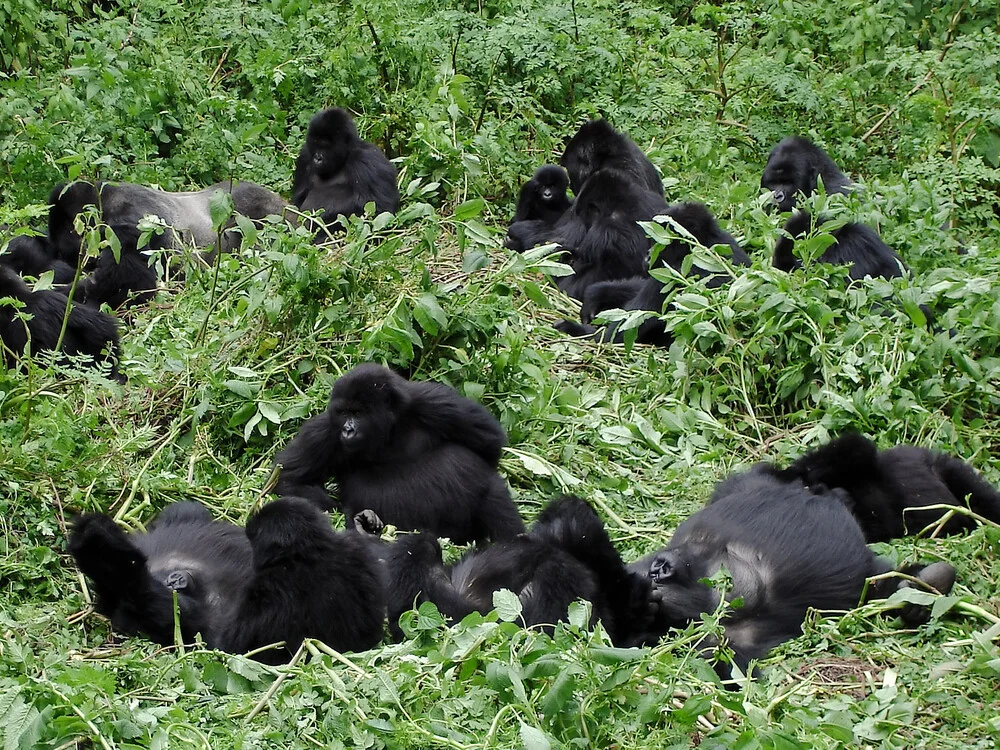
A mountain gorilla family is usually made up of
several individuals with different roles and relationships. A dominant
silverback normally leads the group and protects its members, while other
silverbacks may remain within the family and have their own relationships with
females and younger gorillas. Females are an important part of the group and
may move between families during their lives. Juveniles and infants remain
close to adults and gradually learn social behaviors through interaction with
other members.
Gorilla families are not permanent in size or
structure. Births increase the number of members, while deaths, transfers and
the formation of new groups change the composition. A family that has a
particular number of gorillas today may have a different composition several
years later.
Why Gorilla
Families Are Important for Conservation
Gorilla families play an important role in mountain
gorilla conservation. Habituation allows researchers and visitors to spend
controlled time near selected groups while conservation authorities monitor
their health, behavior and movements. Gorilla tourism generates revenue that
supports conservation and provides employment and income opportunities for
people living around protected areas. Rangers, trackers, guides, porters and accommodation
providers all contribute to the tourism system surrounding gorilla trekking.
The money generated from tourism also helps support
the continued protection of gorilla habitat. Responsible tourism therefore
connects the visitor experience with wider conservation efforts.
The gorilla families of Uganda are more than groups
given different names. Each family has its own history, social relationships
and changing membership, making every trek a unique opportunity to learn about
mountain gorillas. From the historic Mubare, Habinyanja and Rushegura families
in Buhoma to the families of Ruhija, Rushaga and Nkuringo, Bwindi offers a wide
range of gorilla experiences. Mgahinga, with its Nyakagezi family and
spectacular volcanic landscape, provides another important setting for gorilla
tourism in Uganda.
Understanding these families before your safari
makes the trekking experience even more meaningful because you are not simply
walking into the forest to see gorillas, you are visiting a living community
with its own social structure and history.