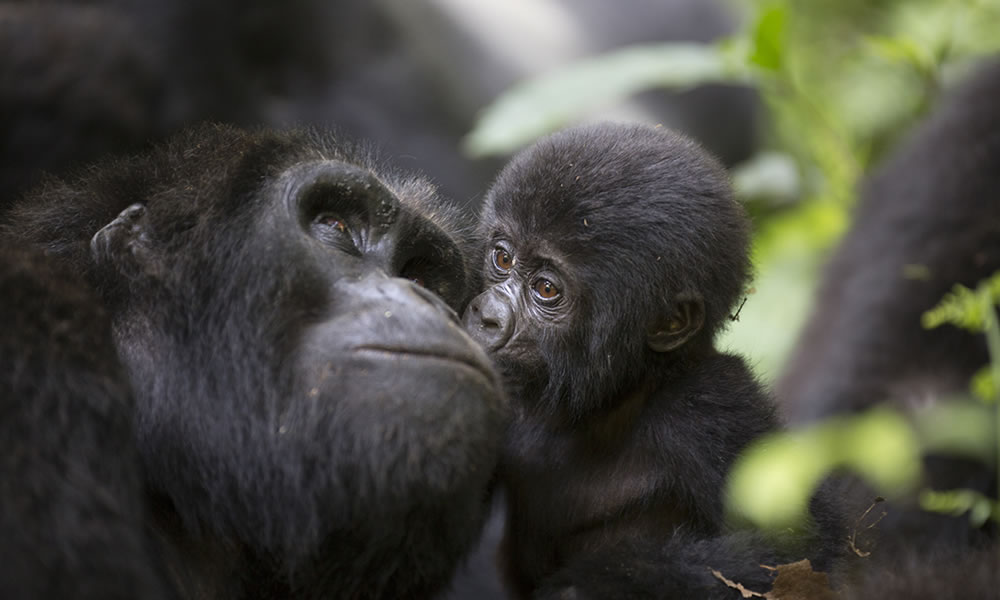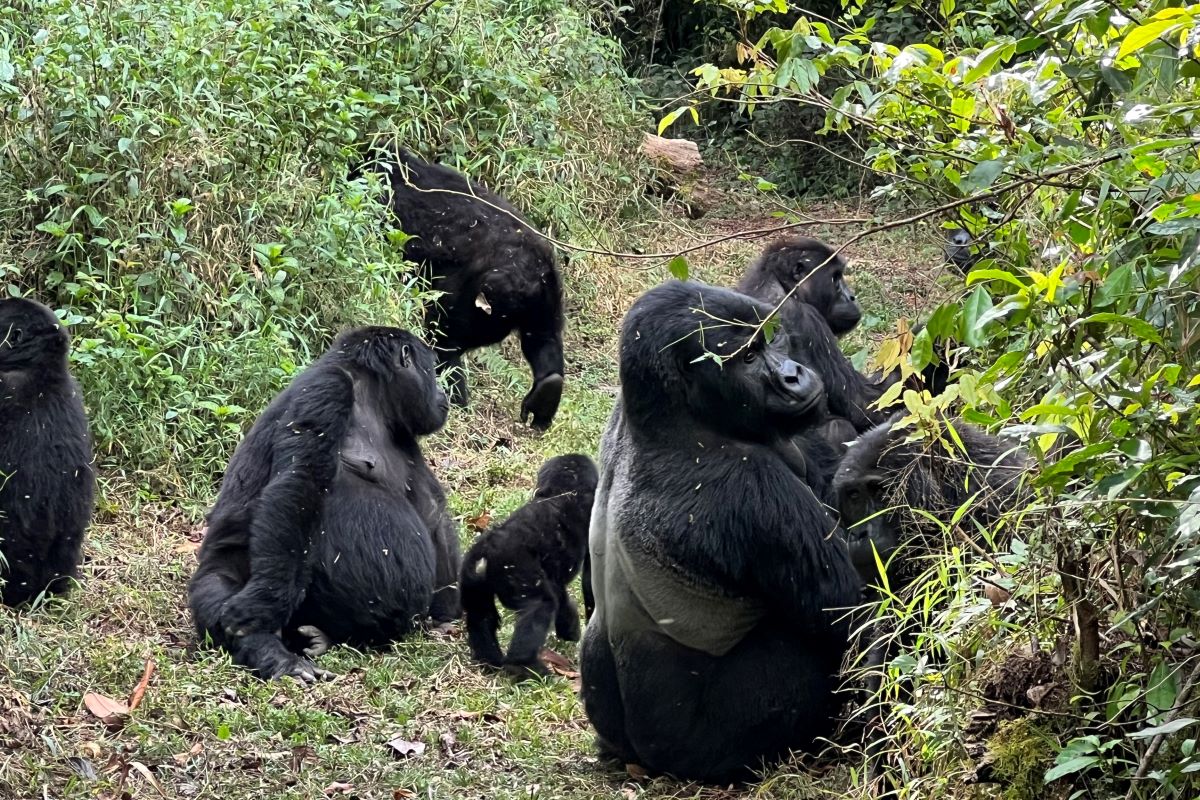

Susa Group
This is the oldest and most famous gorilla family in Volcanoes
National Park . Dian Fossey studied this group for many years, which
helped bring attention to gorilla conservation . The group originally had
over 40 members, but it later split into smaller groups. Today, it has about 19
members led by silverback Impuzamahanga . They live high on the slopes of
Mount Karisimbi, so the trek to see them is long and steep. This group was the
first to produce surviving twins, a rare event for mountain gorillas .
Pick this group if you are fit and want to see a large family with a deep
history.
Amahoro Group
The name "Amahoro"
means "peace" in the local language, and this group is known for
its calm and gentle nature . This group is a good choice if you want a
more relaxed viewing experience. They live on the slopes of Mount Bisoke, where
the trek is moderate in difficulty . After their original leader died, the
group split, but the current group is stable and has around 22 members,
including four silverbacks and several infants . Their peaceful behavior
makes them a favorite for many visitors who want to observe gorilla families
without too much stress.
Kwitonda Group
This group got its name from the
dominant silverback, which means "humble one" in Kinyarwanda .
The family originally moved to Rwanda from the Democratic Republic of Congo and
settled on the lower slopes of Mount Muhabura . The hike to see them is
often long and steep, requiring good fitness. The group is known for being
large, with over 18 members including several silverbacks, adult females, and
young gorillas . Many trekkers choose this group because its large size
shows a wide range of gorilla behaviors in one visit.
Agashya Group
The Agashya Group was originally known as Group 13 . The group's current
name came after a battle where a new silverback, Agashya, beat the previous
leader and took charge . Under his leadership, the group grew from 12 to
about 19 members . This family ranges on the slopes of Mount Sabyinyo. The
trek to find them can be challenging because they move to higher ground to
avoid danger . However, the effort is often rewarded with good views of
this large and stable group.
Karisimbi Group
This family was first known as Susa B after it split from the main Susa group in
2009 . They were later renamed Karisimbi
after the mountain where they live . Today, the group has about 10
members, led by six silverbacks . This group is unique because it is a
cross-border family. They move between Rwanda’s Volcanoes National Park and the
Mikeno Sector in the Democratic Republic of Congo . This means their
location is less predictable, which can make tracking them more of a challenge.
Sabyinyo Group
This group has been habituated since 1987, making it one of the oldest families
open for tourism . They were originally nicknamed "Amavubi"
(wasps) because of their aggressive nature, but they were later renamed after
Mount Sabyinyo . The group is currently led by silverback Gihishamwotsi,
who took over from his father in 2020 . Today, it has about 15 members and
is often found near the park's edge, making it one of the easier groups to
track . This group is good for those who want a shorter trek with a high
chance of a sighting.
Hirwa Group
The name "Hirwa" means
"lucky" in Kinyarwanda, but this group has faced difficult
times . It was formed by gorillas that left other established
families . This group is known for its adaptability in bringing
individuals together from different backgrounds. In 2019, the group crossed
into Uganda, where four members, including the leader, were killed by
lightning . Despite this loss, the remaining 13 members continue to thrive
under a new leader . Their story shows the resilience of these animals.
Muhoza Group
This is one of the newest gorilla families in the park. It started when a
silverback named Marambo left his original group and spent nearly a year alone .
He then formed his own family by attracting females from other groups .
Today, the group consists of about 19 members and ranges in the valley between
the Sabyinyo
and Bisoke volcanoes . This is a good family to track if you want to
see a newly formed group and learn about how gorilla families are created.
Igisha Group
This group was formed in 2014 when
it split from the Susa family . Led by silverback Igisha, the group grew
very large, reaching over 40 members. In August 2025, the group split again, with
25 members leaving to form a new group called Humura . The original Igisha
group now has about 15 members and ranges in the Butaka area . This group
is interesting because it shows how gorilla families change and grow over time.
Umubano Group
This family was created when the
Amahoro group split after the death of its leader . The name
"Umubano" means "togetherness" or
"cooperation" . The group is led by a young silverback named
Charles and has about 14 members, including eight silverbacks . They live
on the slopes of Mount Bisoke . This group is good for observing the
social dynamics between many males in one family.
Best time to
visit gorilla families in Rwanda
The best time to visit gorilla families in Rwanda is
during the dry seasons, which run from June to September and December
to February . During these months, there is less rainfall, so the trails
are firmer and much less muddy, making the hike easier and more comfortable .
You will also get clearer skies and better light for photography .
However, this is peak tourist season, so you must book your gorilla trekking
permits well in advance, as they sell out quickly . The rainy seasons from
March to May and October to November are more challenging because trails are
slippery and muddy, but they offer quieter treks and lower prices .
Ultimately, gorilla trekking is possible all year round, and sightings are
almost guaranteed even in wet months, with proper gear making the experience
just as rewarding
How much is
gorilla tracking in Rwanda
A standard gorilla tracking permit in Rwanda
costs $1,500 per person** for international visitors . This permit
allows you one hour with a gorilla family in Volcanoes National Park .
Lower rates exist for specific groups: East African Community citizens and
African residents pay $500, while Rwandan citizens pay $200. These promotional
rates for residents may exclude peak months like June to October. The permit
price itself is just one part of the total trip cost. You must add
transportation to the park, accommodation, meals, tips for guides and porters
(around $10-15 per trek), and possibly travel insurance . A full 3-day
package with a mid-range lodge and private transfers typically starts from
$1,800 to over $4,000 per person
How to get there
for gorilla tracking in Rwanda
Most travelers start their gorilla trekking trip in
Kigali, as Volcanoes National Park is only about a 2 to 3-hour drive away on
well-paved roads . The most popular and comfortable way to get there is by
booking a private 4x4 vehicle with a driver through a tour operator, which
gives you door-to-door service and flexibility . For a budget option, you
can take a public bus from Kigali's Nyabugogo terminal to Musanze town, though
you'll need to arrange a local taxi or motorcycle to reach the park
headquarters at Kinigi . If you prefer speed and luxury, chartered
helicopter flights from Kigali cut the travel time to just 30 minutes . No
matter which option you choose, make sure to arrive in the park area the night
before your trek, as the morning briefing starts promptly at 7:00 AM and you
cannot be late