
Uganda is widely regarded as the best choice for
budget travelers seeking authentic safari experiences without compromising
quality. Affordable
gorilla trekking permits at $800 dropping to $600 in low season make
encounters with mountain gorillas accessible compared to Rwanda’s higher fees.
Road-based itineraries connect diverse parks like Bwindi, Kibale, and Queen
Elizabeth without costly flights, reducing expenses while adding cultural
depth. Budget accommodation options start at $10, and daily costs can be as low
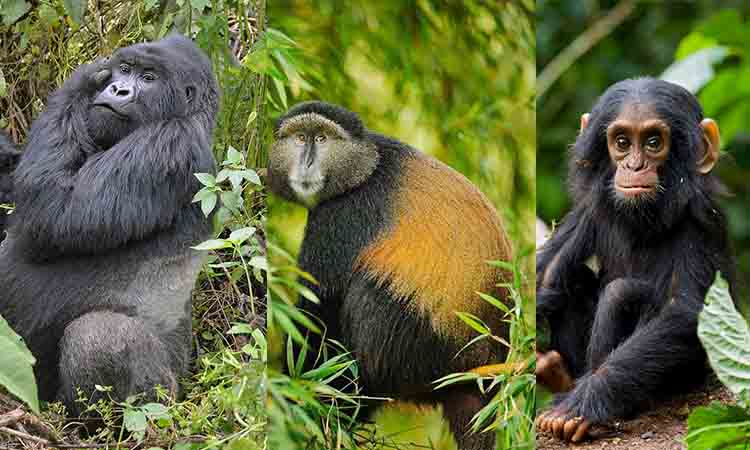
as $88 when choosing self-drive or group safaris. Affordable permits for chimpanzees
and golden monkeys, plus low-cost local meals and cultural visits, further
enhance value. Combined with the East African Tourist Visa, Uganda offers
unmatched affordability, variety, and accessibility, making it the top safari
destination for travelers on a budget.
1. Affordable
Gorilla Trekking Permits
Uganda offers the lowest gorilla
permit prices in the region at $800, compared to $1,500 in Rwanda. This
$700 saving per person makes a huge difference for budget travelers. For a
couple, this saves $1,400 on permits alone, which can cover accommodation and
meals for several extra days. Uganda also offers low-season discounts from
April, May, and November, with permits dropping to $600, making gorilla
trekking even more accessible. The experience remains the same as in Rwanda:
one hour with the gorillas, small groups of eight, professional rangers, and
the same stunning mountain forest environment. You do not sacrifice quality for
the lower price. This affordability is the main reason many budget travelers
choose Uganda over its neighbors.
2. Diverse Parks
Without Expensive Flights
Uganda's compact size allows you to visit multiple
ecosystems in one road trip without expensive domestic flights. You can track
chimpanzees in Kibale Forest, see lions in Queen Elizabeth National Park, and
trek gorillas in Bwindi Impenetrable Forest, all using just a shared 4x4
vehicle. The driving distances between these parks are manageable, ranging from
two to six hours. This is not possible in Kenya, Tanzania, or Rwanda, where
combining different experiences often requires costly air transfers. By staying
on the ground, you save hundreds of dollars on internal flights. This
road-based travel also gives you a closer look at local life and landscapes,
adding value to your trip without extra cost.
3. Budget
Accommodation Options Starting at $10
Every major park in Uganda offers affordable lodging
options for budget travelers. National park campsites cost as little as $10 per
night, community-run rest camps charge $25 to $50, and budget guesthouses are
widely available near park gates. These options provide clean, safe, and basic
spaces with shared bathrooms and simple meals. You are not sacrificing the
wildlife experience by choosing budget accommodation. You wake up at the same
park gates as luxury guests, join the same trekking groups, and see the same
animals. The money you save on accommodation can go toward extra activities
like boat safaris or cultural visits. This range of affordable lodging makes
Uganda accessible to travelers with tight budgets.
4. Daily Costs
as Low as $88
A budget
traveler in Uganda can spend as little as $88 per day on a self-drive
safari, covering vehicle rental, accommodation, food, and park entry fees. This
compares favorably to mid-range packaged safaris that cost $300 to $600 per
day. The lower daily cost comes from choosing basic accommodation, eating local
meals, and sharing transport. You still visit the same national parks, see the
same wildlife, and have the same quality trekking experiences as high-budget
travelers. This low daily cost makes a 10-day Uganda safari achievable for
$1,000 or less, excluding permits. For many travelers, this price point makes
the dream of seeing gorillas and chimpanzees finally reachable.
5. Shared Group
Safaris Split Costs
Joining a small-group safari significantly reduces
your transport costs because the vehicle expense is split across several
travelers. A safari 4x4 with a driver costs about $200 per day, and dividing
this among four to six people brings the per-person cost down to $35 to $50 per
day. A 7-day group safari covering gorillas, chimps, and wildlife can cost
$1,500 to $2,500 per person, saving over $1,000 compared to a private safari.
Group tours also give you a social experience, with shared meals and
activities. Many tour operators in Kampala and Entebbe offer fixed-departure
group safaris, making it easy to join without needing to find travel companions
yourself.
6. Self-Drive
Options Cut Operator Margins
Renting a 4x4 vehicle and driving yourself cuts out
the tour operator's commission, saving you a significant amount of money. A
self-drive vehicle costs $80 to $120 per day, compared to $200 to $250 for a
vehicle with a driver-guide. Over a 7-day trip, this saves you $500 to $800.
The roads to Uganda's national parks are in good condition, and Google Maps
works reliably throughout the country. You need an international driving permit
and some confidence with driving on the left side of the road. Many rental
companies provide a detailed map and emergency contact numbers. This option
suits independent travelers who prefer to set their own schedule and explore at
their own pace.
7. Low-Cost
Permits for Chimpanzees and Golden Monkeys
Chimpanzee
trekking permits in Uganda cost $200 to $250, which is significantly lower
than similar experiences in Rwanda and Tanzania. Golden monkey tracking costs
just $50 per person in Mgahinga Gorilla National Park, making it one of the
cheapest primate activities in Africa. These lower permit prices allow you to
add multiple primate experiences to your itinerary without breaking the bank.
You can track chimps in Kibale, see golden monkeys in Mgahinga, and watch other
monkey species like colobus and L'Hoest's monkeys, all for less than the cost
of a single gorilla permit in Rwanda. This variety of affordable primate
activities is unmatched in East Africa.
8. Street Food
and Local Meals Cost $5 to $10
Eating local food in Uganda is very affordable, with
street meals costing $5 to $10 per person. You can buy fresh fruit, roasted
meat skewers, chapati, and local stews from roadside stalls and markets. Many
budget lodges offer buffet meals for $10 to $15, which is much cheaper than the
$30 to $50 per meal at luxury lodges. Drinking local beverages and bottled
water is also inexpensive. By avoiding tourist-oriented restaurants, you save
money and get a more authentic taste of Ugandan food. This approach to dining
can reduce your daily food budget to $15 or $20, freeing up cash for extra
activities.
9. Free or
Low-Cost Cultural Experiences
Uganda offers many free or low-cost cultural experiences
that add value to your safari. You can visit local villages, attend traditional
dance performances, and see craft markets without paying high fees. Some
community projects charge $5 to $10 for a visit, with money going directly to
local families. You learn about traditional medicine, food preparation, and
daily life in rural Uganda. These experiences are not commercialized, so you
get a genuine interaction rather than a staged performance. Many lodges can
arrange these visits for you. This adds cultural depth to your trip without
costing a fortune, which is a big advantage for budget travelers who want more
than just wildlife.
10. East African
Tourist Visa Saves Money
The East African Tourist Visa costs $100 and allows
unlimited travel between Uganda, Rwanda, and Kenya for 90 days. This single
visa replaces three separate visas, saving you $50 to $100 in visa fees. You
can easily cross borders to combine
gorilla trekking in Uganda with the savannah wildlife of Kenya or the
primate experiences of Rwanda. This visa is processed online before travel and
is valid for multiple entries. It is a cost-effective way to visit three
countries on one trip, reducing the administrative and financial burden of
multiple visa applications. For overland travelers, this is a significant
saving that allows for a longer, more diverse safari experience.
Best time to go
for Uganda safari holidays
The best time for a Uganda safari holiday is during
the dry seasons, which run from December to February and June to
September. During these months, the roads and trekking trails are drier and
easier to navigate, and the vegetation is less dense, which improves visibility
for spotting wildlife like gorillas, chimps, and savannah animals. This period
is also the peak tourist season, so you will need to book your permits and
accommodation well in advance, especially for gorilla trekking in Bwindi. The
rainy seasons from March to May and October to November bring muddy trails and
occasional road washouts, making travel more difficult, but they also offer
lower prices, fewer crowds, and better bird watching, making them a good choice
for budget travelers.
How to get there
for Uganda safari vacations
The standard way to get to Uganda for a safari is to
fly into Entebbe International Airport (EBB) , which is the country's
main international gateway and is located about 40 kilometers from Kampala .
From Entebbe, you take a road transfer to the national parks, with drives to
places like Kibale Forest taking around 4-5 hours and Bwindi for gorilla
trekking taking 8-9 hours . A good alternative is to fly into Kigali
International Airport (KGL) in Rwanda, as it has better flight connections and
is closer to Bwindi (a 3-4 hour drive) . For travelers who want to avoid long
road journeys, domestic flights are available from Entebbe to airstrips near
Murchison Falls, Kidepo, and Queen Elizabeth National Park . Your tour operator
will handle all transport arrangements, making the process straightforward and
stress-free