
Queen Elizabeth National Park is Uganda's most
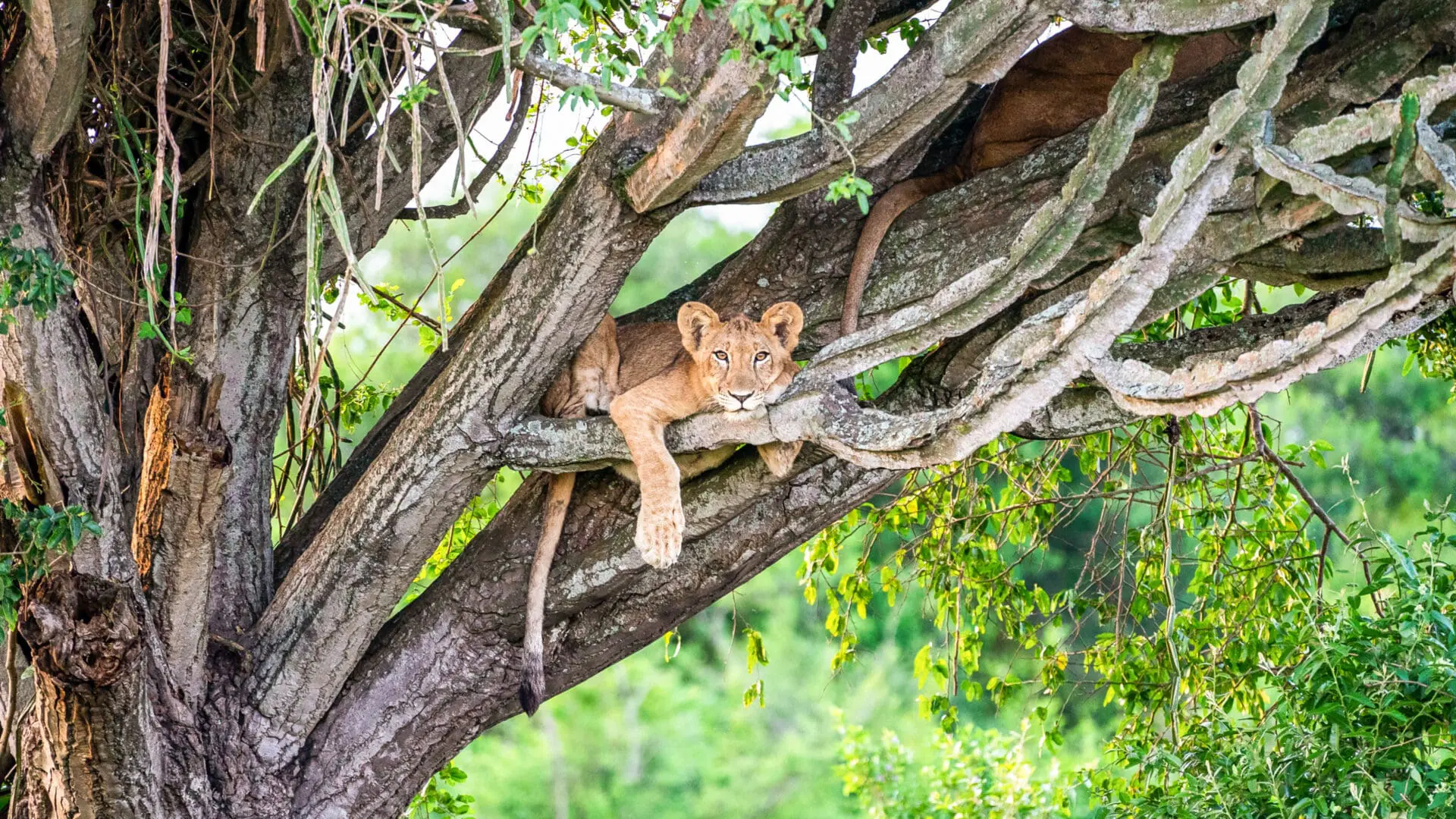
diverse wildlife park, offering a complete safari experience. It is famous for tree-climbing
lions in Ishasha, huge elephant and buffalo herds on the Kasenyi Plains,
and the Kazinga Channel's dense hippo and crocodile populations. You can track
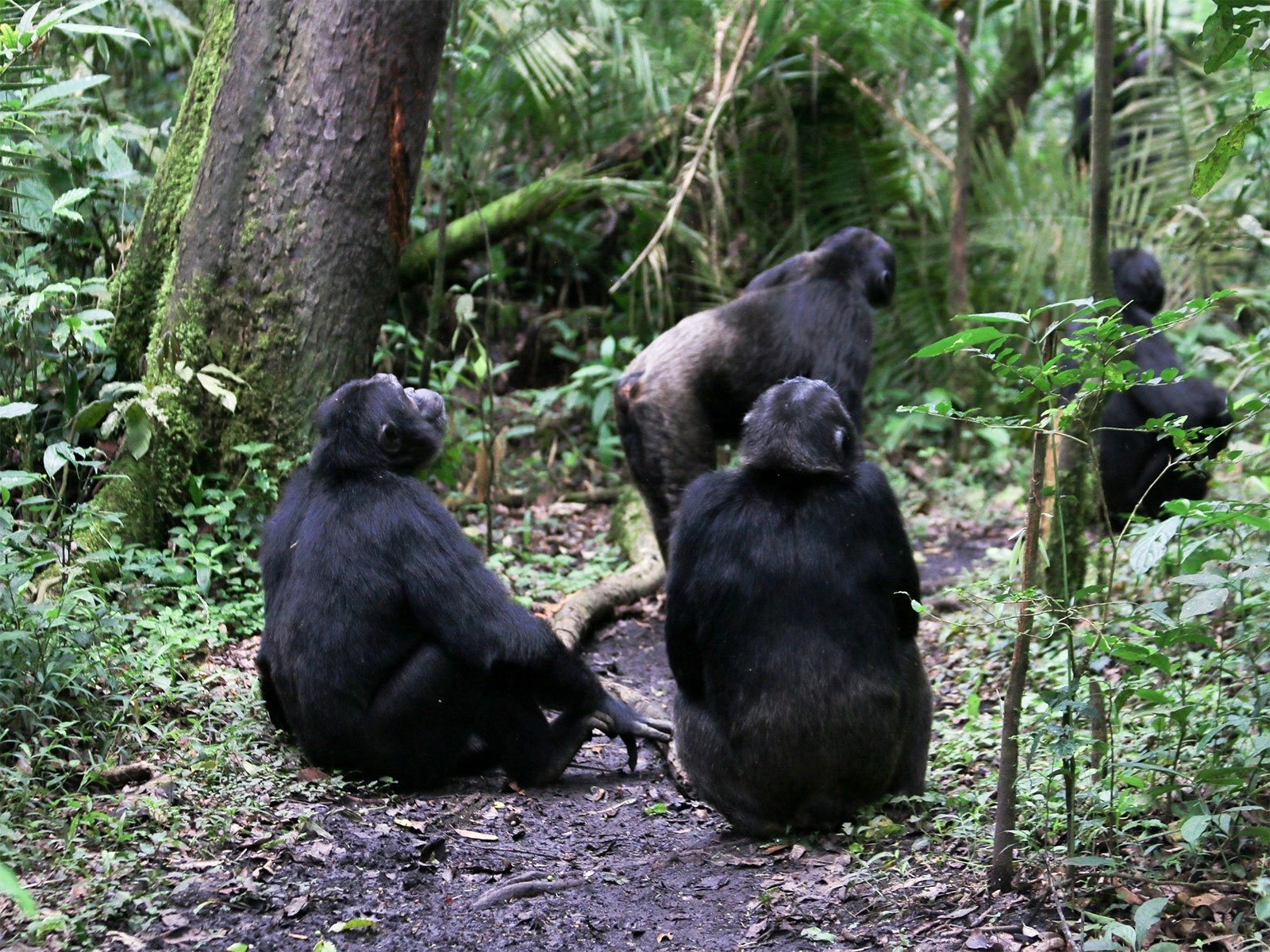
chimpanzees in Kyambura Gorge, spot over 600 bird species, and enjoy boat
safaris and crater lake drives. The park holds four of the Big Five and 95
mammal species in varied landscapes from savannah to forest. It is easy to
reach from Kampala by road or air, with accommodation for all budgets. The park
works well year-round, so you can visit any time. For travellers wanting big
game, birds, primates, and water-based wildlife in one place, this park gives
excellent value.
1. The Famous
Tree-Climbing Lions of Ishasha
This park is one of the only places
in Africa where lions regularly climb trees . In the southern Ishasha
sector, you often see whole prides resting in fig trees during the heat of the
day. They do this to catch cooler breezes, escape flies, or get a better view
for hunting . This unusual behaviour is a major reason people visit. You
drive slowly, scanning the branches until you spot a tawny shape draped over a
limb. It is a strange and memorable sight that you cannot see in most other
African parks. For any traveller who wants something different from the usual
ground-level lion viewing, this is a strong draw.
2. The Kazinga
Channel Boat Safari
This 32-kilometre channel connects Lake George and Lake Edward and holds
Africa's highest concentration of hippos . A boat trip here gives you a
close view of hundreds of hippos in the water, along with crocodiles sunning on
the banks. Elephants, buffalo, and antelopes come down to drink while you watch
from the water . This activity gives you a different angle on wildlife
that a vehicle cannot match. It is easy and comfortable, suitable for all ages.
It is also good for birdwatchers because over 100 bird species line the
channel. This is one of the most reliable ways to see large animals in one
place.
3. A Diverse Mix
of Big Mammals
Queen Elizabeth holds four of the Big Five animals: elephants, lions, leopards,
and buffalo . Large herds of elephants and buffalo are common sights on the
Kasenyi Plains . Leopards are present, though you need a good guide
and some luck to spot them. You also see hyenas, warthogs, and many antelope
types including Uganda kob, waterbuck, topi, and bushbuck. With 95 mammal
species, you get a full safari experience . You are not limited to one or
two animals; each game drive brings something new. This variety makes the park
good for both first-time visitors and experienced safari-goers.
4. Chimpanzee
Tracking in Kyambura Gorge
The Kyambura Gorge, also called the "Valley of Apes," is a
100-metre-deep forested ravine with a small community of habituated
chimpanzees . You descend into the gorge for a guided trek through thick
vegetation to find them. The experience is different from open savannah driving
because you are on foot in a confined forest space. Hearing their calls echo
off the gorge walls is powerful . The success rate is not 100%, but guides
know the area well. This activity combines primate tracking with dramatic
scenery, making it a solid addition to your wildlife viewing.
5. Outstanding
Birdwatching with Over 600 Species
With more than 600 bird species recorded, this park has the largest bird
checklist of any protected area in East Africa . You see pelicans,
flamingoes, fish eagles, kingfishers, and storks along the Kazinga Channel. The
Ishasha wetlands hold the rare shoebill stork . Forest areas host turacos
and sunbirds. This variety means that even non-birders notice the birds. The
park is good for both casual birdwatchers and serious listers. You do not need
to go far to see many different birds, as they are present throughout the park,
adding interest to every drive and boat trip.
6. Varied
Landscapes in One Park
The park covers savannah
grasslands, acacia woodland, humid forest, crater lakes, and
swampland . This mix of habitats supports a wider variety of animals than
a park with only one or two landscape types. You can drive across open plains
and then enter a forested gorge or stop at a crater lake. This keeps the tour
interesting because the scenery changes frequently. You are not staring at the
same view for hours. The varied landscapes also mean you have different
activity options, from game drives to forest walks to boat trips. This variety
reduces boredom and gives you more experiences for your time.
7. Good Value
Compared to Other Safari Destinations
Uganda generally offers lower
prices than Kenya or Tanzania for similar wildlife experiences. Queen Elizabeth
has a wide range of accommodation, from budget campsites to luxury lodges, so
you can pick what fits your wallet . Park entry fees are reasonable, and
activities like the boat safari are affordable. You also save money by getting
a wide mix of animals and birds in one location. You do not need to travel to
multiple parks to see different wildlife types. For travellers on a budget who
still want a good quality safari, this park delivers strong value without
sacrificing much.
8. Easy to Reach
and Well-Organised
The park lies about 5–6 hours by road from Kampala on good tarmac roads .
You can also fly into Kasese or Mweya airstrip for a quicker arrival. Once
inside, the main sectors like Mweya, Kasenyi, and Ishasha are connected by
clear roads . This makes planning straightforward. You do not need a
complicated route or special permits for basic game drives. The Uganda Wildlife
Authority manages the park efficiently, with clear entry procedures and
knowledgeable guides. This infrastructure means fewer surprises and delays. For
travellers who want a smooth, hassle-free experience, this park is a reliable
choice.
9. The Crater
Lake Scenic Drive
The northern sector has a route
that passes dozens of crater lakes formed by volcanic activity . These
water-filled hollows offer panoramic views of the park and, on clear days, the
Rwenzori Mountains. You can stop at Lake Katwe to see traditional salt mining
in action . This drive is a restful break from game viewing, giving you a
different experience. It is also a good spot for birdwatching and photography.
You do not need to book a special permit for this activity; it fits into a
regular day. This adds extra value to your visit without extra cost.
10. A Reliable
Year-Round Destination
Queen
Elizabeth works well in both dry and wet seasons. In the dry months
(June–September, December–February), animals gather around water sources,
making them easier to spot on drives . In the wet seasons (March–May,
October–November), the park stays open, and the landscape turns green with
birds nesting . Even with rain, the main roads remain passable. This
flexibility helps you plan travel around your schedule, not the park's
restrictions. You are not locked into a narrow window of months to visit. This
is helpful for travellers who cannot take holiday during peak seasons or want
quieter parks.
Best time to
visit Queen Elizabeth National park for Uganda wildlife safari
The best time to visit Queen Elizabeth National Park
is during the two dry seasons, which run from June to September and December to
February. During these months, rainfall is low, and the vegetation becomes
sparse, making wildlife much easier to spot as animals gather around permanent
water sources like the Kazinga Channel. The game tracks and trails are also
drier and more passable, allowing for comfortable game drives and nature walks.
Birdwatching remains productive, and conditions for the Kazinga Channel boat
safari are excellent. While the park is open all year, the wet seasons from
March to May and October to November make roads muddy and some paths
impassable, though these months offer lush scenery and lower rates
How to get there
to Queen Elizabeth National park for Uganda wildlife safari
You can get to Queen Elizabeth National Park by road
or by air. The park is located in western Uganda, about 400-420 kilometres from
Kampala . The road journey takes roughly 6 to 8 hours via two main routes:
the Kampala-Masaka-Mbarara highway or the Kampala-Fort Portal-Kasese road,
which is considered more scenic . Roads are generally tarmac, but a 4x4
vehicle is recommended for the park's internal tracks, especially during the
rainy season . For a quicker option, scheduled and charter flights are
available from Entebbe International Airport or Kajjansi Airfield to airstrips
at Mweya, Kasese, or Kihihi (for Ishasha)