
Uganda is one of Africa’s best destinations for
birdwatchers, with a wide variety of wetlands, forests, lakes, rivers and
savannah habitats supporting hundreds of bird species. Among the most
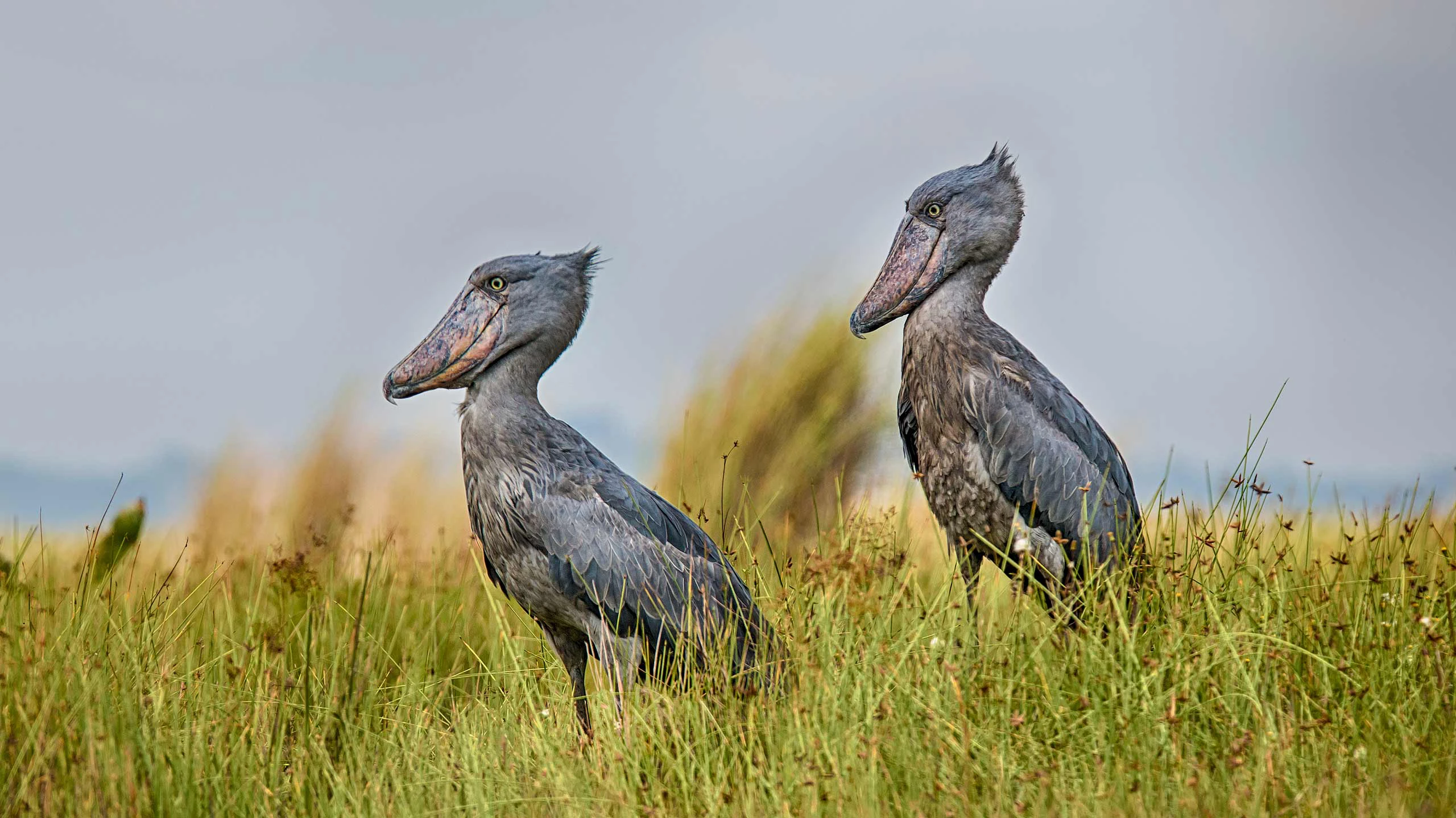
sought-after is the Shoebill, a large prehistoric-looking wetland bird famous
for its enormous shoe-shaped bill, tall stature and patient hunting style.
Uganda offers several places where visitors have a good opportunity to
encounter this rare bird in its natural habitat. For birdwatchers planning a Uganda safari specifically
around the Shoebill, Mabamba Swamp, Ziwa Rhino Sanctuary and Murchison Falls
National Park, stand out as some of the most important locations to consider.
1. Mabamba Swamp
Mabamba Swamp is the most famous Shoebill-watching
destination in Uganda and one of the easiest places to include in a
birdwatching itinerary. Located on the northern shores of Lake Victoria, the
wetland covers about 2,400 hectares, contains extensive papyrus marshes and
open water. It is a Ramsar wetland and supports more than 300 bird species.
The main attraction is the Shoebill. Visitors
explore the narrow wetland channels in a canoe with a local guide who knows the
areas where the birds regularly feed and rest. The quiet canoe ride allows
birdwatchers to move through the papyrus without causing unnecessary
disturbance.
Early morning is a particularly good time for the excursion because bird activity is generally high and the softer morning light provides better conditions for photography. Alongside the Shoebill, visitors may encounter African fish eagles, kingfishers, African jacanas, Papyrus Gonolek and other wetland species. Mabamba is especially convenient for travelers staying in Entebbe or beginning and ending their safari there.
2. Ziwa Rhino
Sanctuary
Ziwa Rhino Sanctuary offers an interesting
combination of wildlife and birdwatching. Located north of Kampala along the
route toward Murchison Falls, the sanctuary protects rhinos as well as a
variety of wetland and savannah habitats.
The Lugogo Wetland within the sanctuary provides
habitat for Shoebills. Birdwatching excursions normally begin early in the
morning, with visitors exploring the wetland by canoe while guides search for
the birds among the papyrus and shallow waters.
One of the advantages of choosing Ziwa is the
opportunity to combine Shoebill watching with rhino tracking. This makes it a
useful stop for travelers heading toward Murchison Falls National Park who want
to add birdwatching to their safari without creating a separate long journey.
3. Murchison
Falls National Park
Murchison Falls National Park is well known for its
large mammals, dramatic landscapes and the powerful Nile River, but it is
equally interesting for birdwatchers. The Uganda Wildlife Authority identifies
Murchison Falls among the country's excellent birding destinations and
specifically highlights the park for sightings of the sought-after Shoebill.
The Albert Delta, where the Victoria Nile approaches Lake Albert, contains
extensive wetland habitat suitable for Shoebills. A boat trip through the delta
provides an opportunity to search the papyrus-lined waterways and marshy areas
for these birds.
A Shoebill sighting here also forms part of a wider
wildlife experience. Depending on the route, a boat safari may bring views of
hippos, crocodiles, elephants, water birds and other wildlife along the Nile.
This makes Murchison Falls a strong choice for travelers who want to combine
birdwatching with a traditional Uganda safari.
4. Semliki
Wildlife Reserve
Semliki Wildlife Reserve is another destination
worth considering for dedicated birdwatchers. Located in western Uganda near
Lake Albert, the reserve contains wetlands and other habitats that support a
wide range of bird species.
Shoebills have been recorded around the wetland areas, making the reserve an option for travelers already exploring western Uganda. The area is particularly appealing to serious birdwatchers because it forms part of a region with an impressive variety of bird habitats. Although Mabamba provides easier access for travelers specifically targeting the Shoebill, Semliki fits well into a longer birding itinerary covering western Uganda.
5. Other Wetland
Areas around Lake Victoria
Uganda has several other wetlands around Lake
Victoria where Shoebills have been recorded. These include areas such as Makanaga
Swamp, Lutembe Bay and other papyrus wetlands.
Makanaga, in particular, offers a quieter
alternative to Mabamba for birdwatchers looking for less-visited wetland
environments. These locations are better suited to travelers with more time and
a strong interest in Uganda's wider wetland birdlife rather than visitors
looking for the easiest Shoebill encounter.
Best Time to See
the Shoebill in Uganda
Shoebills live in Uganda's wetlands throughout the
year, so birdwatching trips are possible in different seasons. For the best
experience, early morning is generally recommended, when bird activity is high
and temperatures are cooler.
The dry periods of June to August and December to
February are widely used for wildlife viewing in Uganda, while wet periods
bring lush vegetation and increased bird activity in many locations.
If the Shoebill is the main reason for your trip, it
is more important to choose a reliable wetland site and arrange the excursion
with an experienced local birding guide than to rely on season alone.
What to Carry
for Shoebill Birdwatching
A few items make the experience more comfortable and productive. Carry binoculars for observing birds from a distance, a camera with a suitable zoom lens, comfortable clothing, a hat, sunscreen, insect repellent and drinking water. Waterproof footwear is useful when visiting wetlands, especially if your itinerary includes walking around muddy areas. A light rain jacket is another useful addition because weather conditions around Uganda's wetlands can change quickly.
Why Shoebill
Birdwatching Is Special
The Shoebill stands apart from most birds visitors
encounter on safari. Its enormous bill, grey-blue appearance and almost
motionless hunting technique give it a distinctive prehistoric appearance.
Rather than constantly moving around, the bird often stands quietly in shallow
water, waiting for the right moment to strike at prey.
Seeing one in a papyrus wetland provides a
completely different experience from watching Uganda's lions, elephants or
chimpanzees. It requires patience, careful observation and a good guide who
understands the wetland environment.
Combining
Shoebill Watching With a Uganda Safari
Shoebill birdwatching fits easily into several
Uganda safari routes. Mabamba Swamp works particularly well at the beginning or
end of a trip around Entebbe. Ziwa Rhino Sanctuary fits naturally into a
journey toward Murchison Falls, while Murchison Falls National Park allows
visitors to combine birdwatching with game drives and Nile boat trips. For
dedicated birders, combining several wetland destinations increases the variety
of habitats and bird species encountered during the journey.
Uganda offers several excellent destinations for
seeing the Shoebill, but Mabamba Swamp remains the leading choice for travelers
seeking a dedicated Shoebill experience. Its papyrus channels, experienced
community guides and convenient location near Entebbe make it an ideal
introduction to Uganda's wetland birdlife. Ziwa Rhino Sanctuary and Murchison
Falls National Park provide strong alternatives, particularly for travelers who
want to combine Shoebill watching with other wildlife experiences.