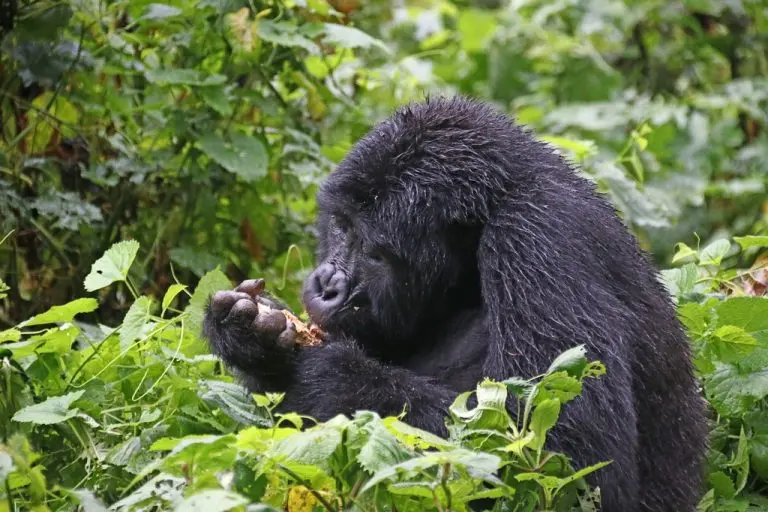

Mountain gorillas in Bwindi
Impenetrable National Park exhibit a fascinating array of behaviors shaped
by their unique environment and complex social structures. Their daily lives
are a intricate balance of feeding, socializing, and communicating within
cohesive family groups led by a dominant silverback .
The cornerstone of gorilla society is the cohesive
social group, typically composed of at least one dominant adult male
silverback, several adult females, and their offspring . Unlike chimpanzees,
which have a fission-fusion social structure, mountain gorillas demonstrate a
strong and consistent grouping pattern. This social cohesion is primarily
driven by females seeking protection from the silverback, which helps prevent
infanticide by outside males, and is supported by relatively low food
competition within their environment .
Communication within these groups is sophisticated
and relies heavily on a rich repertoire of gestures. These apes use a variety
of physical gestures to interact with one another, and researchers are actively
documenting the different forms and frequencies of these signals. The
consistent social cohesion of gorillas means their gestural communication may
differ significantly from species with more fluid social structures, offering
key insights into how social organization shapes communication .
Feeding behavior is a central activity and is
closely linked to social dynamics. While they eat a significant amount of
herbaceous vegetation, Bwindi gorillas are known to incorporate fruit into
their diet when available . This frugivory has a direct impact on their
ranging behavior. Studies show that daily travel distance and home range size
increase with greater fruit consumption and larger group sizes, as they must
travel further to find these clumped resources .
The search for food can also lead to competition and
conflict. When feeding in fruit trees, which represent limited, defendable
patches, gorillas exhibit higher levels of aggression . This aggression,
often in the form of vocalizations, indicates both scramble and contest
competition for resources . Interestingly, despite these conflicts, a
linear dominance hierarchy has been observed, though the social relationships
among females are best described as "dispersal individualistic," and
much aggression is low-intensity and ignored .
Females display a specific social strategy by
emigrating to other groups multiple times throughout their lives . This
flexibility in group membership is a notable feature of gorilla social
organization. A female's association patterns can be influenced by factors such
as whether she has a dependent infant or if she is a recent immigrant to the
group, demonstrating the fluidity of their social bonds .
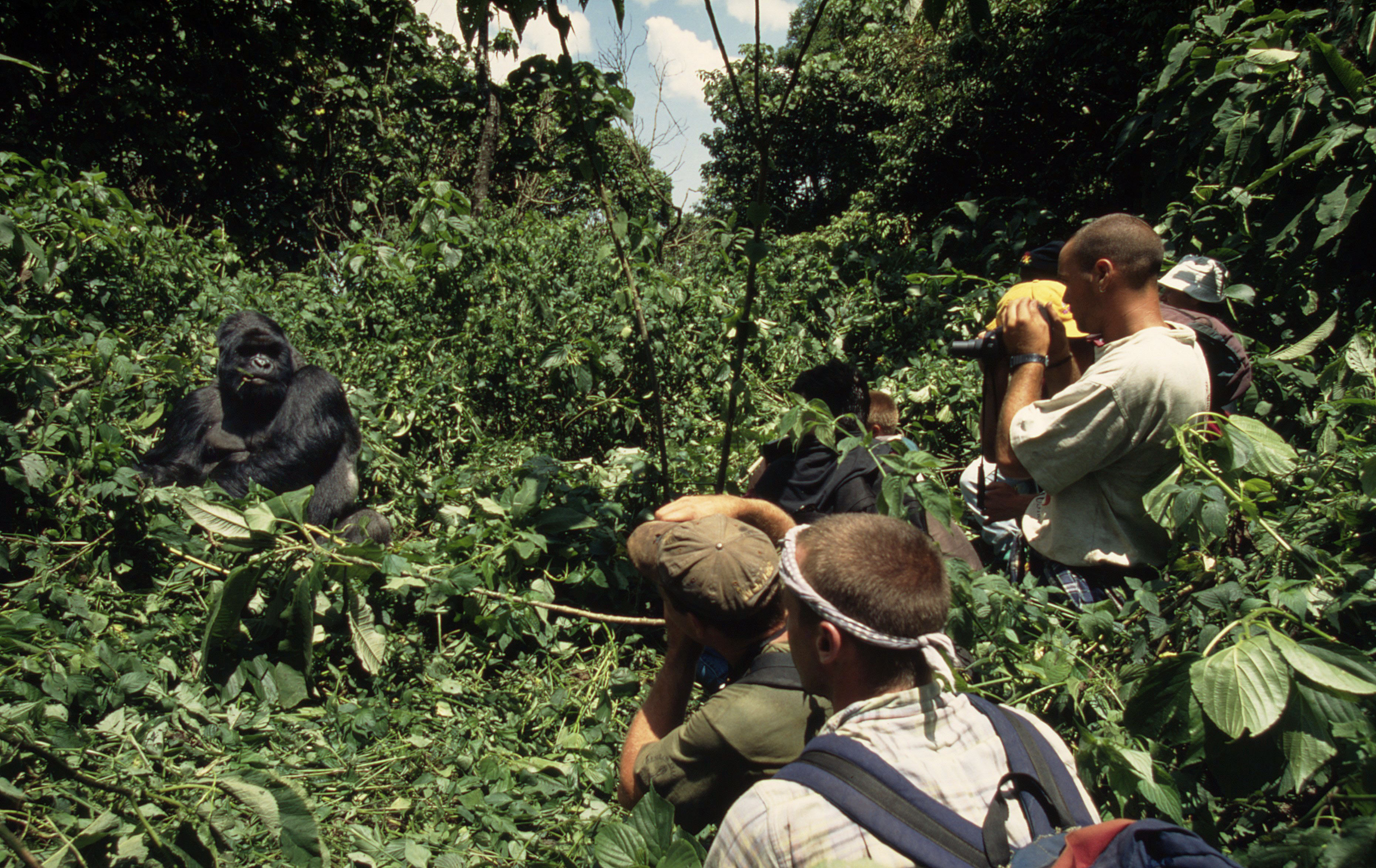
The presence of tourists, while crucial for
conservation funding, has been shown to affect gorilla behavior. Studies
indicate that during tourist visits, gorillas increase self-scratching, a
behavior indicative of stress, and increase prosocial behaviors . This
impact is amplified when tourists get closer than the recommended distance,
with 60% of viewing time spent within 3 meters, causing a decrease in feeding
and an increase in human-directed behavior, especially in adult males
Best time to visit
gorillas in Bwindi National park
The best time to visit gorillas in Bwindi
Impenetrable National Park is during the dry seasons, from June to
September and December to February, when trails are firmer, less
muddy, and easier to navigate, making trekking more comfortable and offering
clearer views and better photography conditions. However, gorilla trekking is a
year-round activity, and the wet seasons from March to May and October
to November also offer rewarding experiences with dramatically fewer
crowds, lower accommodation rates, and special $600 low-season permit
prices for select months in 2026. During the rains, the forest becomes
lush and vibrant, and while trails become muddy and slippery, the gorillas
remain active and sighting success rates stay exceptionally high at
around 98%. Choosing the best time ultimately depends on your priorities whether
you prefer easier trekking and peak-season reliability, or quieter forests,
intimate encounters, and better value