
Akagera National Park in Rwanda is a remarkable
conservation success story and one of East Africa’s most diverse safari
destinations. Stretching across savanna plains, wetlands, and lakes, the park
is home to the famous Big
Five lion, leopard, elephant, rhino, and buffalo alongside giraffes,
zebras, antelopes, hippos, and crocodiles. Birdwatchers are drawn to its nearly
500 species, including the rare shoebill stork and crowned crane. Visitors can
enjoy classic game drives, boat cruises on Lake Ihema, guided walks, and even
hot air balloon safaris for unique perspectives of the landscape. Conservation
programs have restored lions and rhinos, making Akagera a symbol of resilience
and protection. Easily accessible from Kigali, the park offers both adventure
and education, giving travelers a chance to experience Rwanda’s wildlife in a
safe and well-managed environment.
Lion
Reintroduced to Akagera in 2015 and again in 2017
after being eradicated during the 1990s, the lion population has made a
remarkable recovery, now numbering at least 70 individuals. These majestic
predators are the park's apex carnivores and are most active during the cooler
early morning and late evening hours. Visitors on game drives have an excellent
chance of spotting them lounging in the shade or stalking prey across the open
savannah plains, particularly in the northern Kilala Plains region. Their
successful reintroduction stands as one of Africa's great conservation
triumphs.
Leopard
The leopard is the most elusive member of Akagera's
Big Five, with an estimated population of at least 60 solitary individuals.
These secretive and nocturnal cats are masters of camouflage, preferring to
rest in trees or thick bush during the day and hunt under the cover of
darkness. Night game drives, conducted with powerful spotlights, offer the best
opportunity to catch a glimpse of these stunning spotted predators. Their
adaptability and stealth make every sighting a truly special and memorable moment
for safari-goers exploring the park's diverse habitats.
Elephant
Akagera is
home to at least 150
African elephants, all descended from just 26 individuals relocated from
another park in 1975. These gentle giants are the largest land mammals on Earth
and are a highlight for any visitor. They roam across the savannah, woodlands,
and shorelines, often seen in family herds led by a matriarch. Watching them
drink at watering holes or strip bark from acacia trees is a quintessential
African safari experience. Their presence is a vital part of the park's
thriving ecosystem.
Black Rhino
Reintroduced to Akagera in 2017 after a decade of
absence, the eastern black rhino population has grown steadily and is breeding
successfully. These critically endangered animals are heavily protected by
dedicated anti-poaching ranger teams who monitor them daily. Black rhinos are
smaller and more aggressive than their white counterparts, with a hooked upper
lip adapted for browsing on trees and shrubs. Sightings are rare but incredibly
rewarding, making them one of the park's most sought-after attractions.
White Rhino
Following the
successful black rhino reintroduction, white rhinos were reintroduced to
Akagera in 2021, marking another milestone for Rwandan conservation. These larger,
more sociable rhinos have a square, wide mouth adapted for grazing on grass and
are often seen in small groups. They are more placid than black rhinos and are
frequently monitored by park rangers to ensure their safety and
acclimatization. Visitors now have the unique opportunity to see both rhino
species within the same park.
Buffalo
With a population exceeding 3,300 individuals, the
Cape buffalo is the most numerous member of Akagera's Big Five. These
formidable and powerful animals are easily recognizable by their massive horns
and dark, muscular builds. They are frequently encountered in large herds
grazing across the open plains, woodlands, and near water sources. Despite
their size, they are highly alert and can be unpredictable when threatened, so
visitors should always maintain a safe distance. Their sheer numbers make them
a guaranteed highlight of any game drive.
Giraffe
The Maasai giraffe, distinguished by its irregular,
jagged spots, is one of Akagera's most graceful and iconic residents. These
towering herbivores are commonly spotted on the northern Kilala Plains, where
they use their long necks to browse on leaves high in the acacia trees. Their
elegant, swaying gait and peaceful demeanor make them a favorite among
visitors. Watching a herd of giraffes move across the savannah with the sun
setting behind them is a truly unforgettable African experience.
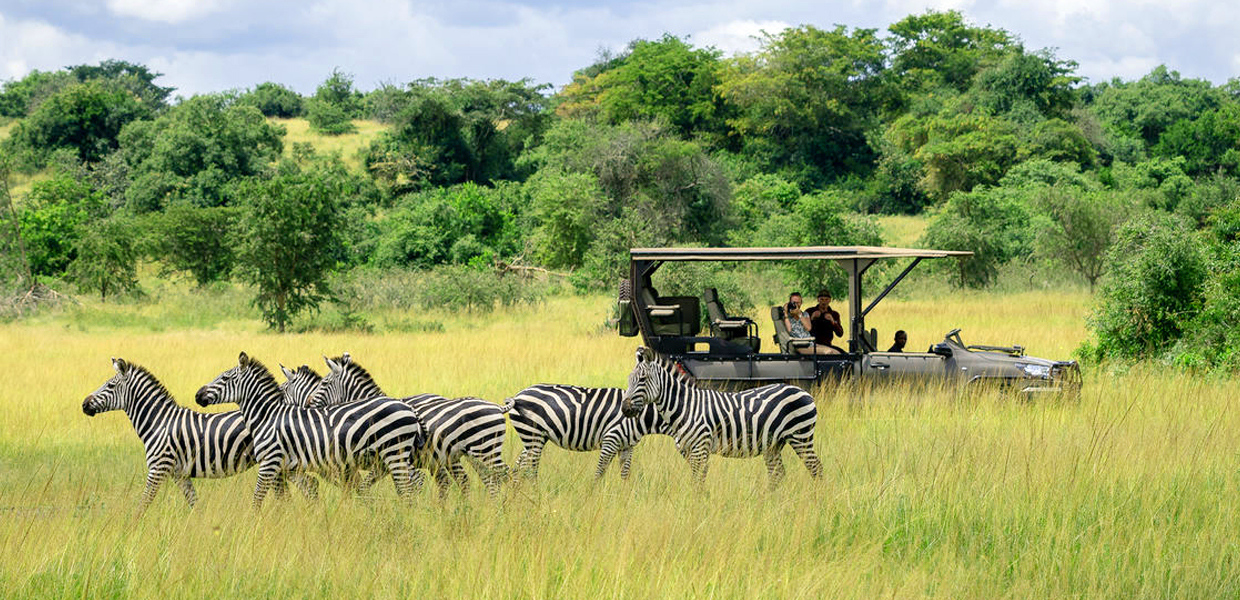
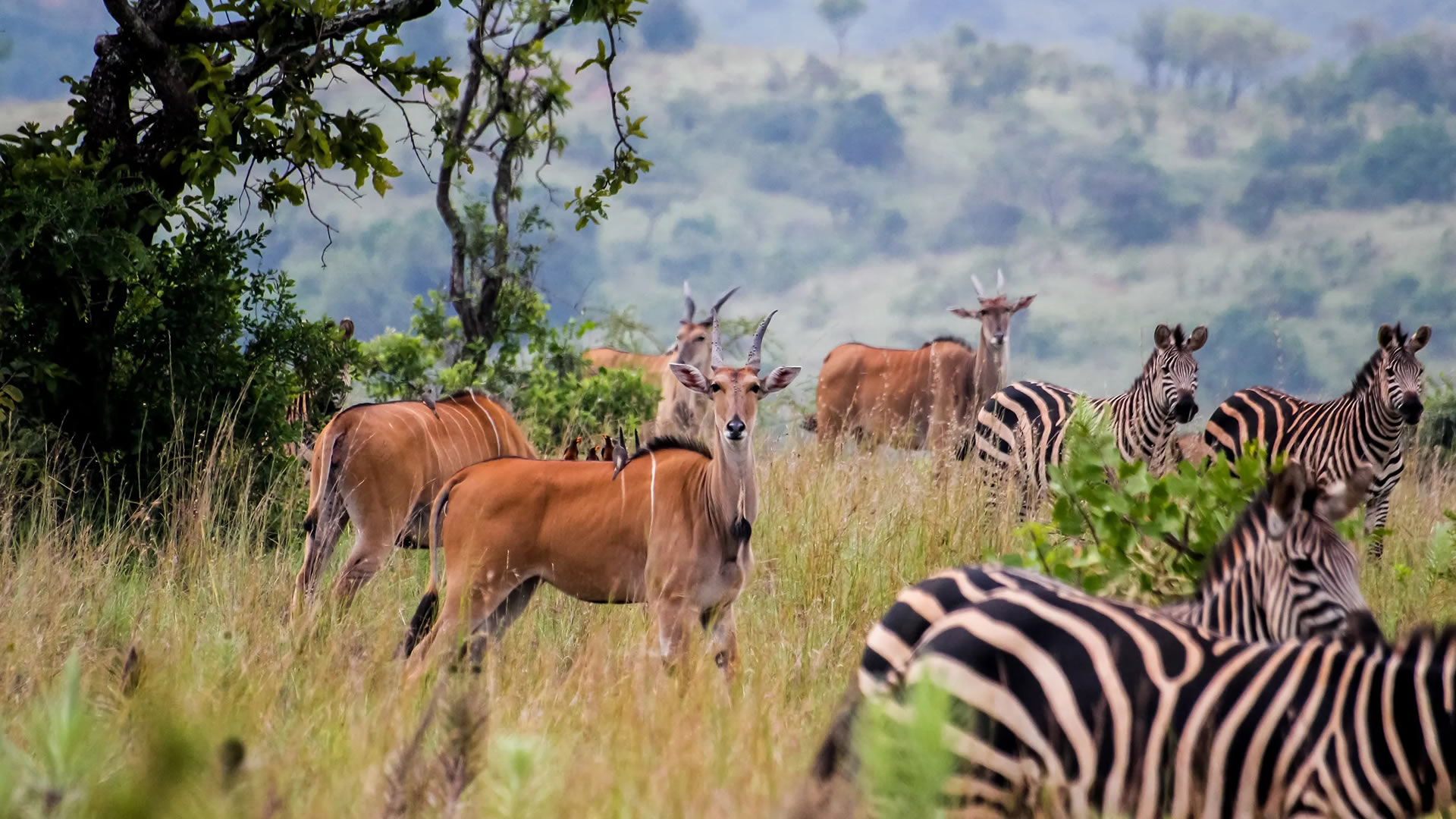
Zebra
Burchell's zebra is a common sight in Akagera,
particularly in the open grasslands and plains. These striking black-and-white striped
animals are highly social, gathering in large herds alongside other grazers
like buffalo and antelope. Each zebra has a unique stripe pattern, much like a
human fingerprint, serving as individual identification. They are constantly
alert, with keen eyesight and hearing to detect predators. Their vibrant
appearance and lively behavior make them a delightful addition to any safari.
Hippo
Lake Ihema
and other waterways in Akagera
are home to large pods of hippos, which spend most of the day submerged in
the water to keep cool. These massive, semi-aquatic mammals are best viewed
during a serene boat cruise, where you can watch them surface for air or yawn
with their enormous mouths. Despite their stocky, lumbering appearance on land,
hippos are surprisingly agile and are considered one of Africa's most dangerous
animals. They emerge at night to graze on land, consuming vast amounts of
grass.
Crocodile
The Nile crocodile is the largest reptile in Africa
and thrives in Akagera's lakes and rivers, particularly around Lake Ihema.
These ancient predators can grow up to 20 feet in length and are masters of
ambush, lying motionless in the water with only their eyes and nostrils
visible. A boat cruise offers the best opportunity to observe these prehistoric
creatures basking on the sandy shores or gliding silently through the water.
Their powerful jaws and formidable size command respect, making every encounter
thrilling.
Antelope Species
Akagera boasts over a dozen antelope species, adding
incredible diversity to the park's wildlife. The stately eland is Africa's
largest antelope, while the roan and sable antelopes are known for their
striking markings and impressive curved horns. Waterbuck are frequently seen
near water sources, and topi are abundant on the open plains. Smaller species
like duikers and oribi inhabit the bushlands. Observing this rich variety of
antelope, each uniquely adapted to their niche, is a fascinating experience for
any wildlife enthusiast.
Hyena and Jackal
The spotted hyena and side-striped jackal are key
predators in Akagera's ecosystem, playing a vital role in maintaining balance.
Hyenas are highly social animals, living in large clans and known for their
distinctive laughing calls and incredible hunting prowess. They are often seen
on game drives, either scavenging or actively hunting. Side-striped jackals are
more solitary and nocturnal, with a greyish coat and a white-tipped tail. Their
presence adds to the park's rich predator-prey dynamics, making every sighting
an exciting encounter.
Birdlife
Akagera is a paradise for birdwatchers, with nearly
500 recorded species inhabiting its diverse environments, from forests to
wetlands. The star attraction is the elusive shoebill stork, a
prehistoric-looking bird found in the papyrus swamps. Other highlights include
the graceful crowned crane, the majestic African fish eagle, and a dazzling
array of kingfishers, herons, and egrets. Wetlands and lakeshores are
particularly rewarding for spotting waterbirds, while the savannah hosts numerous
birds of prey. A visit to Akagera offers endless avian discoveries.
Best time to see
Animals in Akagera national park Rwanda
The absolute best time to see the most animals in
Akagera National Park is during the dry seasons, which run from June to
September and from December to February . During these months, vegetation
thins out and water sources become scarce, compelling wildlife to congregate
around lakes and rivers, making them significantly easier to spot . The
weather is also pleasant, with sunny days and accessible roads, which is
perfect for game drives . For the most active predators, it is best to go
on game drives in the early morning (from sunrise) or late afternoon, as
these are the coolest parts of the day when lions, leopards, and hyenas are
most active . While the rainy seasons (March to May and October to
November) transform the park into a lush, green landscape that is spectacular
for birdwatching, the animals are more dispersed and can be harder to find