
Gorilla Trekking
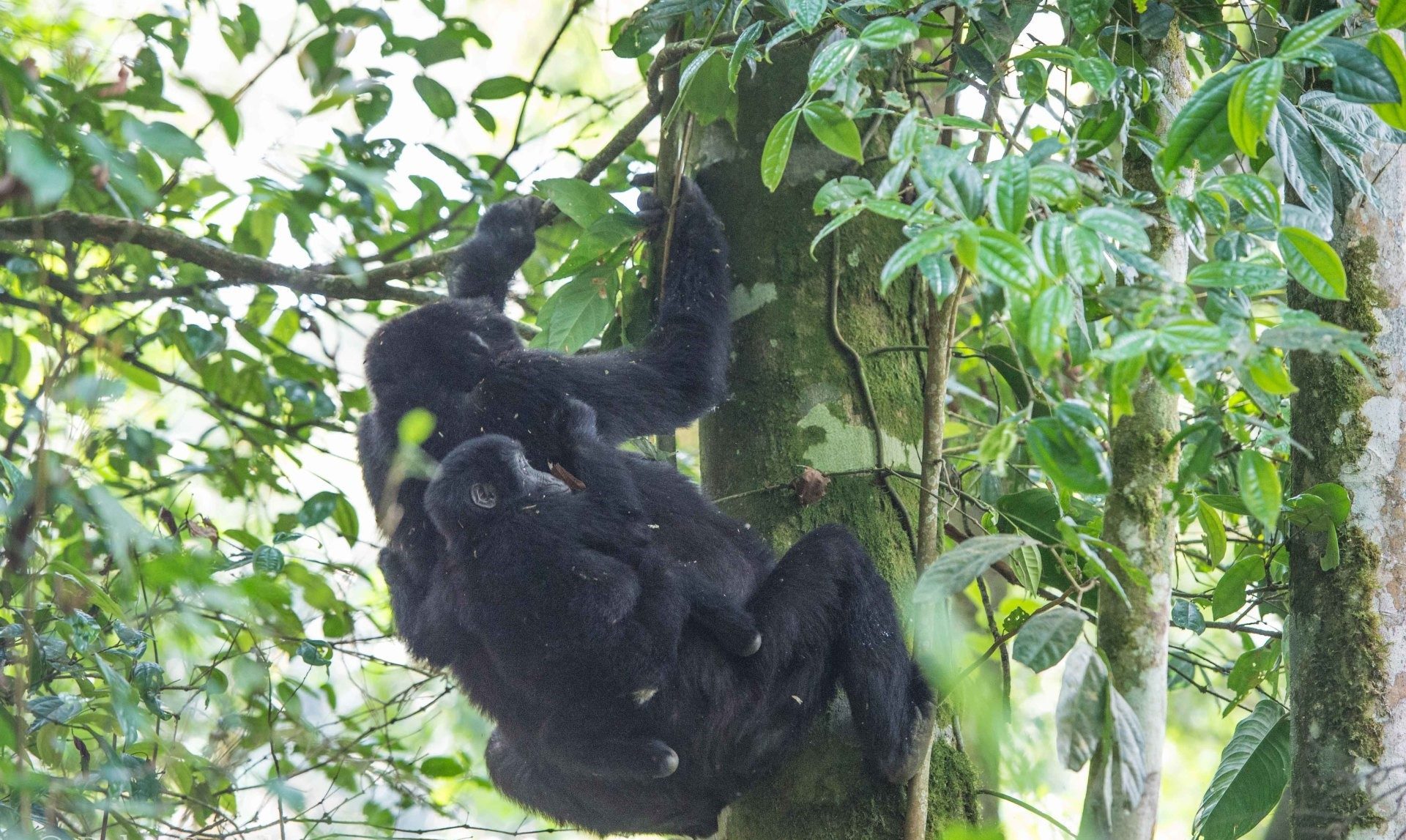
Gorilla trekking is the main reason people visit Volcanoes
National Park. You hike through the forest with park rangers to find a
habituated gorilla family . The hike can take anywhere from 30 minutes to
several hours, depending on where the gorillas are . The terrain is steep
and muddy, so you need proper boots. Once you find them, you spend one hour
watching them in their natural habitat . You see them eat, play, and
interact . Only eight people visit each gorilla family per day .
Getting a permit costs $1,500, and you should book it months in advance .
The high price helps fund conservation and local community projects . The
effort to reach them is worth it.
Golden Monkey
Tracking
Golden monkey tracking offers a different experience
from gorilla
trekking. These rare monkeys live in the bamboo forests at the base of the
volcanoes . They are fast-moving and jump between bamboo branches .
The trek starts from the park headquarters at 7:00 am . You follow a guide
to find a habituated group, which can have up to 100 monkeys . Once you
find them, you get one hour to watch them . Taking good photos is hard
because they move quickly in low light, so set your camera to a fast shutter
speed . A permit costs $100, making it a cheaper option than gorilla
trekking . You can often book a permit on the morning of the trek.
Hiking Mount
Bisoke
Hiking
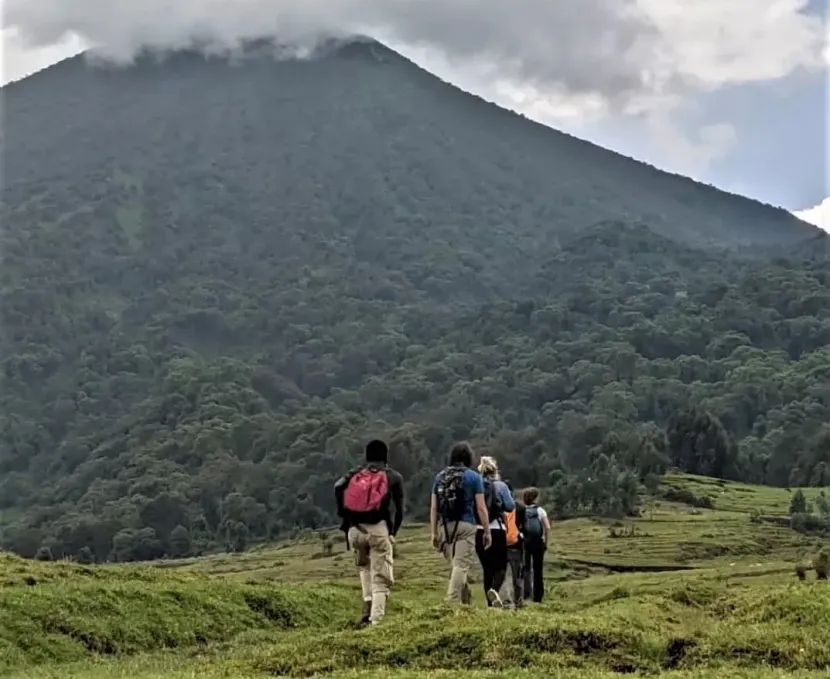
Mount Bisoke is a good option if you want a physical challenge with a big
reward. Mount Bisoke stands at 3,711 meters and has a large crater lake at its
summit . The round trip takes about 5 to 7 hours . The trail goes
through bamboo forest and high-altitude vegetation . You might see golden
monkeys and birds along the way . The hike is steep and can be muddy, so a
reasonable fitness level is needed . You must hike with a guide provided
by the park . The view from the crater lake looks out over the volcano
range and into the Democratic Republic of Congo . A permit for the hike
costs $75 .
Hiking Mount
Karisimbi
Mount Karisimbi is the highest peak in the Virunga
range at 4,507 meters . This hike is only for experienced hikers who are
physically fit. The trek takes two days with an overnight camp at about 3,700
meters . The trail passes through dense forests and alpine meadows .
From the top, you get wide views of the surrounding volcanoes . You may
also see wildlife, including gorilla nests, during the approach . The
difficulty comes from the altitude and the long walking hours . You need
to book this hike well in advance. The climb is tough but reaching the highest
point in Rwanda is a major achievement .
Dian Fossey
Grave Hike
This hike takes you to the site where primatologist Dian
Fossey worked and is buried . The round trip takes about 3 to 4
hours . The trail goes through mossy forest to the remains of her Karisoke
Research Center . At the site, you can visit her grave and the grave of
her favorite gorilla, Digit . The hike is moderate and not too hard for
most people . It gives you a look into the history of gorilla
conservation . The area is rich with birds and other small animals. This
hike is good for visitors who want a mix of nature and history. A permit costs
$75
Iby'Iwacu
Cultural Village Visit
This village sits right next to Volcanoes National
Park and gives you a look into traditional Rwandan life . The community
runs it, with many workers being former poachers who now protect gorillas
instead of hunting them . You watch traditional Intore dance performances
with drumming and singing. Local artisans show you how they weave baskets, make
pottery, and create crafts. You can try making banana beer or cooking local
dishes. The village visit helps fund community projects and conservation
efforts. You learn about Rwandan customs, history, and daily life directly from
the people who live there. The visit costs about $35 per person and lasts one
to three hours . It works well as an activity either before or after your
gorilla trek.
Bird Watching
Volcanoes National Park has about 200 bird species,
including 17 that live only in the Albertine Rift region . The park's
different habitats, from bamboo forests to montane grasslands, support many
bird types. You look for species like the Rwenzori Turaco, Handsome Francolin,
and the rare Scarlet-tufted Sunbird which you only find here . The best
bird watching happens in the morning or evening. During the dry season
(June-September and January-February), the trails are drier and give better
visibility, making bird spotting easier . A birding permit costs $55 per
person per day and includes a guide . This activity suits people who love
nature and want a quieter park experience away from the bigger wildlife.
Visit the Ellen
DeGeneres Campus of the Dian Fossey Gorilla Fund
This modern education center sits near the park and
focuses on gorilla
conservation. You see interactive exhibits that explain gorilla behavior,
their habitat, and the threats they face. The campus has a museum dedicated to
Dian Fossey and her research . You can walk on nature trails around the
campus. The center has research labs where scientists study gorillas. This
visit helps you understand more about gorilla conservation after you have seen
them in the wild. It connects your trekking experience to the bigger conservation
picture. The campus shows how researchers work to protect gorillas and their
environment . This activity is educational and works well as a follow-up
to your gorilla trek.
Best time to
visit Volcanoes National park for great adventures
The best time to visit Volcanoes National Park for
great adventures is during the two dry seasons, which run from June to
September and December to February . During these months, the trails are drier
and less slippery, making gorilla trekking and volcano hiking easier and
safer . This period also offers clearer skies, which is great for
photography, and cooler temperatures that make physical activities more
comfortable . However, because the weather is at its best, these months
are also the busiest, so you'll need to book your gorilla permits and
accommodation well in advance . If you prefer fewer crowds and don't mind
a bit of mud, you can visit during the rainy seasons (March to May and October
to November), as gorilla trekking is possible year-round
How to get there
to Volcanoes National park
To get to Volcanoes National Park, you first fly
into Kigali International Airport (KGL), as this is the main international
gateway . The park is located about 110 kilometers away in the northwest,
and almost everyone travels there by road . The most comfortable and
recommended option is a private transfer or a tour company vehicle that picks
you up from the airport or your hotel and takes you directly to the park
headquarters in Kinigi . The drive takes about 2.5 to 3 hours on a
well-paved, scenic road . For a budget option, you can take a public bus
from Kigali's Nyabugogo Bus Station to the nearby town of Musanze, but you'll
still need to get a taxi or motorbike for the final stretch to the park
entrance . There is no direct commercial airport, but luxury travelers can
book a helicopter transfer from Kigali, which takes about 30 minutes
Booking Rwanda
safaris with Zoophilist adventures and safaris
Booking a Rwanda safari with Zoophilist Adventures and Safaris
guarantees a seamless and enriching journey through the country’s most iconic
parks. As a trusted operator, we handle all logistics including permits,
accommodation, and transfers, ensuring your gorilla trekking or wildlife safari
is stress-free. Our professional guides provide insightful experiences,
maximizing your chances of encountering gorillas in Volcanoes National Park or
spotting diverse wildlife in Akagera. With tailored itineraries for different
budgets, from luxury lodges to community stays, Zoophilist emphasizes
responsible tourism supporting conservation and local communities. Booking
early secures permits and preferred lodges, making your Rwanda safari both
practical and meaningful.