
Did you know Queen Elizabeth National Park is Uganda’s
most visited safari destination, offering an incredible mix of wildlife,
landscapes, and cultural experiences? Stretching across savannah, wetlands, and
crater lakes, it is home to over 95 mammal species and more than 600 bird
species, making it East Africa’s richest birding haven. Visitors marvel at the
rare tree-climbing lions of Ishasha, enjoy serene boat cruises along the Kazinga
Channel, and trek chimpanzees in the dramatic Kyambura Gorge. Classic game
drives on the Kasenyi Plains reveal elephants, buffalo, and big cats, while
cultural encounters at Lake Katwe Salt Mines add depth to the safari. With
crater lakes, lush forests, and the scenic Mweya Peninsula, Queen Elizabeth
offers a quintessential Ugandan safari adventure.
Tree-Climbing
Lions of Ishasha
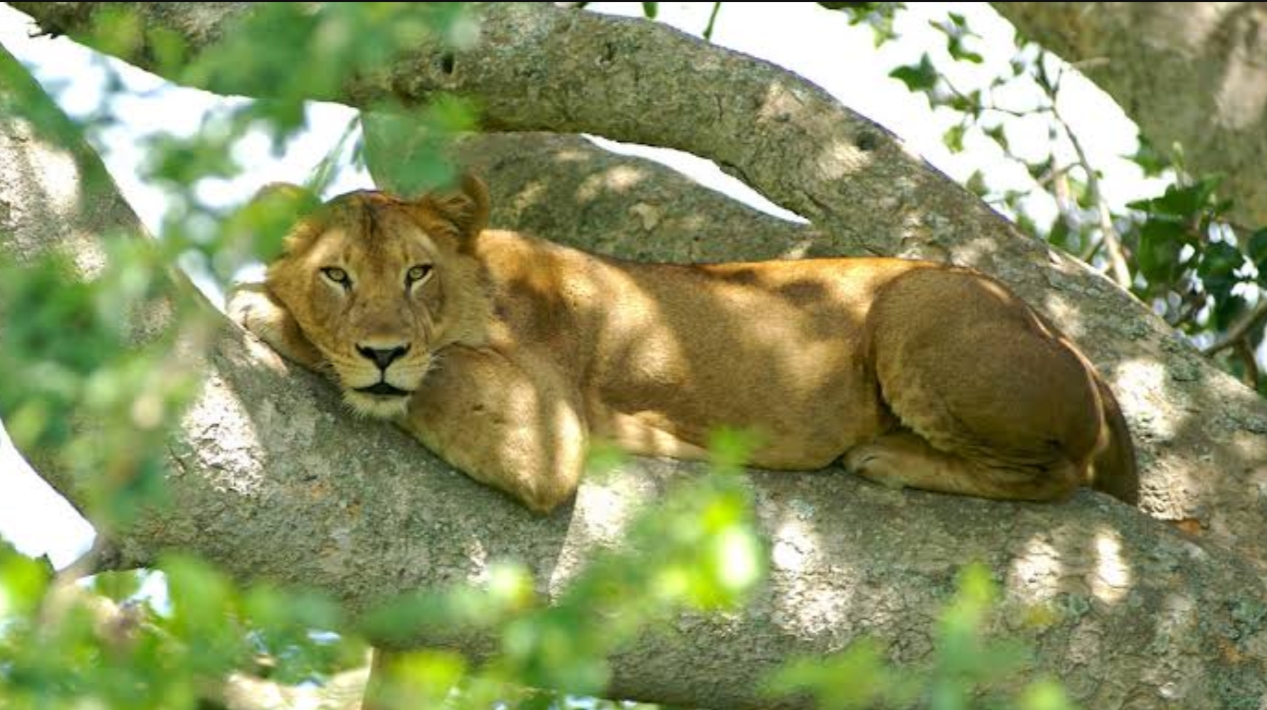
In the southern Ishasha sector, lions have developed
a rare habit of lounging in the branches of fig and acacia trees, a behavior
found in only one other location in Africa. These magnificent predators rest
high above the ground, likely to escape biting insects and enjoy cooler
breezes. For safari travelers, spotting lions draped lazily across branches
against the savannah backdrop is a surreal and unforgettable experience.
Ishasha’s tree-climbing lions are a photographer’s dream, offering unique
angles and dramatic wildlife shots. This rare adaptation makes Ishasha a must‑visit
detour within Queen Elizabeth National Park, adding a distinctive twist to the
classic African safari and ensuring visitors leave with extraordinary memories
of Uganda’s wildlife.
Kazinga Channel
Boat Cruise
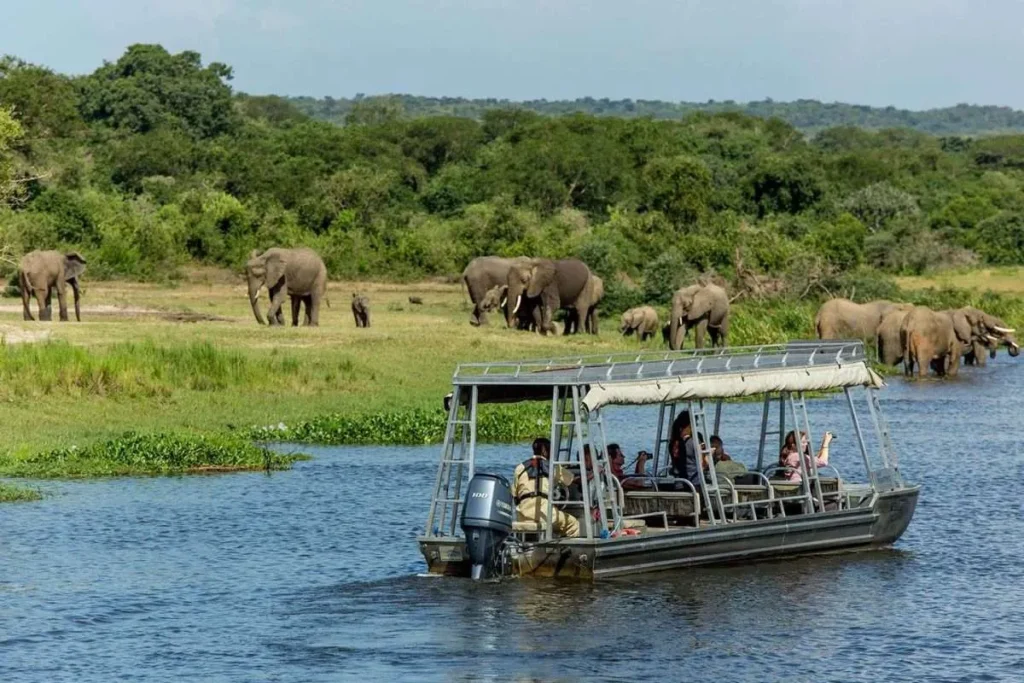
The Kazinga
Channel is a 32‑kilometre natural waterway linking Lake Edward and Lake George,
renowned for hosting one of the world’s highest concentrations of hippos. A
boat cruise here offers close‑up encounters with grunting hippo pods, basking
Nile crocodiles, elephants cooling off at the water’s edge, and buffaloes
drinking along the shoreline. The channel is also a paradise for birdwatchers,
with fish eagles, kingfishers, and herons dive‑bombing the waters. This two‑hour
cruise provides a serene contrast to dusty game drives, allowing travelers to
observe wildlife at eye level while enjoying spectacular photography
opportunities. The Kazinga Channel is a core highlight of Queen Elizabeth
National Park, showcasing the park’s rich biodiversity in a tranquil, immersive
setting.
Chimpanzee
Tracking in Kyambura Gorge
Kyambura Gorge, often called the “Valley of the
Apes,” is a dramatic 100‑metre‑deep chasm carved into the savannah, sheltering
a habituated community of chimpanzees. Trekking through its lush forest floor
is a thrilling adventure, as guides listen for pant‑hooting calls that signal
the troop’s location. Once found, visitors watch chimpanzees swing through the
canopy, forage on the ground, and display complex social behaviors. The gorge’s
unique ecosystem also supports other primates, birds, and butterflies, making
it a biodiversity hotspot. Its striking scenery, combined with the excitement
of tracking our closest relatives, ensures Kyambura offers one of Uganda’s most
memorable primate encounters, blending adventure, science, and raw natural
beauty in a single trek.
Game Drives on
Kasenyi Plains
The Kasenyi Plains deliver classic savannah safari
experiences, where wide open grasslands teem with wildlife. Morning and late afternoon
game drives reveal elephants kicking up dust, herds of Cape buffalo grazing,
and prides of lions stalking Uganda kobs, the park’s signature antelope.
Leopards, warthogs, and spotted hyenas also roam these plains, creating dynamic
predator‑prey interactions. The area is particularly known for its large lion
population, making it one of the best places in Uganda to witness big cat
behavior. With sweeping views and abundant wildlife, Kasenyi offers
quintessential safari moments, combining thrilling encounters with breathtaking
landscapes. It is a must‑visit sector of Queen Elizabeth National Park for
travelers seeking authentic African game drives.
Maramagambo
Forest Nature Walks
Maramagambo Forest is a lush expanse within Queen
Elizabeth National Park, offering guided walking safaris through established
trails. The forest is home to at least nine primate species, including
chimpanzees, red‑tailed monkeys, L’Hoest’s monkeys, and baboons, making it a
haven for primate enthusiasts. Birdwatchers delight in spotting forest
specialists, while butterflies and unique flora add to the experience. The
walks provide a slower, more intimate way to explore the park, allowing
visitors to connect with nature beyond game drives. Maramagambo also features
caves inhabited by bats and pythons, adding an adventurous twist. Its
combination of biodiversity, tranquility, and cultural lore makes it a
fascinating stop for those seeking variety in their safari.
Bird Watching
Paradise
Queen Elizabeth National Park is a birdwatcher’s
paradise, boasting over 600 recorded species—the largest checklist of any
protected area in East Africa. From wetlands to forests, the park’s diverse
habitats support iconic species like the shoebill stork, martial eagle,
flamingos, African skimmers, and the elusive papyrus gonolek. Birding here is
rewarding year‑round, with migratory species arriving between November and
April. Whether on boat cruises, forest walks, or savannah drives, birdlife is
abundant and varied, offering endless opportunities for enthusiasts and
photographers. The sheer diversity makes Queen Elizabeth one of Africa’s
premier birding destinations, where every safari is enriched by vibrant avian
encounters alongside the park’s larger mammals.
Lake Katwe Salt
Mines
Lake Katwe offers a unique cultural experience
within Queen Elizabeth National Park, where visitors witness traditional salt
harvesting methods passed down through generations. Local communities extract
salt by hand from the lake’s alkaline waters, a practice that has sustained
livelihoods for centuries. The salt pans create striking geometric patterns
across the landscape, offering excellent photography opportunities. Guided
tours explain the history, techniques, and challenges of this demanding work,
providing insight into Uganda’s cultural heritage. Lake Katwe blends geology,
culture, and economy, making it more than just a scenic stop. It is a
fascinating detour that connects travelers with the human stories intertwined
with the park’s natural wonders.
Crater Lakes
Scenic Drive
The volcanic history of Queen Elizabeth National
Park created a stunning landscape dotted with crater lakes, each offering
unique beauty. A scenic drive through this region reveals panoramic views of
shimmering lakes nestled within ancient craters, surrounded by farms and
forests. Highlights include Lake Katwe, known for salt mining, and other lakes
that provide breathtaking vistas of the Rwenzori Mountains in the distance. The
drive combines geological wonder with cultural interaction, as visitors encounter
local communities living around these lakes. It is a peaceful yet visually
dramatic experience, offering a different perspective on the park beyond
wildlife. The crater lakes showcase Uganda’s rich geological past and present‑day
human resilience.
Mweya Peninsula
The Mweya Peninsula is the hub of tourism activities
in Queen Elizabeth National Park, offering sweeping panoramic views over Lake
Edward and the surrounding savannah. With the Rwenzori Mountains forming a
dramatic backdrop, Mweya is a perfect vantage point for appreciating the park’s
scale and beauty. The peninsula hosts lodges, visitor centers, and boat launch
sites, making it a convenient base for exploring attractions like the Kazinga
Channel. Wildlife sightings are common, with warthogs, hippos, and elephants
often seen nearby. Mweya combines accessibility, scenery, and wildlife, serving
as both a practical hub and a scenic highlight. For many travelers, it is the
starting point of their Queen Elizabeth adventure, blending comfort with unforgettable
views.
Best time to
visit Queen Elizabeth National Park
The best time to visit Queen Elizabeth National Park
is during the two dry seasons, which run from January to February and June to
July, when wildlife viewing is at its peak . During these months, the
vegetation is thinner and animals are drawn to predictable water sources,
making them much easier to spot in the savannah . Trails are also more
solid and accessible for game drives, and the weather is generally sunny with
warm daytime temperatures averaging around 28°C to 30°C . While the park
is open year-round, the wet seasons (March to May and August to December) bring
heavy rains that can make some roads impassable and wildlife more dispersed due
to abundant water across the landscape