
Nyungwe National Park is a protected rainforest in
southwest Rwanda, covering over 1,000 square kilometers. It is home to 13
primate species, including chimpanzees and a 400-strong troop of colobus
monkeys, plus 345 bird species. The park offers activities for different
fitness levels, from short walks to full-day hikes. Its main attractions
include chimpanzee trekking, a canopy walkway 70 meters high, bird watching,
ziplines, and waterfall hikes. Tea plantations border the forest and offer
tours. A new eco-lodge provides overnight stays inside the park. The terrain is
hilly and often muddy, so sturdy boots are needed. Permits for primate trekking
cost $150, and guides are required for all forest activities. The best visiting
months are January to June and September to December.
1. Chimpanzee
Trekking
Chimpanzee trekking is the main reason many people
visit Nyungwe. The park has over 500 chimpanzees, with two groups used to human
presence. You start early morning with a briefing about the rules, then hike
into the forest with a guide to find them. The trek can take 2 to 6 hours depending
on where the chimps moved overnight. Once found, you get one hour with them.
The success rate is around 90%, so your chances are good. You must be at least
15 years old, and the permit costs $150 for foreign visitors. Wear long
sleeves, long trousers, and sturdy waterproof boots for the hike.
2. Canopy
Walkway
This is a suspension bridge 160 meters long and 70
meters above the forest floor, the only one of its kind in East Africa. You access
it via the Igishigishigi Trail starting at the Uwinka Visitor Center. From the
bridge, you get a bird's-eye view of the rainforest and can see birds and
monkeys moving through the treetops. The walk itself takes about two hours
total. It costs $60 per person. The bridge is made of metal and is safe, but it
moves a bit. If you are afraid of heights, think carefully before going up.
Children aged six and older can join.
3. Colobus
Monkey Tracking
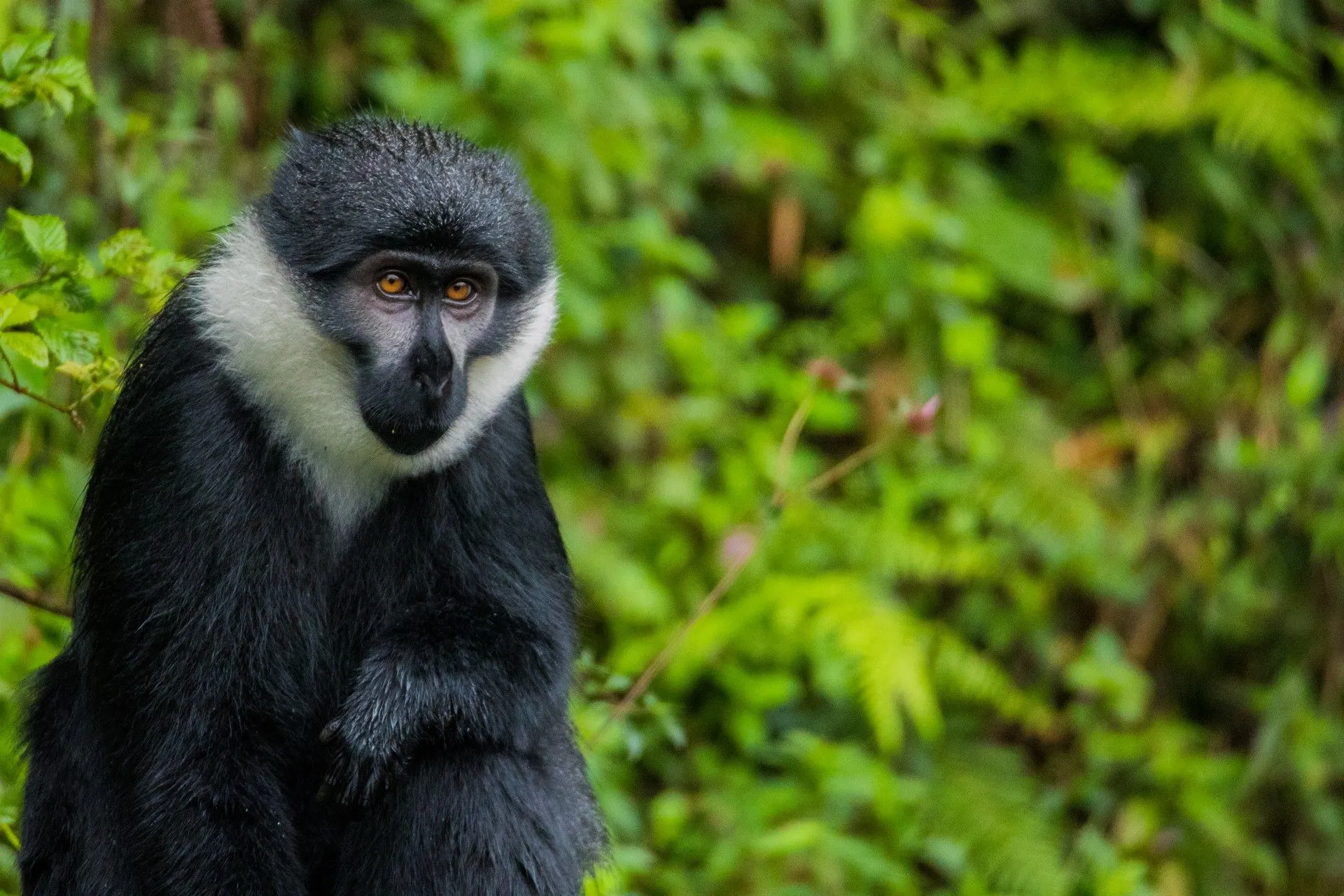
Nyungwe is home to a mega-troop of Rwenzori
black-and-white colobus monkeys numbering over 400 individuals, one of the
largest in Africa. Tracking them is often easier than chimpanzee trekking
because the troop is large and easier to find. The hike follows designated
trails and offers good chances for photos. These monkeys are striking to see
with their long white tails and black bodies. Guided walks take you to areas
where they feed and rest, and you may also see other monkeys like L'Hoest's and
red-tailed monkeys along the way.
4. Bird Watching
The park is considered one of the best birding spots
in East Africa, with 345 recorded species. Among these are 29 species found
only in the Albertine Rift region, such as the Ruwenzori turaco, red-collared
mountain babbler, and Rockefeller's sunbird. Forest birding requires patience
as birds are often heard more than seen. Early morning walks with guides give
you the best chance to spot them. January to June is the best period for
birding because birds are more vocal then. It is a good activity for both
experienced birders and beginners.
5. Nyungwe
Zipline
This is a newer attraction and a long zipline of
1,935 meters, divided into three sections starting from the Uwinka Visitor
Centre. It offers a fast trip through and above the treetops, giving you a
different perspective than the canopy walk. It covers 1,935 meters in total. It
is for visitors who want an activity with some speed. It is guided and
considered safe. The course ends near the canopy walkway. This is a good option
if you want to see the forest from above but prefer an active ride over a
walking bridge.
6. Hiking Trails
The park has over 130 kilometers of maintained
trails for hiking. Trails range from short walks to full-day hikes up to Mount
Bigugu, the park's highest point at 3,000 meters. Each trail offers different
views, such as waterfalls, swamps, or views across the forest and Lake Kivu.
The Igishigishigi Trail leads to the canopy walk, while the Isumo Trail goes to
a large waterfall. Some trails are physically demanding due to steep slopes and
muddy conditions. Guides are required and will help you choose a trail matching
your fitness level.
7. Kamiranzovu
Waterfall and Swamp
The Kamiranzovu area is a large swamp and waterfall
inside the park. The waterfall's name means "eating an elephant" in
the local language, which refers to the swamp that feeds it. Hiking here takes
you through different types of forest and open marshland. You can see
waterbirds and plants that grow near water. The trail to the waterfall is a
good choice for visitors who want a clear destination for their hike. It is
less steep than some mountain trails, making it a moderate walk. The waterfall
is powerful and is a good spot to take a break and enjoy the forest sounds.
8. Gisakura Rope
Course
This is an aerial obstacle course, 280 meters long,
located near the park's Gisakura Visitor Centre. It has 21 parts, including
rope bridges and small ziplines. It is designed for different skill levels, so
families and groups can do it together. It is more about physical activity and
fun than wildlife viewing. It offers a way to engage with the forest edge
actively. The course is newer and adds variety to the park's attractions. It is
a good rainy-day backup plan as parts of it may stay dry under the canopy.
Check with the visitor centre for age and fitness requirements before you go.
9. Tea
Plantation Tours
Large tea plantations like Kitabi, Gisakura, and
Gisoyu sit on the edges of the park. These areas provide jobs for local
communities and act as buffer zones for the forest. You can take guided tours
of the plantations to learn how tea is grown and processed. The rolling green
hills make a strong visual contrast with the dark forest. Tours offer a
different activity from hiking and provide a cultural experience. You can also
buy local tea as a souvenir. This is an easy activity that does not require the
physical fitness needed for forest treks and is good for visitors of all ages.
10. Munazi Eco
Lodge and Night Stays
Munazi Eco Lodge opened inside the park in 2025 with
nine A-frame cottages built from reclaimed wood. Staying here places you
directly inside the forest. Cottages are raised above the ground for privacy
and forest views. The lodge is designed to be sustainable and built by local
workers. From the lodge, you can sometimes spot wildlife like monkeys near the
cabins. Staying overnight lets you experience the forest at night and early
morning. It is a comfortable base for accessing trails and the canopy walk.
Booking in advance is advised as it is a new and small lodge
Best time to
visit Nyungwe National park
The best time to visit Nyungwe is during the dry
seasons, from June to September and December to February, when trails are firm
and less slippery, which makes hiking and chimpanzee trekking easier. The wet
seasons, from March to May and October to November, bring heavier rain, making
paths muddy and more challenging to walk. However, this rainy period is a good
choice for birdwatchers, as there are many species to see, and the park is much
less crowded. Keep in mind that Nyungwe is a rainforest, so some rain is
possible all year; you should always pack waterproof clothes and sturdy boots