
The Great Migration is one of the most spectacular
wildlife events in Africa and a major highlight of a Tanzania safari. Every
year, millions of wildebeests, accompanied by thousands of zebras and gazelles,
move across the vast plains of the Serengeti National Park in search of fresh
grass and water. This natural movement creates incredible opportunities to
witness large herds, dramatic river crossings, predator encounters and the
beauty of Tanzania's wilderness.
A Great Migration safari offers an unforgettable
experience for wildlife lovers, photographers and adventure travelers. However,
the migration is not a single event that happens in one location. It moves
throughout the year, following seasonal rainfall and the availability of fresh
grazing. Understanding its movements helps you choose the right time and area
for your safari.
What Is the
Great Migration?
The Great Migration is the annual movement of
approximately 1.5 million wildebeests, hundreds of thousands of zebras and
other grazing animals across the Serengeti ecosystem in Tanzania and the Maasai
Mara in Kenya. The animals travel in search of fresh grazing pastures and
water, covering long distances throughout the year.
This journey is part of their natural survival
cycle. As the herds move, they encounter predators such as lions, leopards,
cheetahs, hyenas and crocodiles. These encounters make the migration an
exciting wildlife spectacle, with opportunities to observe hunting behavior,
animal interactions and dramatic river crossings. The Serengeti is the main
destination for witnessing the Great Migration in Tanzania, with different
areas offering unique experiences depending on the season.
5 Best
Experiences on a Great Migration Safari in Tanzania
1. Witness the
Great Wildebeest Calving Season
The calving season is one of the most exciting
experiences of the Great Migration. It usually takes place between January and
March, with February being a particularly important month. During this period,
thousands of wildebeest give birth across the southern Serengeti plains and the
Ndutu area. The arrival of newborn calves attracts predators, including lions,
cheetahs, hyenas and leopards, creating excellent opportunities to observe
wildlife interactions. Visitors can witness newborn wildebeest taking their
first steps, mothers protecting their young and predators searching for food.
This season is especially rewarding for wildlife photographers and travelers
interested in animal behavior.
2. Witness the
Mara River Crossings
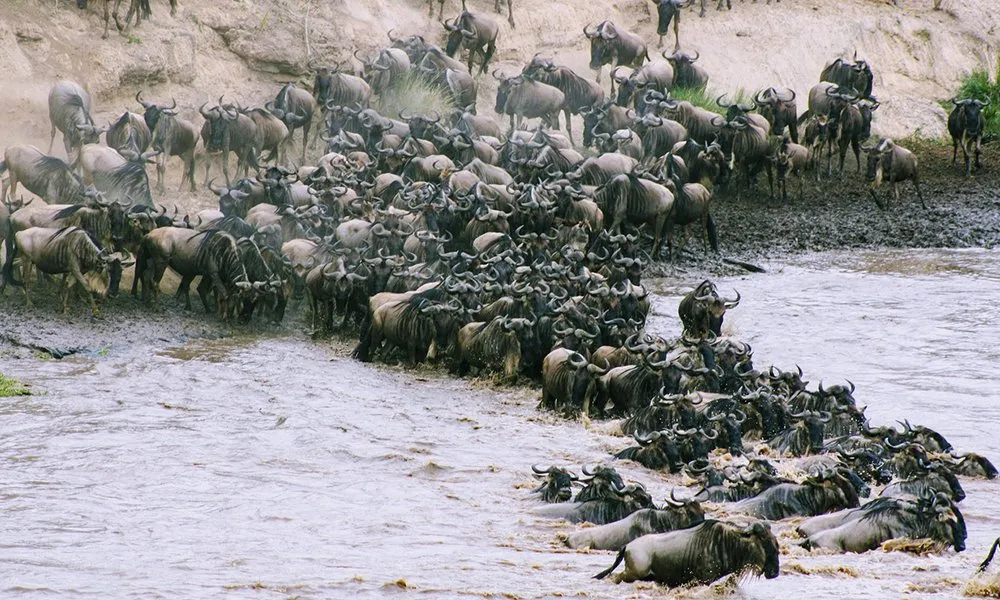
The Mara River crossings are among the most famous
highlights of a Great Migration safari in Tanzania. Usually occurring between
July and October, these crossings take place in the northern Serengeti as large
herds attempt to cross the Mara River while moving between Tanzania and Kenya. The
experience can be dramatic as thousands of wildebeest gather along the
riverbanks before entering the water. They face strong currents, steep riverbanks
and Nile crocodiles waiting in the water. Some animals hesitate for hours
before making the crossing, while others follow the herds into the river. Watching
these animals navigate the river is an unforgettable wildlife experience.
However, crossings are unpredictable, and there is no guarantee of witnessing
one during a safari.
3. Enjoy Game
Drives across the Serengeti Plains
Game drives are among the best ways to experience
the Great Migration in Tanzania. They allow visitors to explore different parts
of the Serengeti while following the movement of wildebeest, zebras and other
wildlife. With an experienced safari guide, you can travel through open
grasslands, woodland areas and river valleys in search of the migrating herds. Besides
witnessing the migration, game drives provide opportunities to spot the Big
Five, including lions, elephants, leopards, buffaloes and rhinoceroses. You may
also encounter cheetahs, giraffes, hyenas, hippos and various antelope species.
Morning and afternoon game drives offer different wildlife experiences, with
early mornings being particularly rewarding for observing predators when they
are most active.
4. Experience a
Hot Air Balloon Safari
A hot air balloon safari is a wonderful way to
appreciate the Great Migration from a different perspective. The experience
usually begins early in the morning before sunrise, when visitors take off over
the vast Serengeti plains. As the balloon rises, you can enjoy beautiful aerial
views of migrating herds, winding rivers, scattered acacia trees and wildlife
moving across the grasslands. Depending on the season and location, you may see
large concentrations of wildebeest and zebras from above. After landing, many
balloon safari experiences include a bush breakfast in the wilderness. This
activity is usually offered at an additional cost and is particularly suitable
for travelers looking for a memorable and special safari experience.
5. Enjoy
Wildlife Photography during the Migration
The Great Migration provides some of the best wildlife photography opportunities in Africa. The enormous herds, dramatic river crossings, newborn calves and predator encounters create memorable scenes for both professional and beginner photographers. During the calving season, photographers can capture newborn wildebeest, mothers caring for their young and predators moving through the grasslands. During the river crossing season, the gathering herds, splashing water and crocodile encounters provide dramatic photographic moments. The Serengeti's beautiful landscapes also create excellent opportunities for capturing sunrise and sunset photographs. Travelling with a knowledgeable guide and having enough time in the park can help you find rewarding photography locations.
Best Time to
Experience the Great Migration in Tanzania
The Great Migration happens throughout the year,
making Tanzania a rewarding safari destination in different seasons. However,
the best time to visit depends on the particular migration experience you want
to witness. The movement of the herds is influenced by rainfall, fresh grazing
and water availability, so their exact locations may change from year to year.
January to
March: Calving Season in Southern Serengeti
January to March is one of the best periods to visit
Tanzania for the Great Migration calving season. During these months, large
herds gather in the southern Serengeti and Ndutu plains, where nutritious grass
provides suitable conditions for wildebeest to give birth.
February is particularly rewarding because thousands
of calves are born within a short period. This attracts predators such as
lions, cheetahs, leopards and hyenas, creating excellent opportunities for
wildlife viewing and photography. If you want to see newborn wildebeest and
predator activity, this is an excellent time to plan your safari.
April to May:
The Herds Move towards Western Serengeti
During April and May, the wildebeest herds gradually
leave the southern plains and begin moving towards the central and western
Serengeti in search of fresh grazing. This period coincides with the long rainy
season, when some roads can become muddy and challenging to navigate.
Although it is not the most popular period for
migration safaris, visitors can still enjoy large herds, beautiful green
landscapes and fewer crowds in certain areas. It can also be a good season for
photographers interested in capturing the Serengeti's lush scenery.
June to July: Grumeti River Crossings
June and July are exciting months to explore the
Western Corridor of the Serengeti. During this period, large herds move towards
the Grumeti River, where they face the challenge of crossing
crocodile-inhabited waters.
The crossings can be dramatic as wildebeest gather
along the riverbanks before attempting to reach the opposite side. This period
also offers excellent game drives, with opportunities to see predators and
other wildlife throughout the Western Corridor.
August to
October: Mara River Crossings in Northern Serengeti
August to October is one of the most popular periods
for a Great Migration safari in Tanzania. During these months, large herds
gather in the northern Serengeti, particularly around Kogatende and the Mara
River.
The highlight is witnessing wildebeest attempting to cross the river as they move between Tanzania and Kenya. The crossings are unpredictable, but spending several days in the northern Serengeti increases your chances of witnessing this remarkable event. This period is particularly suitable for travelers whose main goal is to experience the famous river crossings.
November to
December: Return to Southern Serengeti
November and December mark the beginning of the
herds' return towards the southern Serengeti. Following the short rains, fresh
grass begins to grow across the plains, attracting wildebeest and zebras back
towards the Ndutu area.
Although the calving season has not fully started,
these months provide opportunities to see large herds moving across the
Serengeti. The green landscapes, fewer crowds in some areas and returning
wildlife make this an attractive time for a safari.
Overall, January to March is best for the calving
season, June to July for the Grumeti River crossings, and August to October for
the Mara River crossings. However, the migration is a natural event, and
sightings cannot be guaranteed on specific dates.
Where to See the
Great Migration in Tanzania
The Serengeti ecosystem is the main destination for
experiencing the Great Migration in Tanzania. However, different regions offer
different wildlife experiences depending on the time of year.
Southern Serengeti and Ndutu: These areas are best
known for the calving season, especially between January and March. The open
grasslands provide excellent opportunities to see newborn wildebeest and
predators.
Central Serengeti: The central region, particularly
the Seronera area, offers excellent wildlife viewing throughout the year. It is
also an important area for observing the herds as they move between the
southern and western parts of the ecosystem.
Western Serengeti: The Western Corridor is
particularly important between May and July when migrating herds move towards
the Grumeti River. This region offers opportunities to witness river crossings
and large concentrations of wildlife.
Northern Serengeti: This is the best area to visit
for the famous Mara River crossings, generally between July and October. Areas
around Kogatende and the Mara River provide access to important migration
routes.
How to Get to
the Serengeti for a Great Migration Safari
Most Great Migration safaris in Tanzania begin in
Arusha, the country's main safari tourism hub. From Arusha, visitors can travel
to the Serengeti by road or take a domestic flight to one of the park's
airstrips.
A road safari allows you to explore other northern
Tanzania destinations, such as Tarangire National Park, Lake Manyara National
Park and the Ngorongoro Conservation Area before reaching the Serengeti.
Depending on your chosen route and destination within the park, the journey can
take several hours.
Alternatively, you can take a domestic flight from
Arusha or Kilimanjaro to airstrips serving different Serengeti regions. For
example, flights to Kogatende provide convenient access to the northern
Serengeti during the Mara River crossing season, while flights to Ndutu are
useful during the calving season.
Where to Stay
During a Great Migration Safari
Accommodation choices depend on the season and the
location of the migrating herds. Tanzania offers luxury lodges, tented safari
camps and comfortable mid-range accommodation within and around the Serengeti.
Mobile tented camps are particularly popular for
migration safaris because they move seasonally to remain close to the herds.
This allows visitors to spend less time travelling between their accommodation
and important wildlife viewing areas.
For the calving season, consider accommodation
around Ndutu and the southern Serengeti. During the Grumeti crossings, choose
camps in the Western Corridor, while the northern Serengeti and Kogatende are
ideal for Mara River crossing experiences.
Choosing accommodation close to the migration route
helps maximize your time for game drives and wildlife viewing.
How Many Days Do
You Need for a Great Migration Safari?
A Great Migration safari generally requires between
5 and 8 days, depending on the experiences you want to include and the Serengeti
region you plan to visit. A five day safari can provide a good introduction to
the Serengeti and its migrating wildlife. However, a seven or eight day safari
allows more time to explore different regions, enjoy multiple game drives and
increase your chances of witnessing special migration events. You can also
extend your safari to include the Ngorongoro Crater, Tarangire National Park or
Lake Manyara National Park for a more complete northern Tanzania wildlife
experience.
Essential Tips
for Planning a Great Migration Safari in Tanzania
Choose your travel month carefully: Decide whether
you want to experience calving season, Grumeti River crossings or Mara River
crossings before booking your safari.
Book accommodation early: Popular migration camps,
especially in the northern Serengeti, can fill up quickly during peak seasons.
Allow enough time: Spending several days in the
right migration area gives you better opportunities to witness wildlife
activities.
Travel with an experienced guide: A knowledgeable
safari guide understands the migration routes and can help locate the herds.
Carry suitable safari clothing: Pack comfortable
neutral-colored clothing, a hat, sunscreen, sunglasses and warm layers for
early morning game drives.
Bring a good camera: Wildlife photography is a major
highlight, so carry a camera with a suitable zoom lens or binoculars for
distant sightings.
A Great Migration safari in Tanzania is an
extraordinary wildlife adventure that brings you closer to one of nature's most
remarkable journeys. From witnessing thousands of wildebeest giving birth in
the southern Serengeti to watching massive herds cross the Mara River in the
north, every season offers something special. Whether you are interested in
wildlife photography, predator encounters, river crossings or simply observing
enormous herds moving across the African plains, the Serengeti provides an
unforgettable safari experience. With proper timing, suitable accommodation and
an experienced safari guide, you can enjoy one of Africa's greatest wildlife
spectacles and create lasting memories in Tanzania. Plan your Great Migration
safari around the season you want to experience and discover the incredible
wildlife of the Serengeti.