
Tanzania offers some of Africa’s most iconic safari
destinations, each with unique landscapes and wildlife experiences. A Tanzania
safari is incomplete without the Serengeti, famous for the Great Migration
and predator action across its vast plains. The Ngorongoro Crater provides
unmatched density of animals, including rare black rhinos, within a dramatic
volcanic caldera. Tarangire stands out for its massive elephant herds and
striking baobab trees, while Lake Manyara adds variety with tree-climbing lions
and flamingo-filled shores. For travelers seeking remoteness, Nyerere and Ruaha
deliver water-based safaris and wild dog sightings away from crowds. Mikumi,
easily accessible from Dar es Salaam, offers consistent wildlife viewing and
birdwatching. Together, these destinations ensure Tanzania safaris deliver
diversity, adventure, and unforgettable encounters with Africa’s most
celebrated wildlife.
Serengeti
National Park
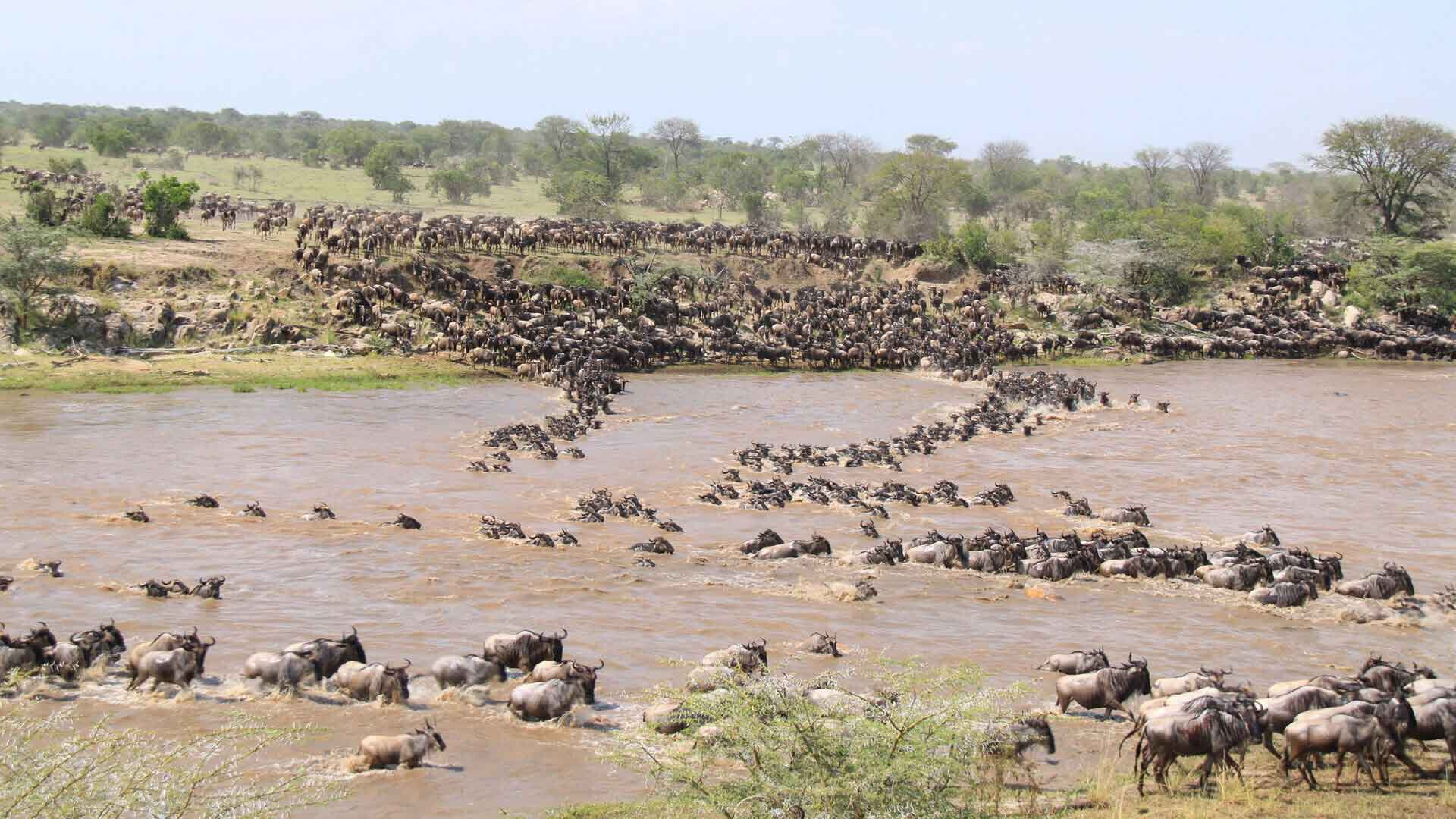
The Serengeti is the most famous
park in Tanzania, and for good reason. Its vast plains are home to the
Great Migration, where over 1.5 million wildebeest and zebras move in search of
fresh grazing . This is a year-round event, so you have a good chance of
seeing large herds no matter when you visit . The park is also a top spot
for seeing predators like lions, cheetahs, and leopards in action . Game
drives are the main activity here, and the open landscapes make wildlife easy
to spot . If you want to see classic African wildlife on a grand scale,
the Serengeti is a reliable choice.
Ngorongoro
Crater
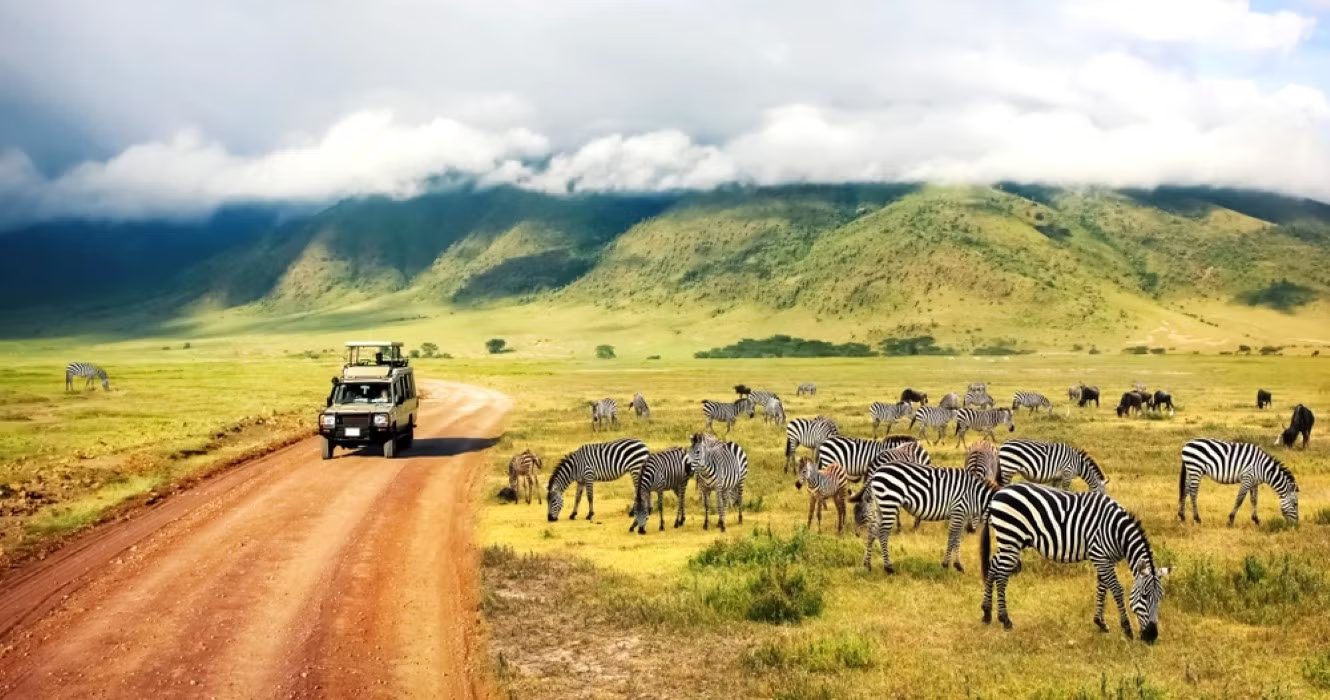
The Ngorongoro Crater is a massive volcanic caldera
that acts as a natural enclosure for a huge number of animals. It holds the
highest density of wildlife in Africa, making game drives very productive .
In a single visit, you can often see lions, elephants, buffalo, and the rare
black rhino, which is one of the few places left to see them . The crater
floor has its own ecosystem with a lake, grasslands, and forest, so the scenery
is diverse. Getting there involves a steep drive down, but the concentration of
animals waiting below is worth it, especially if you are short on time.
Tarangire
National Park
Tarangire is famous for its large elephant herds,
with some groups numbering in the hundreds . The park’s landscape is
dotted with huge baobab trees, which provide a dramatic backdrop for
photography . During the dry season (July to November), the Tarangire
River becomes the main water source, so animals are forced to gather here,
making them easier to find . It is a quieter alternative to the Serengeti
but offers excellent biodiversity, including sightings of leopards and unusual
antelopes like the gerenuk . It’s a strong option if you want good
wildlife viewing without the biggest crowds.
Lake Manyara
National Park
Lake Manyara is a smaller, more compact park, which
makes it ideal for a short visit or a stopover between other destinations. It
is known for its tree-climbing
lions, which are a rare sight . The park also has a large soda lake
that attracts thousands of flamingos and other water birds, offering a
completely different experience from the open plains . The varied
habitats, from groundwater forests to the lake shore, mean you can see several
different species in a single game drive . It works well as a half-day
excursion, but you can see a lot without spending a full day driving.
Nyerere National
Park
Formerly part of the Selous Game Reserve, Nyerere is
one of the largest national parks in Africa and remains relatively
untouched . Unlike the northern parks, the main way to explore here is by
boat on the Rufiji River . This is a great way to get up close to hippos,
crocodiles, and elephants along the water's edge. The park is also known for
having a high buffalo population (around 150,000) and a healthy number of
lions . If you are looking for a more remote and water-based safari
experience away from the crowds, this southern park is a top choice.
Ruaha National
Park
Ruaha is one of Tanzania’s most remote parks,
covering a huge area of rugged hills and ancient baobab trees . It is
known for its large populations of lions and endangered wild dogs, so you have
a good chance of seeing them . The Great Ruaha River draws animals
together during the dry season (June to October), making wildlife easier to
find . Because it is far from the popular northern parks, visitor numbers are
low, which offers a quiet safari experience . Walking safaris are a main
activity here, led by well-trained guides who take small groups on foot .
It is a strong choice if you want a wilderness atmosphere without many other
vehicles .
Mikumi National
Park
Mikumi is the most accessible park from Dar es
Salaam, making it a good option for travelers short on time . The open
Mkata Floodplain has consistent wildlife viewing, with elephants, giraffes,
lions, and buffalo often seen in large numbers . It is also one of the few
places in Tanzania where you can observe tree-climbing lions, a rare
behavior . The park has over 400 bird species, which works well for
visitors with an interest in bird watching . A new lodge opened here in
2026, and the park permits activities like night drives that are not allowed in
some northern parks . It serves as a practical entry point for
experiencing southern Tanzania, especially for those combining a safari with a
beach stay on Zanzibar
Best time to
visit Tanzania safari Destinations
The best time to visit Tanzania for a safari is
generally during the dry season, from June to October, when wildlife
viewing is at its peak. During these months, the lack of rain causes vegetation
to thin out and animals to gather around remaining water sources, making them
much easier to spot . This period also coincides with the most dramatic
parts of the Great Migration, particularly the famous river crossings in the
northern Serengeti, which usually occur from July through September .
However, January and February are also excellent, as this is the calving season
in the southern Serengeti, where you can see many newborn animals and intense
predator activity . The rainy seasons from March to May and November to
December bring fewer crowds and lower prices, but the wet conditions can make
some roads difficult and wildlife more challenging to find . If you want a
balance of good weather and smaller crowds, the shoulder months like October or
June can be a great compromise
How to get there
to Tanzania safari Destinations
Getting to Tanzania's safari destinations involves
choosing the right entry point and then using a mix of flights and road travel.
First, you fly into one of three main international airports: Kilimanjaro
International (JRO) for the northern safari circuit, Julius Nyerere
International (DAR) in Dar es Salaam for the southern parks and coast, or
Zanzibar Airport (ZNZ) for the islands . Once in the country, reaching
specific parks depends on your budget and time. For the northern circuit, many
travelers drive from Arusha to parks like Tarangire, Lake Manyara, and the
Ngorongoro Crater, though the Serengeti is a long road trip and often better
reached by a short domestic flight from Arusha . For the southern circuit,
flying is the most efficient method, with daily scheduled or charter flights
from Dar es Salaam or Zanzibar to airstrips inside parks like Nyerere and
Ruaha, saving you many hours of driving . You can also reach some parks by
road, such as Mikumi, which is about a 300 km drive from Dar es Salaam or
accessible via a 2-hour train ride on the Standard Gauge Railway