
Ngorongoro National Park in Tanzania is one of the
best places in Africa to see wildlife in a concentrated setting. The Ngorongoro
Crater, a vast volcanic caldera, holds over 25,000 animals, making game drives
highly rewarding. Visitors have a rare chance to spot the critically endangered
black rhino, alongside dense lion prides, large-tusked elephants, and massive
buffalo herds. Hippos thrive in the Gorigor Swamp, while flamingos turn Lake
Magadi pink during the green season. Predators such as leopards, cheetahs, and
spotted hyenas add excitement, while raptors circle above the plains. Birdlife
is diverse, with over 200 species recorded. The crater’s contained geography
ensures reliable sightings, and its mix of grassland, forest, and soda lake
habitats supports remarkable biodiversity. For wildlife enthusiasts, Ngorongoro
offers unmatched viewing opportunities year-round.
1. Black Rhino
The black rhino is the rarest animal you can see in
Ngorongoro, and it draws many visitors for that reason alone. The crater holds
a small but stable population, and rangers monitor them closely. They usually
graze in open grassland, especially in the early morning when light is soft.
Your guide will know where they were last seen and will drive to those spots.
Sightings are never guaranteed, but the crater gives you a better chance than
almost anywhere else in Tanzania. Bring binoculars because rhinos often stay
far from the road. Seeing one is a genuine highlight for most travellers.
2. Lion
Ngorongoro has one of the densest lion populations
in Africa, and you will likely see them on any full-day game drive. The crater
floor supports several prides, and males with dark manes are common. Because
the area is contained, lions cannot move far, so guides often find them resting
near roads or under trees. Early morning drives give you the best chance of
seeing them hunt, since buffalo and zebra are plentiful. Do not expect action
all day. Lions sleep for most of the day, often right next to vehicles. Keep
your windows up and follow your guide's instructions.
3. Elephant
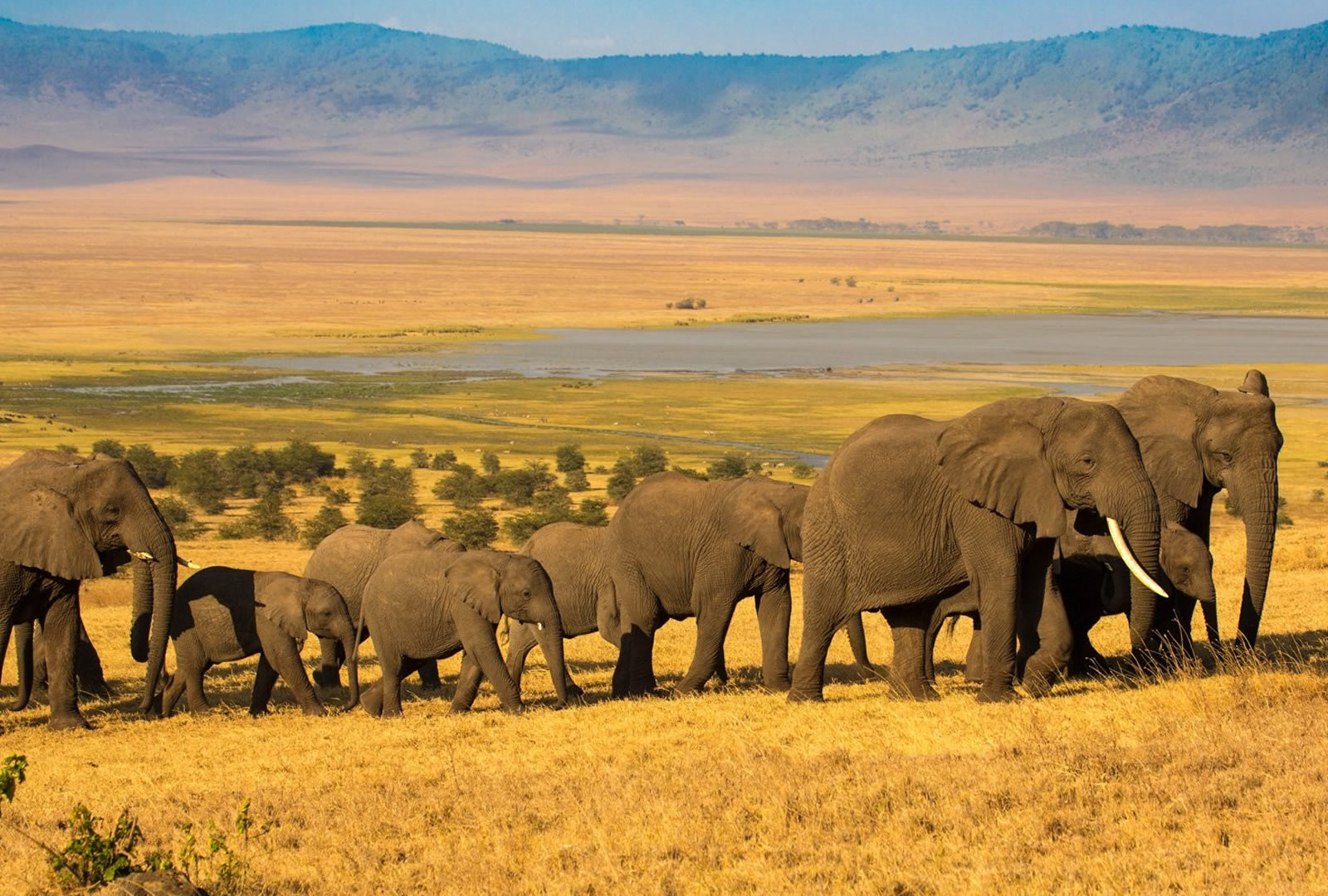
The crater's elephants are mostly older bulls with
large tusks, and they move through the forest and swamps on the crater floor.
Many younger elephants leave the crater because there is not enough food for
large herds. The bulls you see here are often calm and used to vehicles. You
can watch them feed on grass and tree bark from a short distance. The Lerai
Forest is a good place to find them in the afternoon. Do not block their path
or get too close. Elephants can move fast when they feel threatened.
4. Buffalo
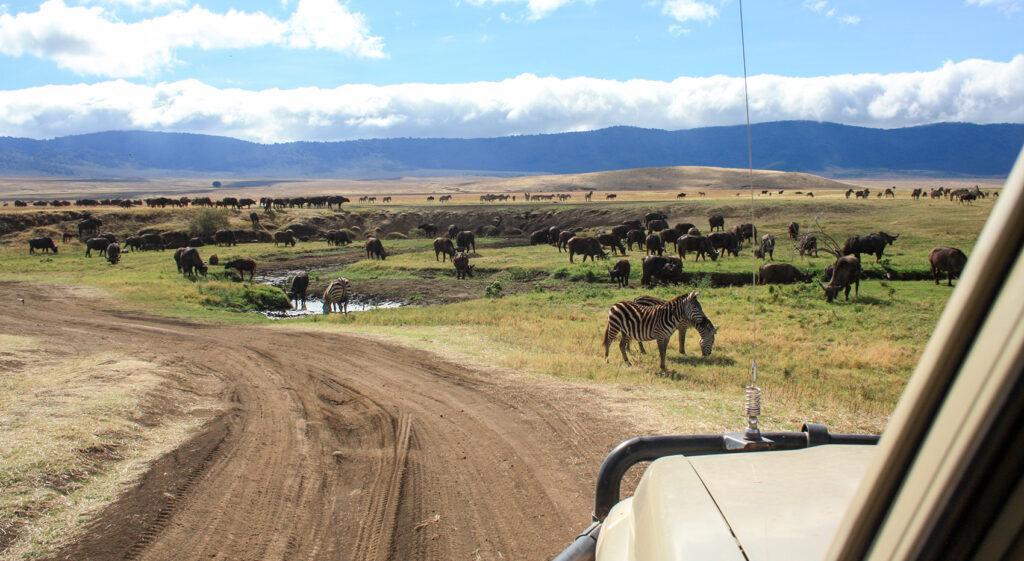
Buffalo are everywhere in Ngorongoro, and you will
see hundreds during a single game drive. They gather in large herds on the
crater floor and near the swamps. Old bulls often stay alone or in small
groups, and they can look scruffy and tired. Buffalo are one of the most
dangerous animals in Africa, so your guide will keep a safe distance. They are
also the main food source for the crater's lions. Watching a herd move across
the grassland is one of the simplest but most impressive sights in the park.
They are easy to photograph.
5. Hippopotamus
Hippos live in the Gorigor Swamp and around Lake Magadi,
and you can watch them from a safe distance. During the day, they stay in the
water to keep cool. In the late afternoon, they walk out to graze on grass. The
picnic site near the hippo pool lets you eat lunch while watching them surface
and snort. Do not walk near the water on your own. Hippos move fast on land and
are responsible for many accidents in Africa. Your guide will tell you where it
is safe to stand.
6. Flamingo
Lake Magadi attracts thousands of flamingos, and
they turn the shallow water pink when they gather in large numbers. They feed
on algae and small crustaceans that live in the soda lake. The best viewing is
in the morning when the light is clear. You can also see them from the rim road
looking down at the lake. Flamingos move between lakes in the region, so
numbers change through the year. The green season often brings the largest
flocks. Bring a zoom lens because you cannot walk close to the water.
7. Leopard
Leopards live in the forest areas on the crater rim
and sometimes move down to the floor. They are harder to find than lions
because they hide in trees and thick cover. Your best chance is early morning
or late afternoon near the Lerai Forest. Guides share sightings by radio, so if
one is found, you may get a chance to see it. Do not expect a guaranteed
sighting. Leopards are solitary and cautious. If you see one, consider yourself
lucky. Patience and a good guide make the difference.
8. Cheetah
Cheetahs are less common in the crater than lions,
but they do appear on the open grassland. They prefer flat ground where they
can run fast, and the crater floor suits them in some areas. You may see them
scanning for gazelles in the morning. They hunt during the day, which gives you
a better chance of watching a chase. However, lions often steal their kills, so
cheetahs stay alert. Sightings are not reliable. If you want a stronger chance
of seeing cheetahs, add the Serengeti to your trip.
9. Spotted Hyena
Spotted hyenas are common in Ngorongoro and often
seen near lion prides, waiting for leftovers. They also hunt on their own, and
they can bring down wildebeest and zebra. You will notice them by their sloping
backs and loud calls at night. They are active in the early morning and
evening. Many visitors overlook them because they focus on lions, but hyenas
are interesting to watch. They live in clans with complex social rules. Do not
leave food or items unattended at picnic sites because they will take them.
10. Birds of
Prey
Ngorongoro holds a strong range of raptors,
including eagles, hawks, and vultures. You can see them circling above the
crater or perched in trees on the rim. Vultures gather at kills, and you can
watch several species together. Martial eagles and augur buzzards are common.
The crater's open areas make them easier to spot than in thick forest. Bring
binoculars to identify them. Early morning is the best time because the air is
calm and birds sit still. Even casual visitors enjoy watching them hunt.
Best time to
visit Ngorongoro National park
The best time to visit Ngorongoro National Park
depends on what you want from your trip, but the dry season from June to
October gives you the most reliable conditions overall. During these months,
rainfall is minimal, roads stay firm and passable, and the short grass on the
crater floor makes wildlife easy to spot. Animals gather around Lake Magadi and
the Gorigor Swamp because water is scarce elsewhere, so you can find lions,
elephants, buffalo, and rhinos without driving for hours. This is also the best
window for spotting black rhino and for photography, since clear skies give you
wide views across the caldera.
The downside
is crowds and high prices, especially from July to September, so book your rim
lodge and guide months ahead. If you want fewer vehicles and lower rates,
consider the short dry spell in January and February, which also coincides with
calving season in the nearby Serengeti and rising predator activity. The green
season from November to December offers good value, rich birdlife, and quiet
game drives, though short afternoon rains can make some roads slippery. Avoid
March to May if you can, because the long rains turn access roads into mud, cut
visibility, and force many lodges to close. For hiking on the rim and Empakaai
Crater, stick to the dry months when trails are firm. Decide your priorities
first, then match your dates to them.