
Game Drives
A game drive is the classic way to see Queen
Elizabeth's wildlife. The Kasenyi Plains in the north are the best spot,
where you will see lions, elephants, buffaloes, and large herds of Uganda
kob . These open grasslands give you a clear view of animals from a
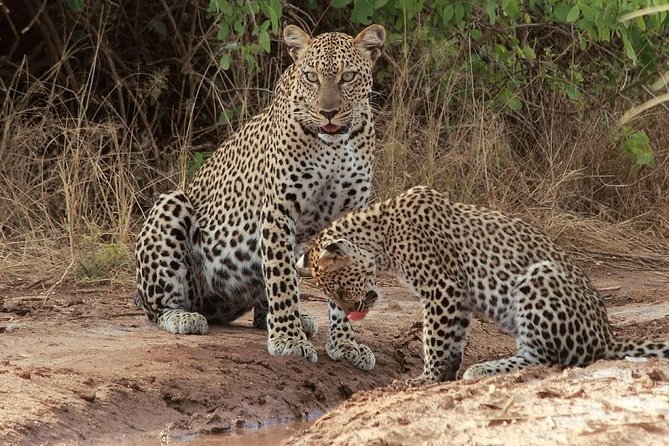
distance. Morning drives, starting at sunrise, are good for seeing predators
like lions and leopards while they are still active . Late afternoon
drives also offer good sightings as animals move to water sources . You
can also do night game drives in the Kasenyi and Mweya areas. With spotlights,
you can find nocturnal animals like leopards, hyenas, civets, and bush babies
that hide during the day . Each drive lasts 3 to 4 hours with an
experienced guide who knows where to look.
Boat Cruise on
the Kazinga Channel
The Kazinga Channel is a 32-kilometer natural
waterway linking Lake George and Lake Edward. It is a must-do activity for any
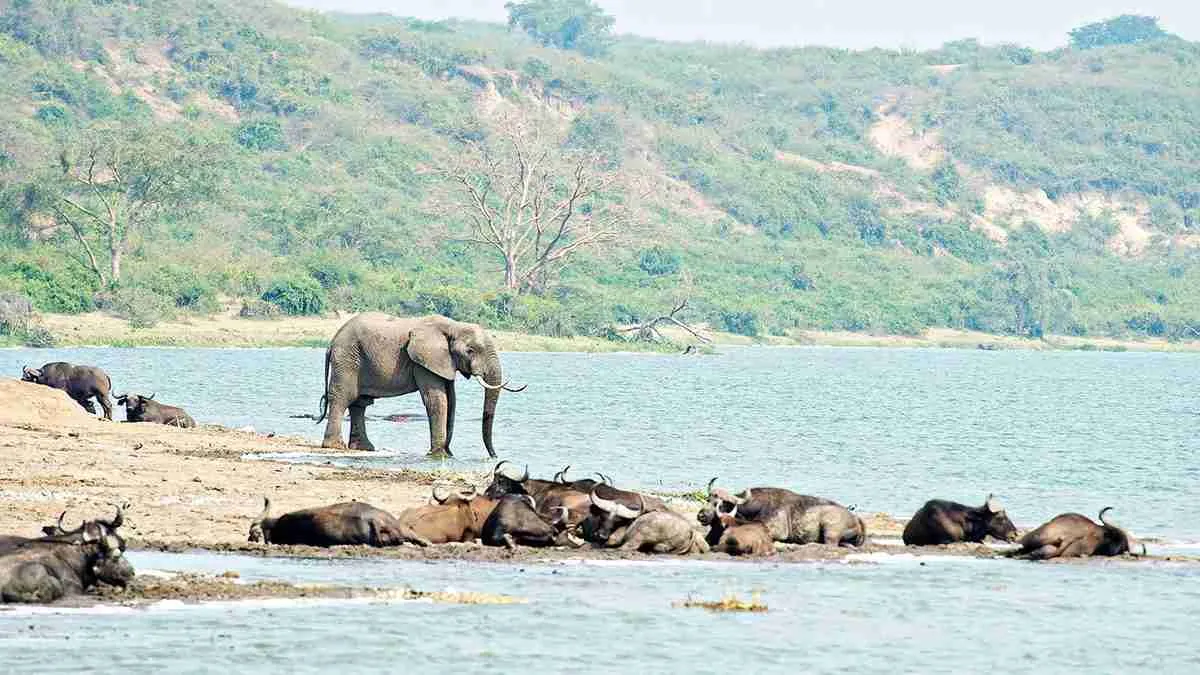
visitor . The channel has one of the world's largest groups of hippos, and
you will see hundreds of them in the water . Crocodiles bask on the banks,
and elephants often come to the shore to drink . The boat gives you close
views of these animals from the water, which is different from a game drive. It
is also excellent for
birdwatching, with African fish eagles, pelicans, herons, and kingfishers .
The 2-hour cruise is relaxing and good for families and photographers. There
are morning and afternoon departures from Mweya.
Chimpanzee
Tracking in Kyambura Gorge
Kyambura Gorge is a 100-meter-deep forested valley
in the park, often called the "Valley of Apes" . This is where
you can track a small group of about 30 habituated chimpanzees . The walk
through the gorge is active, with steep trails and a river to cross . It
takes 2 to 4 hours to find the chimps, depending on their movement . While
the chimp community is smaller and the success rate for sightings is around
60-70%, the gorge itself is a unique and beautiful place to explore . You
may also see other primates like black-and-white colobus monkeys and red-tailed
monkeys . A permit costs $100 for foreign non-residents, and you can book
directly with the Uganda Wildlife Authority
Searching for
Tree-Climbing Lions in Ishasha
The Ishasha sector, in the southern part of the
park, is famous for its lions that rest in fig trees . This behaviour is
rare, and seeing a lion stretched on a branch is one of the best sights in the
park . The lions climb trees for reasons like avoiding insect bites,
getting a cool breeze, or having a good view of their prey . To see them,
plan a morning or late afternoon
game drive in Ishasha. A good guide knows the lions' favourite trees and
will take you to the right spots . This area is more remote, so it is
quieter and has fewer vehicles. If tree-climbing lions are your main interest,
you should book a night in this sector to have enough time to find them.
Lion tracking
Lion tracking is a unique activity in Queen
Elizabeth Park where you join researchers from the Uganda Carnivore Programme
to follow lions fitted with radio collars . Unlike a normal game drive,
this is a conservation-focused activity that gives you a close view of lions
while helping to monitor and protect them . The park's lion population has
dropped from over 400 in the 1980s to only 39 by 2022, so this research work is
important . The tracking takes place on the Kasenyi Plains in the northern
part of the park, where the highest number of lions live . You go out with
armed rangers and researchers who use telemetry devices to pick up signals from
the collars. They then lead you off the main tracks to find the lions .
Once the lions are located, the guides turn off the vehicle and explain their
behaviour, social structure, feeding habits, and how to tell males from
females
Birdwatching
Queen Elizabeth Park is a top place for birdwatching
in Africa, with over 600 bird species recorded . The many habitats savannah,
wetlands, forests, and the Kazinga Channel attract a wide variety of birds. The
Kazinga Channel and Mweya Peninsula are good areas for waterbirds and raptors
like the African fish eagle . The forests in Kyambura Gorge and
Maramagambo are home to forest-dwelling birds that are harder to find in open
areas . Early morning is the best time to see birds at their most
active . Even if you are not a serious birder, you will see many colourful
and interesting birds during your game drives and boat cruise. The park's
birdlife is a highlight for many visitors.
Guided Nature Walks
Guided nature walks offer a closer look at the
park's smaller details that you miss from a vehicle. You can take a walk with a
ranger in areas like Maramagambo
Forest or Kyambura Gorge . These walks are about seeing plants,
tracks, insects, and birds. You learn about the ecosystem and how everything
fits together. Walking also lets you get closer to wildlife on foot, giving you
a different perspective. It is a quieter activity compared to game drives. You
must be reasonably fit for walks in the gorge because of the steep terrain. A
guide will keep you safe and point out things you would not notice on your own.
It is a simple but rewarding experience.
Community Visits
and Cultural Experiences
You can visit local communities around the park to
learn about their daily life. A popular visit is to the Lake Katwe salt mines,
where people harvest salt by hand using traditional methods . This has
been done for centuries, and you can see the process up close . You can
also visit fishing villages along the Kazinga Channel to see how locals live
and work . These visits give you a look at the human side of the area and
how people live alongside the park's wildlife. Always ask for permission before
taking photos of people . These experiences add a different layer to your
safari beyond the animals. It is a simple way to connect with the local
culture.
Crater Drive and
Visit to the Explosion Craters
The park has a 27-kilometer trail that takes you
through an area of ancient volcanic craters, formed over 8,000 years ago after
violent eruptions . This drive rewards you with wide views of the Western
Rift Valley, Lake George, Lake Edward, and the Kazinga Channel . You also
see the Rwenzori Mountains from a distance . The main stop is Lake Katwe,
a salty lake where local people mine salt by hand . This has been done for
many generations, and you can watch the process and talk to the miners .
The landscape feels different from the rest of the park, with round basins and
steep hills. The drive takes about half a day and is good for photography .
It works well as a break between game drives.
Maramagambo
Forest Nature Walk and Bat Cave Visit
Maramagambo is a rainforest on the southern edge of
the park, known for its rich birdlife and primate populations . A guided
walk here takes you through dense vegetation where you might see chimpanzees,
red-tailed monkeys, and L'Hoest's monkeys . The main attraction is a
volcanic tube cave that houses thousands of bats . You can watch the bats
from a safe viewing platform with a glass barrier, so you stay clear of direct
contact . Large pythons often come to the cave entrance to hunt the bats,
which is a sight to see . The forest also has over 200 bird species,
including the shoebill stork in nearby wetlands . The walk takes about 1
to 2 hours and requires good walking shoes. A guide is needed for safety
Best time to
visit Queen Elizabeth National park Uganda
The best time to visit Queen Elizabeth National Park
is during the dry seasons, which run from June to September and December to
February. During these months, rainfall is low, which means the vegetation is
thinner and animals gather around permanent water sources, making them much
easier to spot on game drives. The roads and tracking trails also stay dry and
easy to use, so you can access most parts of the park without trouble. If
birdwatching is your main interest, the wet seasons from March to May and
October to November are also good because migratory birds arrive, and the park
turns green. However, heavy rain can make some roads muddy and harder to drive
during these wetter months. For most visitors, the dry season offers the most
reliable and comfortable safari experience.
Booking Uganda
safari With Zoophilist adventures and safaris
Booking a Uganda safari with Zoophilist Adventures and Safaris
involves working with a local tour operator to handle the planning and
logistics for you . The process typically starts when you contact the
company to discuss your travel dates, budget, and the kind of experience you
want, whether it's game drives in Queen Elizabeth Park, gorilla trekking, or a
combination of activities . Zoophilist Adventures will then create a
custom itinerary, book your accommodations, and arrange for transport in a 4x4
safari vehicle with an experienced guide . A professional operator will
also take care of securing any necessary permits for activities like chimpanzee
tracking, which is a key step to ensure your trip goes smoothly . Working
with a local company like this means you get expert advice and on-ground
support, which is valuable for first-time visitors . Once you approve the
itinerary and make a deposit, they confirm all bookings, leaving you to prepare
for your trip