Location, Area
It Covers, Background
Ngorongoro Crater National Park is located in
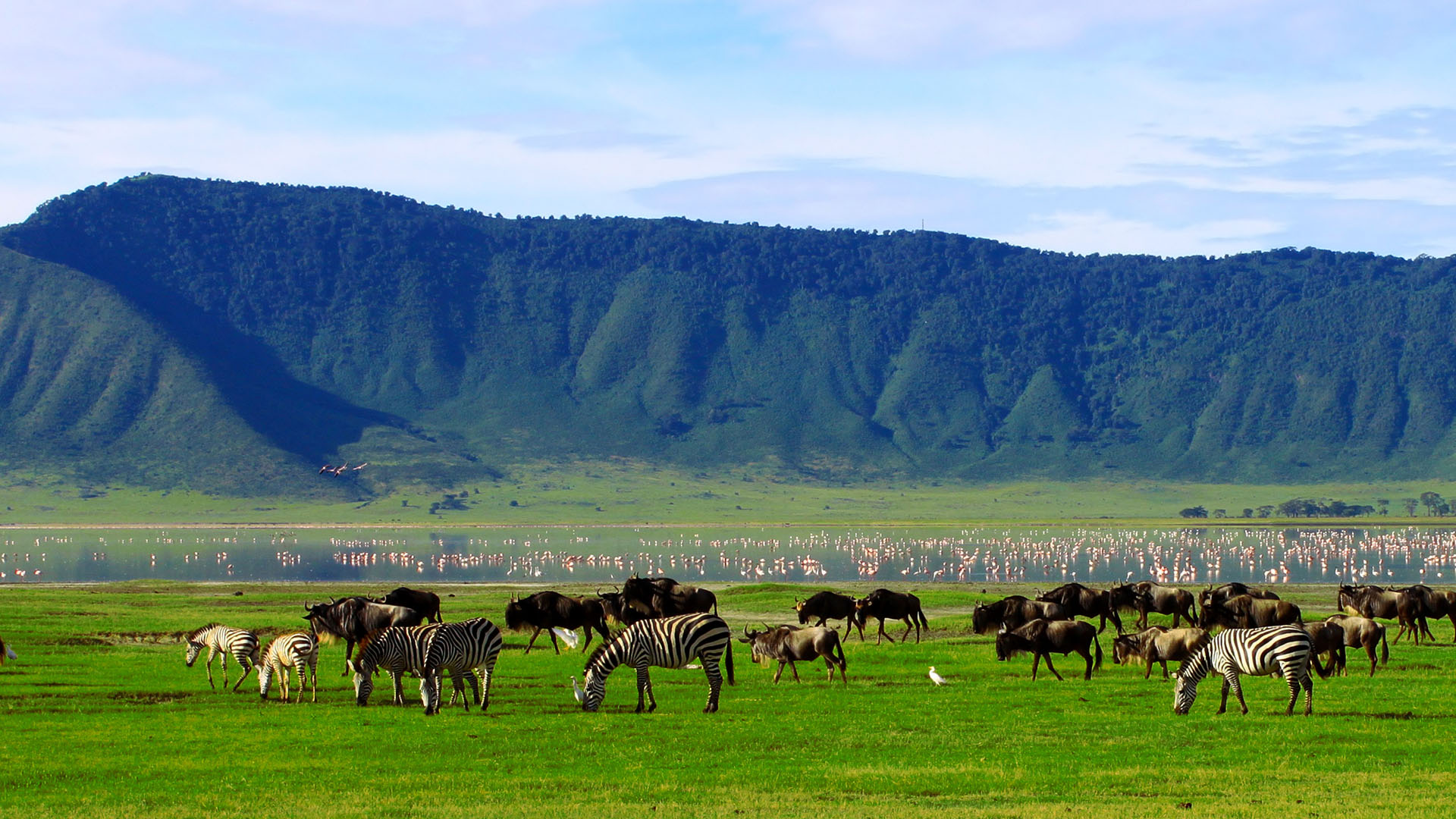
northern Tanzania within the Ngorongoro Conservation Area. The crater itself is
the world’s largest intact volcanic caldera, measuring about 600 meters deep
and covering 260 square kilometers. The wider conservation area spans over
8,000 square kilometers, combining wildlife protection with Maasai pastoral
lands. Established in 1959, the park was designed to balance conservation with
community use, making it unique compared to other reserves. Its protected
status ensures reliable wildlife viewing year-round.
Top Attractions
to See in Ngorongoro Crater National Park
The crater floor is home to the Big Five lion,
elephant, buffalo, leopard, and black rhino with rhinos being a rare highlight.
Large herds of wildebeest and zebra graze the plains, while hippos occupy
permanent water sources. Lake Magadi often hosts flamingos, adding color to the
landscape. The crater rim offers panoramic views, while nearby Olduvai Gorge
provides archaeological significance. Visitors can also see Maasai villages
around the conservation area, adding cultural depth to the experience.
Best Time to
Visit Ngorongoro Crater National Park
The dry season from June to October is best for
concentrated wildlife viewing, as animals gather near water sources and
visibility is clear. November to May brings the green season, with fewer
crowds, lush landscapes, and excellent birdwatching. Calving season in February
is particularly interesting, as thousands of wildebeest give birth on the
plains, attracting predators. Travelers should choose timing based on whether
they prefer peak wildlife density or quieter, greener surroundings.
How to Get to
Ngorongoro Crater National Park
Most visitors fly into Kilimanjaro International
Airport or Arusha Airport. From Arusha, the drive to Ngorongoro takes about 3.5
to 4.5 hours, passing through towns and landscapes that add context to the
safari. Road transfers are common, but domestic flights to nearby airstrips are
available for those who prefer shorter travel times. Organized safaris usually
include transport, making logistics straightforward for international
travelers.
What Are the
Things to Do in Ngorongoro Crater National Park
Game drives on the crater floor are the main
activity, offering close views of diverse wildlife in a compact area.
Birdwatching is rewarding, with species ranging from flamingos to raptors.
Cultural visits to Maasai villages provide insight into traditional lifestyles.
Photography is popular, with dramatic crater walls and wildlife density
offering unique opportunities. Some itineraries also combine Ngorongoro with
nearby Serengeti or Tarangire for extended safari experiences.
Pro Tips for
Visiting Ngorongoro Crater National Park
Book permits and accommodation early, as the crater
is one of Tanzania’s busiest safari destinations. Start game drives early in
the morning to avoid crowds and maximize sightings. Carry warm clothing for the
crater rim, which can be chilly, and lighter clothing for the floor.
Binoculars, sunscreen, and insect repellent are essential. Always follow guide
instructions and respect park rules to ensure safety and conservation.
Accommodation
Options in Ngorongoro Crater National Park
Options range from luxury lodges on the crater rim
to budget-friendly campsites. Rim lodges offer stunning views and quick access
to game drives, while tented camps provide a closer connection to nature.
Public campsites cater to self-drive travelers, while mid-range lodges balance
comfort and affordability. Choosing accommodation depends on budget, desired
comfort level, and proximity to the crater floor.
Booking with
Zoophilist Adventures and Safaris
Booking with Zoophilist Adventures and Safaris
ensures well-planned itineraries tailored to traveler preferences. Our team
organizes transport, accommodation, and guided activities, making the experience
smooth and reliable. We understand seasonal highlights and help visitors choose
the right timing for wildlife viewing. By booking through them, travelers
benefit from local expertise, personalized service, and practical support that
maximizes value and minimizes stress