
Hidden in the southwestern corner of Uganda, Mgahinga
Gorilla National Park offers an extraordinary journey into the Virunga
Mountains. Although it is Uganda’s smallest national park, covering about 33.7
square kilometers, the park is rich in mountain forests, bamboo vegetation,
volcanic peaks, wildlife and cultural heritage. It forms part of the larger
Virunga ecosystem shared by Uganda, Rwanda and the Democratic Republic of
Congo.
For travelers who want to experience Uganda beyond
traditional savannah game drives, Mgahinga provides a completely different
adventure. Here, the journey takes you through misty forests, steep mountain
slopes and volcanic landscapes while offering opportunities to encounter some
of Africa’s most fascinating primates.
Exploring the
Forests of Mgahinga
The forests of Mgahinga are among its greatest attractions.
As you, enter the park, the landscape changes from cultivated farmland into
dense natural vegetation, creating a feeling of entering a completely different
world. The lower areas contain montane forest, while higher elevations feature
bamboo and other mountain vegetation. These different habitats support a
variety of wildlife and bird species, making forest exploration an important
part of the Mgahinga experience.
Walking through the forest is particularly rewarding
because the surroundings constantly change. The sounds of birds, rustling
vegetation and distant mountain scenery create an atmosphere that is very
different from the open landscapes of Uganda’s savannah parks.
A Home for
Mountain Gorillas
For many visitors, the main reason to enter Mgahinga's
forests is to search for mountain gorillas. The park is one of only two
destinations in Uganda where visitors can trek these endangered primates. Gorilla
trekking involves walking through the forest with trained guides and trackers
while following signs of the gorilla group. The trek can take several hours
depending on where the gorillas are located, making the journey itself an
important part of the experience.
Once the gorillas are found, visitors have the
opportunity to observe them feeding, resting, climbing, and interacting with
one another in their natural environment. The experience provides a close look
at one of the world's most fascinating primates while highlighting the
importance of conservation.
Discovering the
Golden Monkeys
Mgahinga's forests are also home to another special
primate: the golden monkey. These endangered monkeys are known for their
distinctive golden-orange fur and energetic behavior.
Golden monkey tracking takes visitors through areas
of bamboo forest in search of habituated groups. Unlike gorillas, golden
monkeys are constantly on the move, jumping through branches and moving quickly
through the vegetation.
This makes golden monkey tracking an active and
exciting experience, particularly for travelers interested in primates and
wildlife photography. Combining golden monkey tracking with gorilla trekking
can provide two very different primate encounters during one visit to Mgahinga.
The Three
Volcanoes of Mgahinga
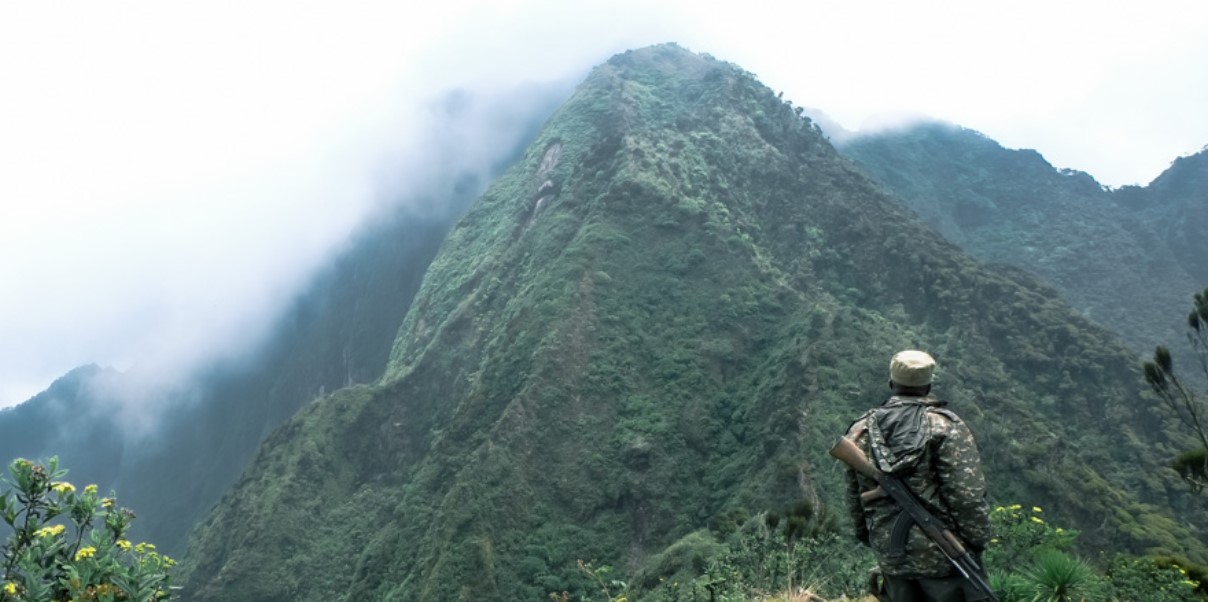
The forests are only part of the story. Rising
dramatically above the park are three extinct volcanoes: Mount Muhabura, Mount
Gahinga, and Mount Sabinyo.
These mountains form part of the Virunga volcanic
chain and dominate the scenery around Mgahinga. Their slopes provide
opportunities for challenging hikes through different vegetation zones,
offering travelers another way to explore the park. Each mountain has its own
character, making volcano hiking an excellent addition to a gorilla or golden
monkey safari.
Climbing Mount
Muhabura
At approximately 4,127 meters above sea level, Mount
Muhabura is the highest of Mgahinga's three volcanoes. The hike is physically
demanding and involves a steady climb through different vegetation zones. The
higher you climb, the more dramatic the landscape becomes. On clear days, the
summit provides spectacular views across the surrounding Virunga volcanoes and
the neighboring countryside. Mount Muhabura is a good choice for travelers
looking for a challenging mountain adventure alongside their wildlife
experience.
Hiking Mount
Gahinga
Mount Gahinga stands at approximately 3,474 meters
and offers another rewarding hiking experience. The name Gahinga is associated
with a local word referring to a pile of stones, reflecting the agricultural
landscape around the mountain. The trail passes through forest and bamboo
vegetation before reaching higher mountain environments. Compared with some of
the region's higher peaks, Mount Gahinga provides a more moderate volcanic
hiking experience while still offering beautiful scenery.
The Adventure of
Mount Sabinyo
Mount Sabinyo rises to approximately 3,669 meters
and is known for its rugged summit. Its name is associated with the idea of a
tooth, reflecting the mountain's distinctive appearance. The hike is
challenging, particularly near the summit, where the terrain becomes steep and
exposed. One of the attractions of reaching the summit is the opportunity to
stand near the meeting point of Uganda, Rwanda and the Democratic Republic of
Congo. For adventurous travelers, climbing Sabinyo adds a strong sense of
exploration to a visit to Mgahinga.
Forests,
Volcanoes and Wildlife in one Destination
What makes Mgahinga special is the way its different experiences connect. A visitor can spend one day trekking through the forest in search of gorillas and another hiking toward a volcanic summit. The same mountain environment supports a variety of wildlife, including forest elephants, buffaloes, bushbucks, giant forest hogs and numerous bird species. The park also supports Albertine Rift bird species, making it an interesting destination for birdwatchers. Although wildlife encounters can never be guaranteed, the combination of forest, mountains, and diverse habitats makes every walk through the park an opportunity to discover something new.
Experiencing the
Batwa Heritage
The forests of Mgahinga also have an important
cultural history. The Batwa have a long-standing connection with the forests of
the region and cultural experiences provide visitors with an opportunity to
learn about their traditional knowledge, relationship with the forest, and
heritage.
Including a Batwa cultural experience in your
itinerary allows you to explore Mgahinga from another perspective. The
mountains and forests are not simply natural attractions; they are also part of
the history and culture of communities that have lived in the region for
generations.
Best Time to
Explore Mgahinga
Mgahinga can be visited throughout the year, but the
drier periods are generally more suitable for hiking and trekking. The main dry
seasons are usually June to September and December to February, when trails
tend to be easier to navigate.
The wet seasons bring more rainfall and can make
mountain trails muddy and slippery. However, they also transform the landscape
into lush green scenery. Because Mgahinga is a high-altitude destination,
visitors should be prepared for changing weather conditions even during the dry
months.
What to Expect
on Your Mgahinga Adventure
Exploring Mgahinga requires a reasonable level of
preparation. Gorilla trekking and volcano hikes can be physically demanding, so
comfortable hiking boots, long trousers, a waterproof jacket, drinking water,
snacks and other essential hiking gear are recommended. Weather conditions can
change quickly in the mountains, making rain protection particularly important.
A walking stick or hiking poles can also provide extra support on steep or
slippery sections of the trails.
How to Get to
Mgahinga
Mgahinga is located near Kisoro in southwestern
Uganda. By road, travelers can reach the area through Kabale and Kisoro. The
journey from Kampala takes several hours, but the changing scenery along the
route makes the drive part of the adventure.
Travelers who prefer flying can use scheduled or
charter flights to Kisoro Airstrip and continue by road to the park. Mgahinga
can also be combined with nearby attractions such as Bwindi Impenetrable
National Park, Lake Mutanda and other destinations in southwestern Uganda.
Why Explore the Virunga’s
Through Mgahinga?
Mgahinga provides an opportunity to experience the Virunga
Mountains from the Ugandan side while combining wildlife, hiking, scenery and
culture. The park's forests provide habitat for endangered primates, while its
volcanic peaks create challenging adventures for hikers. Rather than simply
visiting the mountains, travelers can become part of the landscape by walking
through the forests, following wildlife trails, climbing volcanic slopes, and
meeting communities connected to the region.