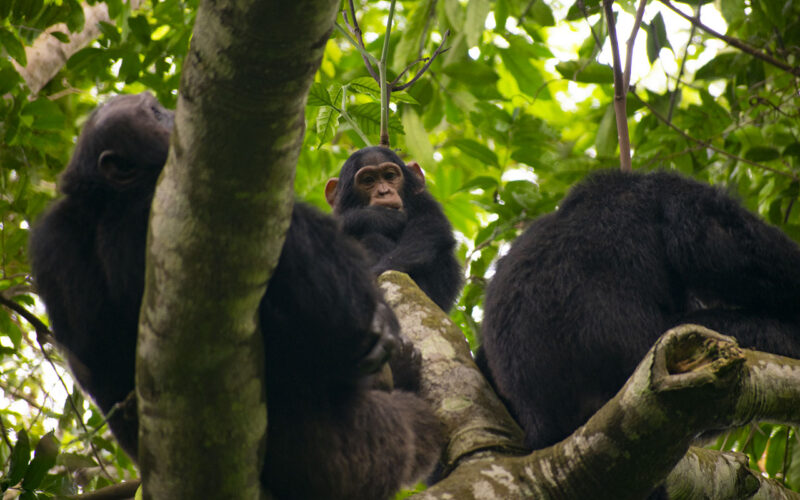

Kalinzu Forest Reserve, located near Queen Elizabeth
National Park in western Uganda, is one of the country’s most rewarding
destinations for chimpanzee trekking. Home to over 320 chimpanzees, with about
50 habituated for tourism, the reserve offers visitors a remarkable chance to
observe these primates in their natural environment. The forest’s diverse
ecosystem also hosts hundreds of bird species, butterflies, and other wildlife,
making it a rich safari stop. Timing your visit is essential, as Uganda’s
climate alternates between dry and rainy seasons, each offering distinct
advantages. Dry months provide easier trekking conditions, while rainy months
bring lush scenery and fewer crowds. Whether you seek comfort, adventure, or
intimacy with nature, Kalinzu Forest guarantees an unforgettable experience on
any Uganda safari itinerary.
The dry seasons are generally considered the best
time for chimpanzee trekking in Kalinzu Forest Reserve, which runs from June to
August and December to February . During these months, the forest
experiences less rainfall, making the trekking trails significantly drier and
easier to navigate . For visitors who prefer comfortable hiking conditions
with less mud and a lower risk of weather disrupting their plans, this period
is the most favorable choice .
From a practical standpoint, the dry season ensures
that the trails within the forest are firm and passable, reducing the physical
effort required for trekking . This makes it an ideal time for a wider
range of travelers, including families or those less accustomed to strenuous
hikes. However, because the weather is more pleasant, this is also the peak
tourist season, meaning the forest sees higher visitor numbers . As a result,
it is strongly recommended to book your chimpanzee trekking permits well in
advance ideally 2 to 3 months ahead to secure your spot .
Interestingly, the rainy seasons, from March to May
and September to November, also have their own advantages and can be considered
the "best" time depending on your priorities . While the trails
become softer, muddier, and more slippery, which requires more physical effort,
the forest itself becomes incredibly lush and vibrant . This period, often
called the low season, brings fewer visitors, offering a more peaceful and
intimate experience in the forest with fewer crowds
One surprising advantage of the rainy season is that
the abundance of rainfall stimulates heavy fruiting in the forest, which can
concentrate chimpanzee activity in predictable feeding areas . In some
cases, this can actually improve your chances of encountering chimpanzees
compared to the dry season. Additionally, with fewer tourists, chimpanzee
trekking permits are much easier to obtain and often come at a lower cost,
making this a highly attractive option for budget-conscious travelers
For those who are passionate about birdwatching, the
rainy season presents a unique opportunity . The wetter months bring
increased bird activity and the spectacle of breeding plumage, as well as the
chance to see migratory bird species . The forest's 378 recorded bird
species are particularly active during these months, adding a spectacular
dimension to your visit . The lush greenery also makes for excellent
scenic photography, with dramatic mists often rising from the forest
floor
Regardless of the season, the forest is a year-round
destination due to its consistently warm temperatures, which hover around 28°C
during the day . The chimpanzees, numbering around 320 individuals with 50
habituated to human presence, are always present, ensuring a very high 95%
chance of sighting on any given trek . The timing of your trek also
matters; the forest offers trekking sessions at 8:00 AM and 3:00 PM, with
morning treks being particularly recommended for the most active chimpanzee
behavior and the best photographic light
To summarize, the dry seasons (June–August,
December–February) are the best time for comfortable hiking and easier wildlife
viewing due to the drier trails . On the other hand, the wet seasons
(March–May, October–November) are the best time for a quiet, uncrowded
experience with lower prices and lush scenery . Ultimately, there isn't
one single "best" time; rather, the ideal time depends on what you
value more convenience or a more intimate, budget-friendly adventure
Trekking is available throughout the year, so you
can plan your safari around your other interests, such as combining it with a
visit to nearby Queen Elizabeth National Park or other attractions in
Uganda . If your main goal is to secure a permit and enjoy easier walking,
target the dry season. If you prefer fewer crowds, a more immersive forest
experience, and potential savings, the rainy season could be perfect for
you .
Ultimately, Kalinzu Forest offers a rewarding
chimpanzee trekking experience regardless of when you visit . The key is
to prepare accordingly sturdy, waterproof hiking boots are essential in the
rainy season, and a good pair of binoculars is recommended for both bird and
primate viewing year-round . By weighing the pros and cons of each season,
you can choose the time that best aligns with your personal travel style and
safari expectations