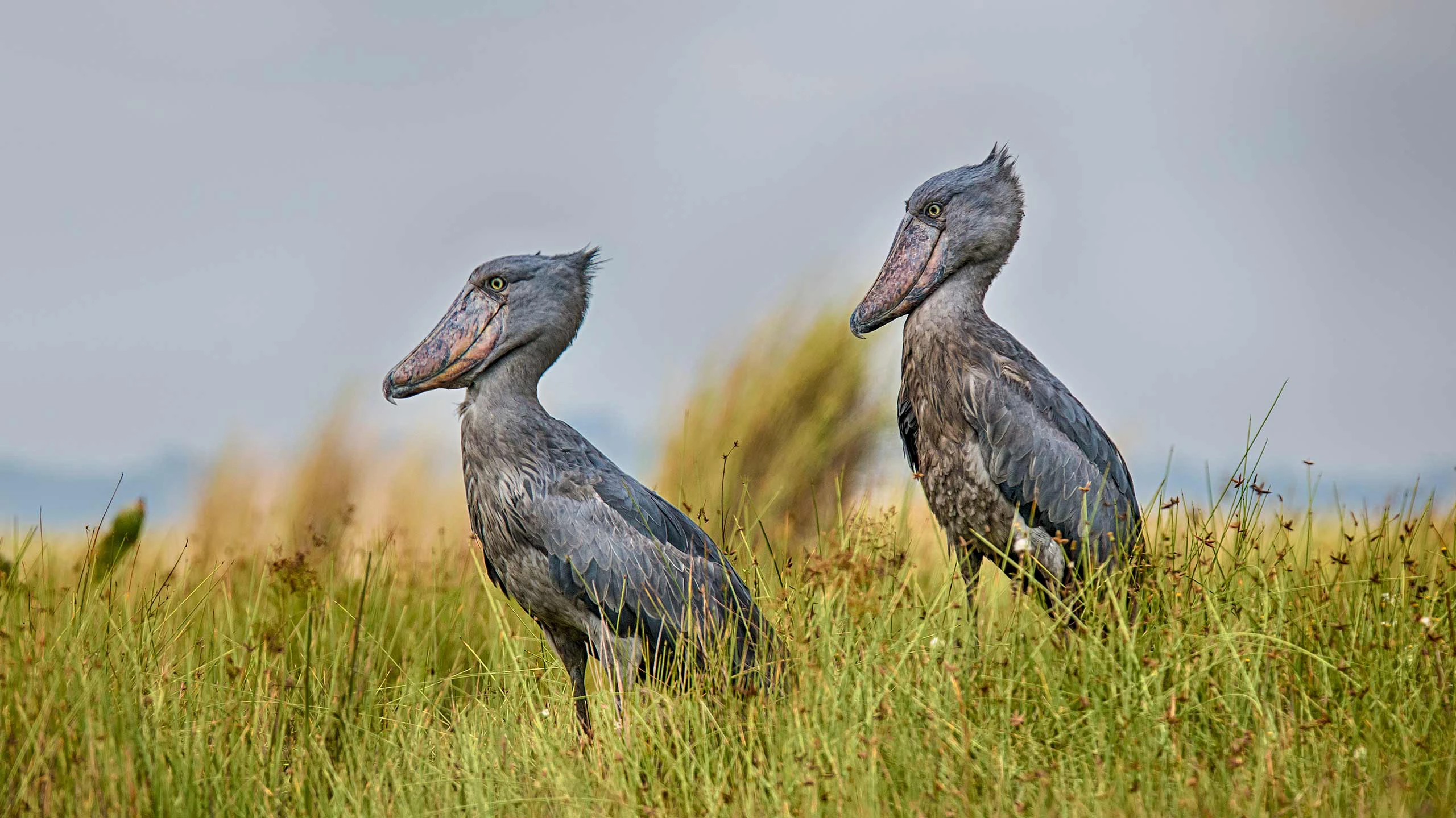

The best time to spot the elusive shoebill at
Mabamba Swamp is during the dry season, particularly in the months
of December to February and June to August. These periods offer
the most favorable conditions for a successful tracking experience.
During the dry season, water levels in the swamp
recede, which concentrates the shoebill's prey, like lungfish, in smaller areas.
This makes the birds more predictable and easier to find as they come to the
shallower edges to hunt. The weather during this time is also calmer, with less
wind, which is ideal for silently gliding through the narrow papyrus channels
on a canoe. Many local tour operators cite a very high success rate for
sightings during these months, with one source suggesting a 95% chance in the
morning hours.
It is also important to consider the time of day for
your excursion. The consensus among all guides and tour operators is that the early
morning hours, particularly around sunrise, offer the absolute best chances of
seeing a shoebill. Shoebills are most active during these cooler parts of the
day, actively hunting for fish in the shallow water after a night of rest.
Later in the morning, as the sun gets higher and hotter, the birds often become
less active, seeking shade and standing motionless, which can make them harder
to spot.
The months of June and July represent a
unique period to consider. While these are excellent months for travel due to
the dry weather, they are also the shoebill's nesting season. During this time,
the birds tend to retreat deeper into the most inaccessible parts of the swamp
to build nests and raise their young. This can make them more difficult for
visitors to find. While sightings are still possible, patience is even more
crucial during these months.
Conversely, you should plan to avoid the rainy
seasons which typically run from March to May and again
from October to November. These periods present significant challenges for
a shoebill safari. Heavy rainfall makes the swamp more difficult to navigate as
water levels rise and the weather can become stormy. The dense vegetation that
flourishes during the rains can also obscure your view, making it harder to
spot a shoebill that is standing just a few meters away.
Regardless of the season, it is important to manage
expectations. Although the guides at Mabamba are highly skilled and know the
swamp intimately, no sighting is 100% guaranteed. The swamp is home to around
12 shoebills in a vast 24,000-hectare wetland, so finding one is still a wild,
natural experience. However, following the recommendations on timing maximizes
your odds dramatically.
One last detail to note is that many tours from
Entebbe, the standard starting point for these excursions, last between 3 to 5
hours. This includes the boat ride across Lake Victoria and the time spent
within the swamp. This full experience is what makes a visit to Mabamba one of
Uganda's premier birding adventures
How to get to
Mabamba for shoebill tour and search
To get to Mabamba Swamp for a shoebill tour, the
most common and scenic route is by boat from Entebbe, where you will
depart from the Nakiwogo Landing Site for a 45-minute motorized canoe ride
across Lake Victoria . Many tour operators include hotel pickup in Entebbe
and will arrange this boat transfer for you . Once you arrive at the swamp's
edge, you'll transfer to a smaller, traditional wooden canoe to navigate the
narrow papyrus channels in search of the shoebill . Alternatively, the
swamp can be reached by road from either Kampala or Entebbe a drive that
takes about one hour though most visitors find the boat journey a more
adventurous and integrated part of the experience