
The best time of year for Rwanda gorilla trekking is
during the dry seasons, which run from June to September and December to
February. These months provide firm trails, clearer visibility, and more
comfortable trekking conditions. Travelers benefit from reduced mud and easier
access to gorilla families in Volcanoes National Park. Planning for these
periods ensures a smoother experience, especially for those who may not be used
to hiking in challenging terrain. Choosing the dry season makes Rwanda gorilla
trekking practical and rewarding.
During the dry months, gorillas are easier to track
because vegetation is less dense and ranger guides can follow their movements
more effectively. This increases the chances of spending quality time with a gorilla
family. For travelers who want reliable conditions, the dry season is the
most suitable. While gorillas can be seen year-round, the dry months make Rwanda
gorilla trekking more predictable. This reliability is important for visitors
who have limited time and want to maximize their experience.
The rainy seasons, from March to May and October to
November, bring heavier rainfall, which makes trails slippery and trekking more
demanding. However, these months also mean fewer tourists, creating a quieter
atmosphere in Volcanoes National Park. Travelers who prefer less crowded
conditions may find value in trekking during this time. Rain gear and
preparation are essential, but the experience remains rewarding. For those
willing to adapt, Rwanda gorilla trekking in the rainy season offers a more
private feel.
Another factor to consider is photography. The dry
season provides clearer skies and better lighting, making it easier to capture
gorillas and the forest environment. In contrast, the rainy season offers
softer light and greener surroundings, which can also be appealing for
photographers. Each season has unique advantages, but for most visitors, the
dry months are more practical. Choosing the right time ensures that Rwanda
gorilla trekking delivers both comfort and memorable images.
Permit availability is another reason why the dry
season is considered the best time. Demand is highest during these months, and
permits often sell out quickly. Travelers should book well in advance to secure
their spot. In the rainy season, permits are easier to obtain, offering
flexibility for last-minute planners. Whether in peak or off-peak months,
permits remain limited to protect gorillas. This makes early planning essential
for anyone considering Rwanda gorilla trekking.
Wildlife behavior also plays a role in timing.
During the dry season, gorillas often stay closer to accessible areas, making
treks shorter and less strenuous. In the rainy season, they may move deeper
into the forest, requiring longer hikes. For travelers who prefer manageable
trekking distances, the dry months are ideal. This ensures that Rwanda gorilla
trekking is accessible to a wider range of visitors, including those with
moderate fitness levels.
In summary, the dry seasons of June to September and
December to February are the best times for Rwanda gorilla trekking, offering
firm trails, reliable sightings, and easier logistics. The rainy months provide
quieter treks and greener surroundings but require more preparation. Travelers
should choose based on their priorities comfort, photography, or privacy.
Regardless of timing, the experience remains consistent: one hour with a
gorilla family in Volcanoes National Park. Planning around the dry season
ensures the most practical and rewarding gorilla trekking adventure.
How to get there
for gorilla trekking in Rwanda
To get to Volcanoes
National Park for gorilla trekking in Rwanda, most travelers arrive first
at Kigali International Airport (KGL), which is the country’s main entry point.
From Kigali, the drive to Musanze District, where the park headquarters are
located, takes about 2.5 to 3 hours on well-paved roads. Tour operators usually
arrange private transfers or group transport, making the trip straightforward
and comfortable. Staying overnight in Kigali or Musanze before the trek is
recommended to avoid early morning travel stress.
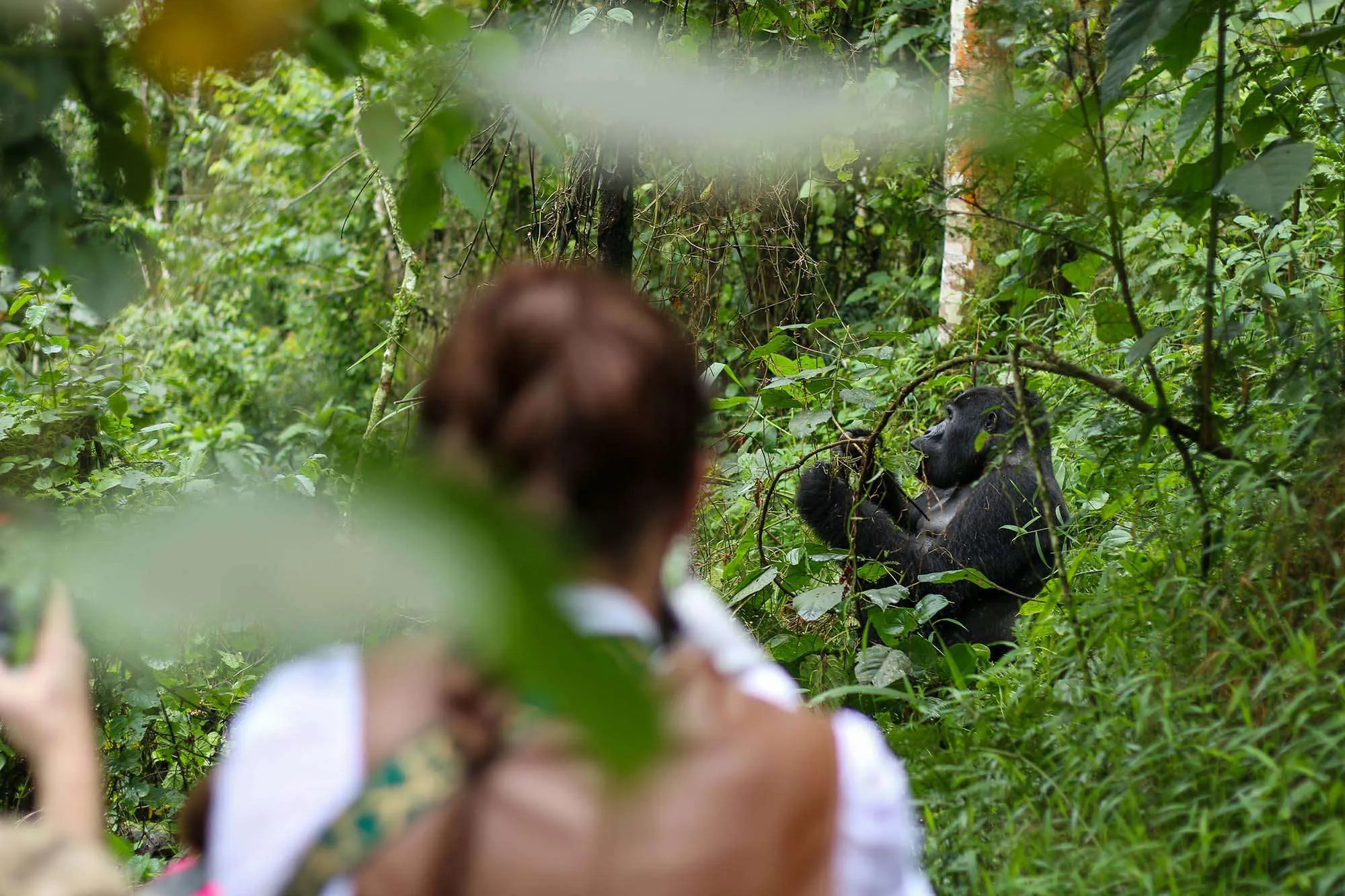
Another option is combining gorilla trekking with
safaris in Uganda or Kenya. Travelers can cross into Rwanda by road from
Uganda’s southwestern border or connect through regional flights. While
domestic flights within Rwanda are not necessary due to the park’s
accessibility, organized tours simplify logistics by including permits,
accommodation, and transport. Planning ahead ensures smooth access to Volcanoes
National Park, allowing you to focus fully on the gorilla trekking experience
in Rwanda.
What to carry
for gorilla trekking in Rwanda
For gorilla trekking in Rwanda, carrying the right
gear ensures comfort and safety throughout the hike. Pack sturdy hiking boots
with good grip for steep and muddy trails, along with breathable long-sleeved
shirts and trousers to protect against insects and vegetation. A waterproof jacket
is essential for sudden rain showers, while a warm fleece helps during chilly
mornings. Bring a wide-brimmed hat, sunscreen, insect repellent, and a reusable
water bottle to stay hydrated. Binoculars and a camera with extra batteries or
memory cards are useful for wildlife viewing. A small backpack keeps essentials
organized, and hiring a porter to carry it supports local livelihoods. Don’t
forget personal medications, a basic first aid kit, and your gorilla trekking
permit for entry into Volcanoes National Park
Places to stay
in during gorilla trekking in Rwanda
For gorilla trekking in Rwanda, accommodation
options range from luxury lodges to budget guesthouses, all located near Volcanoes
National Park in Musanze. Luxury choices such as Bisate Lodge, Singita
Kwitonda Lodge, and One&Only Gorilla’s Nest provide private villas, fine
dining, and personalized services, often costing over USD 1,000 per night.
Mid-range options like Sabyinyo Silverback Lodge, Five Volcanoes Boutique Hotel,
and Mountain Gorilla View Lodge balance comfort and affordability, with rates
between USD 200–600. Budget travelers can stay at Kinigi Guesthouse or Le
Bambou Gorilla Lodge, offering simple facilities close to park headquarters for
USD 50–150. Staying near the park ensures easy access to early morning treks,
reducing travel stress and maximizing your gorilla trekking experience in
Rwanda
Booking Rwanda gorilla
trekking with Zoophilist adventures and safaris
Booking Rwanda gorilla trekking with Zoophilist
Adventures and Safaris ensures a well-organized and stress-free experience from
start to finish. We manage all essential logistics, including securing gorilla
permits, arranging transport from Kigali to Volcanoes National Park, and
booking accommodation that suits your budget and preferences. Or professional
guides are experienced in tracking gorilla families, making your trek smoother
and more rewarding. Zoophilist alsoemphasizes responsible tourism, ensuring
that part of your trip supports local communities and conservation efforts.
Whether you prefer luxury lodges or budget stays, their tailored packages
provide flexibility without compromising quality. Choosing Zoophilist
guarantees that your gorilla trekking in Rwanda is practical, reliable, and
value-driven, giving you confidence that every detail is handled professionally